What Is a Brooch?
What a brooch is, how its pin-and-catch fastening works, and how brooch styles moved from naturalistic Victorian sprays through mourning brooches to Art Deco geometry.
A brooch is a decorative jewellery item fastened to clothing by a pin passing through the fabric and secured on the reverse, distinguishing it from jewellery worn around the neck, wrist or finger.
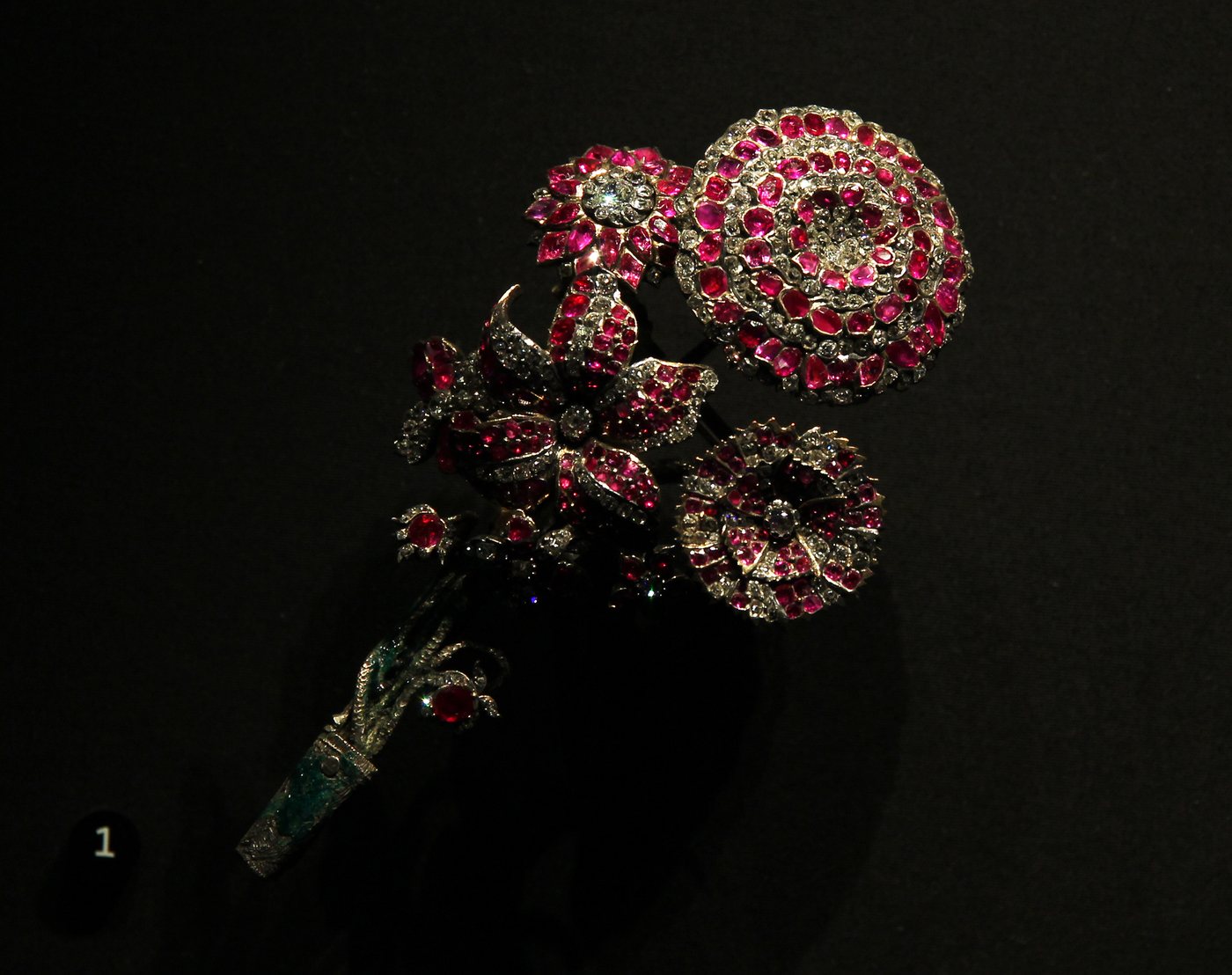
What Is a Brooch?
Structurally, a brooch is defined by its fastening rather than its shape: a pin, hinged to the back of the piece, swings out, passes through fabric, and is caught and held by a catch on the opposite side. Within that basic mechanism, brooch designs range enormously - naturalistic sprays, bows, cameos, mourning devices, geometric Art Deco clips and everything between.
How to Recognise It
Look on the reverse for the pin-and-catch mechanism itself, since the front alone can look similar to a pendant or clip. Older brooches (Georgian and early Victorian) typically have a simple C-catch, which does not fully enclose the pin’s point and can work loose; locking catches appeared only in the late 19th century, and the rotating safety catch still used today from about the 1910s, so a safety catch on a brooch that otherwise looks earlier can be a sign of a later repair or a later date than the design suggests.
When Was It Worn?
Brooches were worn from 1700 to 1950 and beyond, typically at the neckline, on a lapel, or centred on a bodice, with the specific placement and scale shifting with fashion - large statement brooches suited the fuller Victorian bodice, while smaller, more restrained brooches suited the narrower Edwardian and 1920s silhouette.
Origins
Brooches, in the broad sense of a pin-fastened ornament, are ancient - fibulae served a similar practical fastening function in Greek, Roman and various European archaeological contexts long before the word “brooch” or the decorative jewellery form covered here. The brooch as a primarily decorative accessory, rather than a practical clothes-fastener, became especially prominent from the 18th century onward.
How It Changed Over Time
Georgian brooches favoured foiled paste and gemstones set close together in silver-topped gold, often in bow, spray or ribbon forms. Early Victorian brooches leaned naturalistic - flowers, leaves and knots - while the mid-Victorian mourning period produced huge numbers of black brooches in jet, vulcanite and French jet, alongside brooches incorporating hair or acting as lockets. The Edwardian period favoured lighter, lace-like brooches in platinum and diamonds, and Art Deco brooches embraced geometric outlines, calibré-cut coloured stones and, later in the period, the double-clip brooch that could be worn as one piece or split into two dress clips.
Materials
Gold and silver were standard for finer brooches, with pinchbeck, cut steel and gilt base metals common in less expensive pieces. Set stones ranged from diamonds and coloured gemstones to paste, and mourning brooches in particular used jet, vulcanite, French jet and enamel.
Construction
Most brooches are built around a metal body or frame, to which the pin and catch are hinged or soldered on the reverse; stones are set into the front using period-appropriate settings such as closed-back collet settings (common before the 19th century, when foiling stones to enhance their colour was widespread) or open, claw-set mounts that became more common once stone quality reduced the need for foiling.
How It Was Worn
Typically pinned horizontally or diagonally at the neckline or on a lapel; some larger Victorian brooches also converted into pendants via a detachable loop, extending their use across more than one type of jewellery.
Who Wore It?
Brooches were worn across genders and classes to varying degrees, though the elaborate gem-set brooch was primarily a women’s fashion accessory for most of the period; men more commonly wore smaller pin forms such as the stickpin or cravat pin.
Notable Variations
- Bar Brooch - a narrow, elongated horizontal form especially popular in the late Victorian and Edwardian periods.
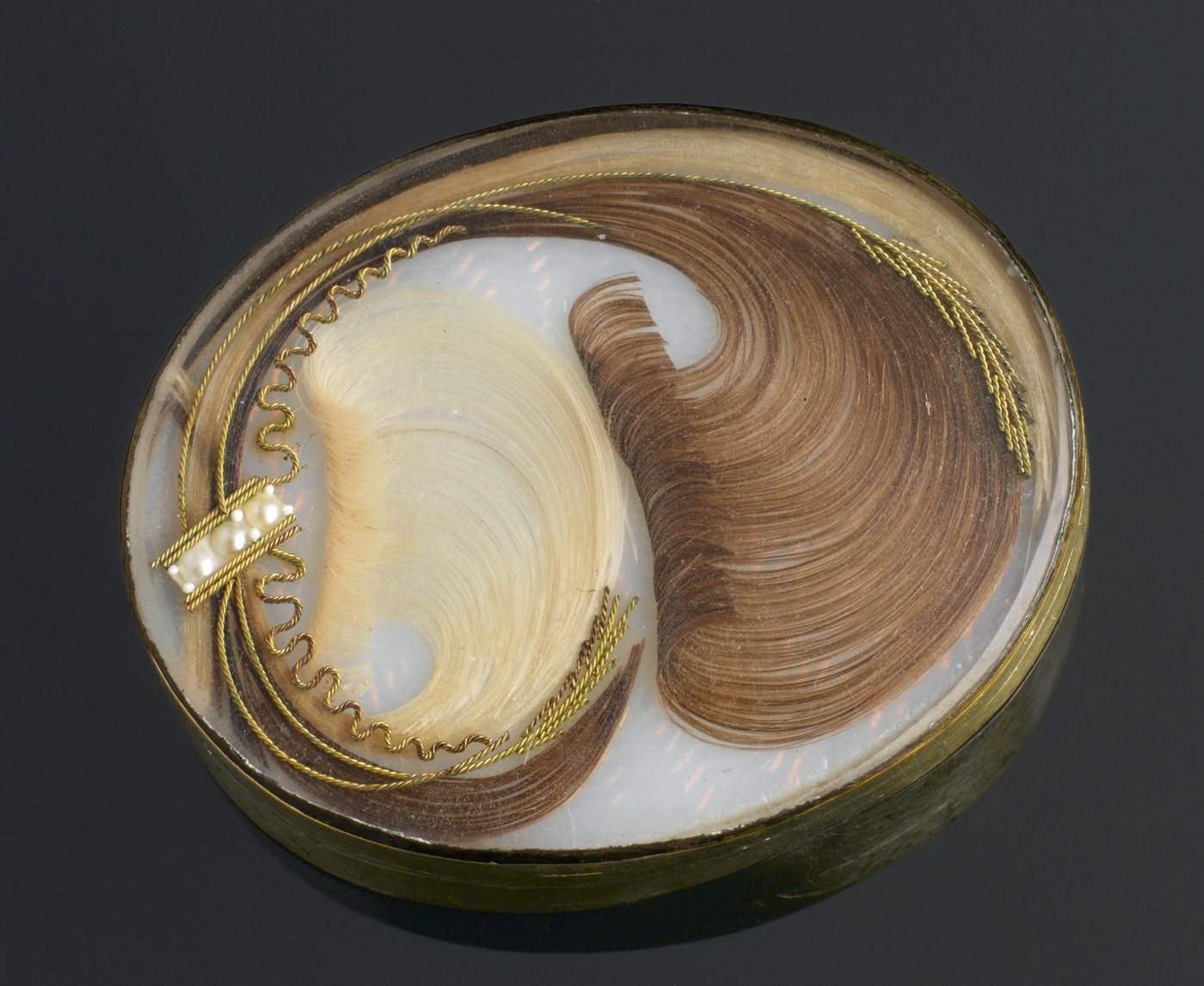
- Memorial Brooch - a brooch specifically made or adapted to commemorate a death, often containing hair or a photograph.
- Cameo brooch - a carved relief portrait or scene, frequently set as a brooch.
- Double clip brooch - an Art Deco form that splits into two matching dress clips.
Terminology
“Pin” is widely used interchangeably with “brooch” in American English, though some collectors reserve “pin” for smaller or simpler forms; see Brooch vs Pin for a closer look at where the terms overlap and where they don’t.
Similar Jewellery
Brooches are sometimes confused with clips (which grip fabric rather than piercing it) and with pendants that have been fitted with a brooch-back conversion, so checking the actual fastening mechanism is the most reliable way to tell them apart.
Examples in Museum Collections
- Spray brooch, French, c.1850. Victoria and Albert Museum, London, M.4-1971. Silver set with brilliant-cut pastes, with articulated pendants that move with the wearer - the naturalistic mid-19th-century flower spray, here in paste rather than diamonds.
- Brooch, Tiffany & Co., New York, 1868. Metropolitan Museum of Art, New York, 2000.556. Gold, pearls, black enamel and hair: the black-and-hair combination of mid-Victorian sentimental and memorial brooches, in a dated American example.
- Double-clip brooch, probably English, c.1930-40. Victoria and Albert Museum, London, M.145:1, 2-1987. Platinum set with brilliant, baguette and square-cut diamonds, separating into two identical clips. The museum describes the double clip as one of the most distinctive forms of the period.
Read next
Compare
Brooch vs Pin: What's the Difference?
Why brooch and pin often mean the same thing, where usage diverges, and how a stickpin differs structurally from both.

Identify
Understanding Pin and Hinge Construction
How pin-and-hinge mechanisms work across brooches, hatpins and stickpins, and why the presence or absence of a catch is a useful structural distinction.

Jewellery
What Is a Cameo?
What a cameo is, how it differs from an intaglio, and how carved shell and hardstone cameos moved from Grand Tour souvenirs to mass-produced Victorian jewellery.

Jewellery
What Is a Chatelaine?
What a chatelaine is, how its hanging chains of household implements combined practical use with status display, and why the handbag largely ended its everyday role.
Mourning & Sentimental
What Is a Memorial Brooch?
What a memorial brooch is, how its design changed from Georgian sepia-and-hair brooches to Victorian black-enamel and photographic brooches, and how it differs from general mourning jewellery.