What Is a Cameo?
What a cameo is, how it differs from an intaglio, and how carved shell and hardstone cameos moved from Grand Tour souvenirs to mass-produced Victorian jewellery.
A cameo is a carved image, usually a portrait profile or a figural scene, raised in relief above a background of contrasting colour, most often mounted as a brooch, pendant or ring.

What Is a Cameo?
A cameo’s defining feature is that its design stands proud of its background, carved from a material naturally or artificially layered in two or more colours so that the raised figure reads as one colour against a differently coloured ground. This relief carving, combined with the layered material, distinguishes the true cameo from a cameo-effect design that is merely painted, moulded or pressed to resemble one.
How to Recognise It
Examine the piece under raking light or magnification: a carved cameo shows fine, slightly irregular tool marks and a relief that varies subtly in depth, while a moulded glass or resin imitation tends to show uniform depth, mould seams, or a slightly blurred, repeated design if compared with other examples. The material itself is also a clue - shell cameos typically show the fine growth lines of the shell in cross-section, while hardstone cameos in banded agate or sardonyx show the sharper, straighter colour bands typical of that mineral.
When Was It Worn?
Cameos were worn from 1700 to 1950, but were especially fashionable from the mid-18th century through the Victorian era, worn as a brooch at the neckline, set into a ring, or suspended as a pendant.
Origins
Cameo carving is ancient, with carved gemstone and hardstone cameos produced in classical Greek and Roman contexts long before the jewellery styles covered here; the technique was revived and studied intensively during the Renaissance and remained a mark of connoisseurship and classical learning in the centuries that followed.
How It Changed Over Time
Cameo jewellery gained enormous popularity in the second half of the 18th century and into the Regency period, driven substantially by the Grand Tour, the extended continental journey undertaken by wealthy young Britons, who returned home with hardstone and shell cameos as souvenirs of classical antiquity. Napoleon Bonaparte’s own enthusiasm for cameos in the early 19th century further boosted their fashionable status in France and beyond. By the Victorian period, improvements in shell carving and the growth of carving centres, particularly in Italy, made shell cameos far more affordable, and they were produced and worn on a much larger scale than the costlier hardstone cameos of the previous century, typically depicting classical profiles, mythological scenes or, less often, a specific sitter’s portrait.
Materials
Shell (most commonly a helmet or queen conch shell, chosen for its contrasting layers) became the dominant material for affordable Victorian cameos, while hardstones such as sardonyx and banded agate were used for finer, costlier pieces continuing an ancient tradition. Cast glass or paste cameos, moulded rather than carved, offered a cheaper imitation of both. Mounts were typically gold or gilt metal, with silver sometimes used for less expensive settings.
Construction
A true cameo is carved by hand (or, from the Victorian period, increasingly with mechanical assistance for the rough shaping, finished by hand) from a naturally or artificially layered material, removing the background layer to leave the design standing in relief in a contrasting layer. The finished carving is then set into a mount, most often a simple collet or claw setting that frames the piece without obscuring its edges.
How It Was Worn
Most commonly worn as a brooch at the neckline or on a lapel, but also set into rings, bracelets, earrings and pendants, and sometimes incorporated into a parure, a matching suite of jewellery worn together.
Who Wore It?
Cameos were worn by both men and women, though the elaborate cameo brooch and pendant were predominantly women’s fashion; men more often wore a cameo set into a ring or a seal.
Notable Variations
- Shell cameo - carved from layered shell, the most common and affordable form from the Victorian period onward.
- Hardstone cameo - carved from banded agate, sardonyx or similar stone, generally finer and costlier than shell.
- Habille cameo - a portrait cameo further decorated with small set gemstones, such as a tiny diamond “necklace” on the carved figure.
- Micromosaic souvenir jewellery - a related but distinct Grand Tour souvenir form using tiny glass tesserae rather than carving.
Terminology
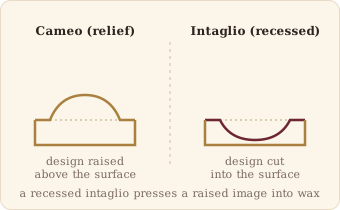
A cameo is often confused with, or discussed alongside, an intaglio, which is carved into rather than raised from its surface and was traditionally used for wax seals; see Cameo vs Intaglio for how to tell the two apart at a glance.
Similar Jewellery
Beyond the cameo-versus-intaglio distinction, carved cameos are frequently confused with moulded glass, resin or plastic imitations that reproduce the raised-relief look without hand carving; examining the material and tool marks closely, ideally with magnification, is the most reliable way to distinguish them, though this site does not offer authentication and physical examination by a specialist is advisable for a confident attribution.
Examples in Museum Collections
- Ariel, c.1840. Victoria and Albert Museum, London, M.274-1921. A shell cameo in a gold scrollwork mount, a product of the Roman carving trade that supplied Grand Tour travellers.
- Queen Victoria, Paris, 1851. Cameo carved by Paul Lebas, mounted by Félix Dafrique. Victoria and Albert Museum, London, M.340-1977. A shell cameo portrait of the young queen in enamelled gold set with emeralds and diamonds, probably shown by Dafrique at the Great Exhibition - a dated cameo of a named sitter rather than a classical subject.
- Brooch-pendant with a cameo of a bacchante, Paris, c.1870, signed by Georges Bissinger. Victoria and Albert Museum, London, M.3-1980. A layered agate cameo in gold with diamonds, made to be worn as either a brooch or a pendant - the costlier hardstone tradition. Compare Cameo vs Intaglio.
Read next
Compare
Cameo vs Intaglio: What's the Difference?
The structural difference between a cameo, carved in relief, and an intaglio, carved into the surface - and why that difference mattered for seals.
Compare
Cameo vs Micromosaic: Comparing Two Grand Tour Souvenir Jewellery Forms
How the carved cameo and the tiny-tesserae micromosaic differ in construction and materials, despite sharing a well-documented history as Grand Tour souvenirs.
Compare
Georgian vs Victorian Jewellery
How Georgian and Victorian jewellery differ in settings, techniques and motifs, and why Victorian jewellery itself spans several distinct phases.
Jewellery
What Is a Brooch?
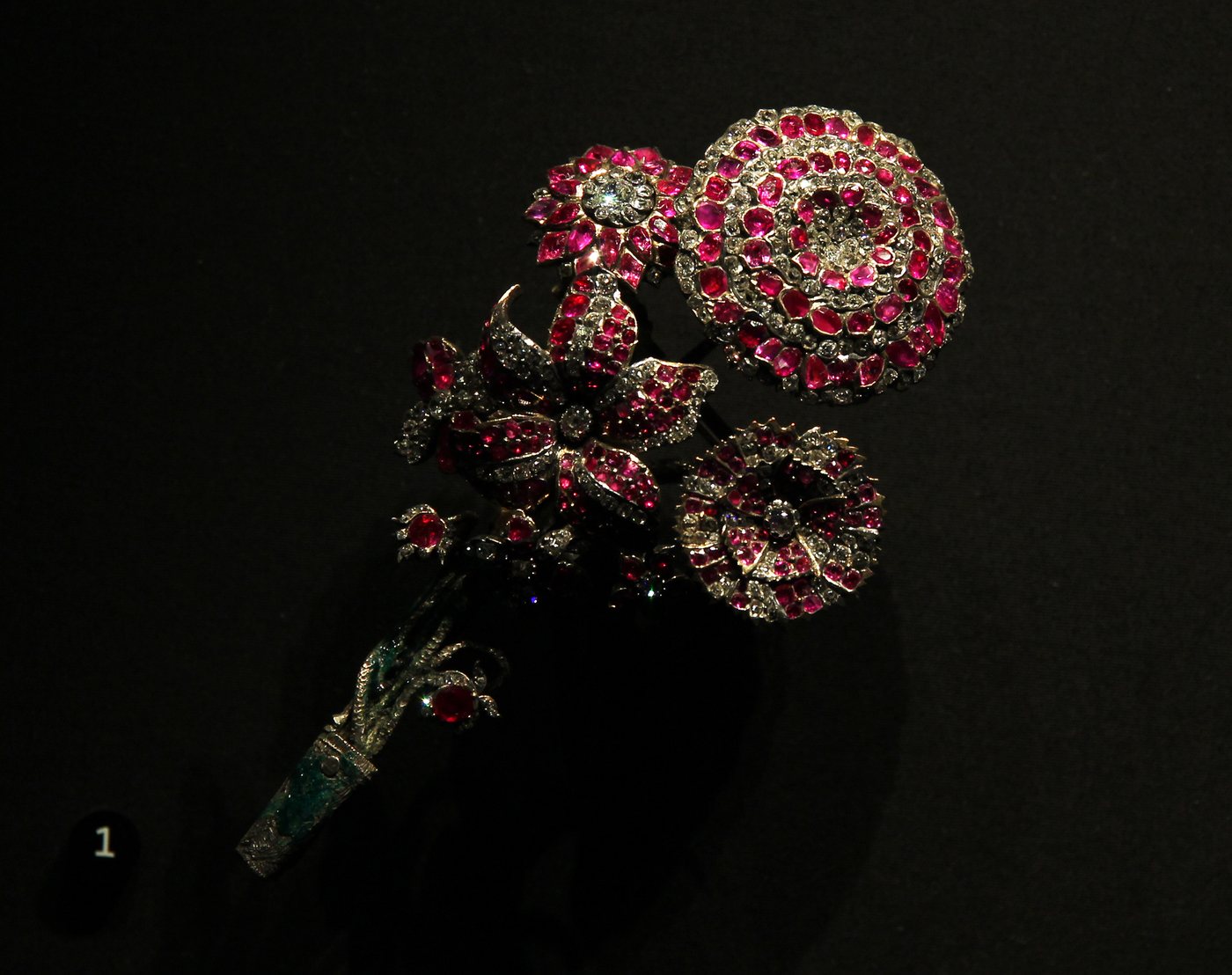
What a brooch is, how its pin-and-catch fastening works, and how brooch styles moved from naturalistic Victorian sprays through mourning brooches to Art Deco geometry.
Jewellery
What Is a Pendant?
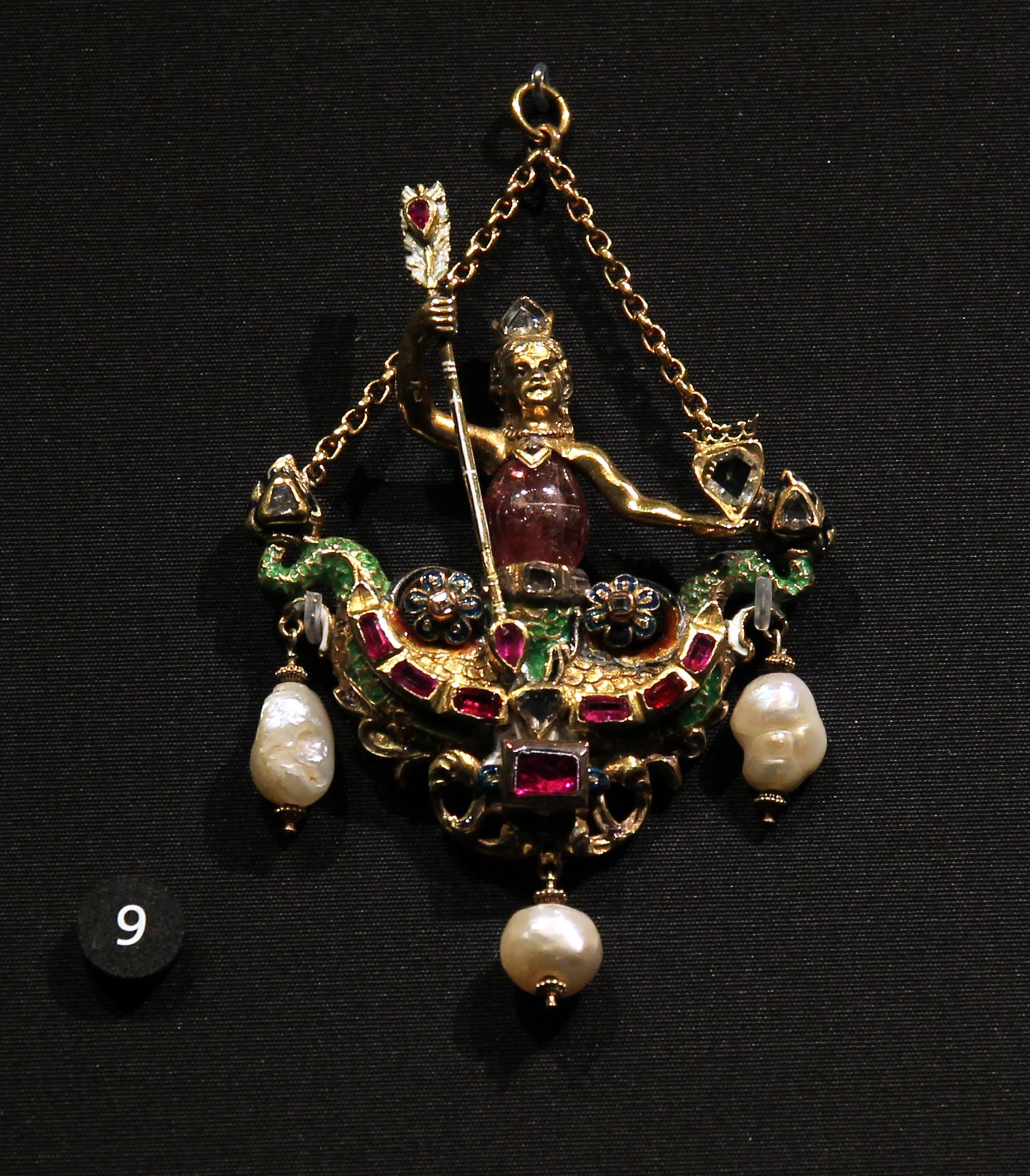
What a pendant is, how it differs from an integrated necklace centrepiece, and how forms like the locket, lavalier and negligee pendant developed within the broader category.
Techniques
What Is Micromosaic Jewellery?
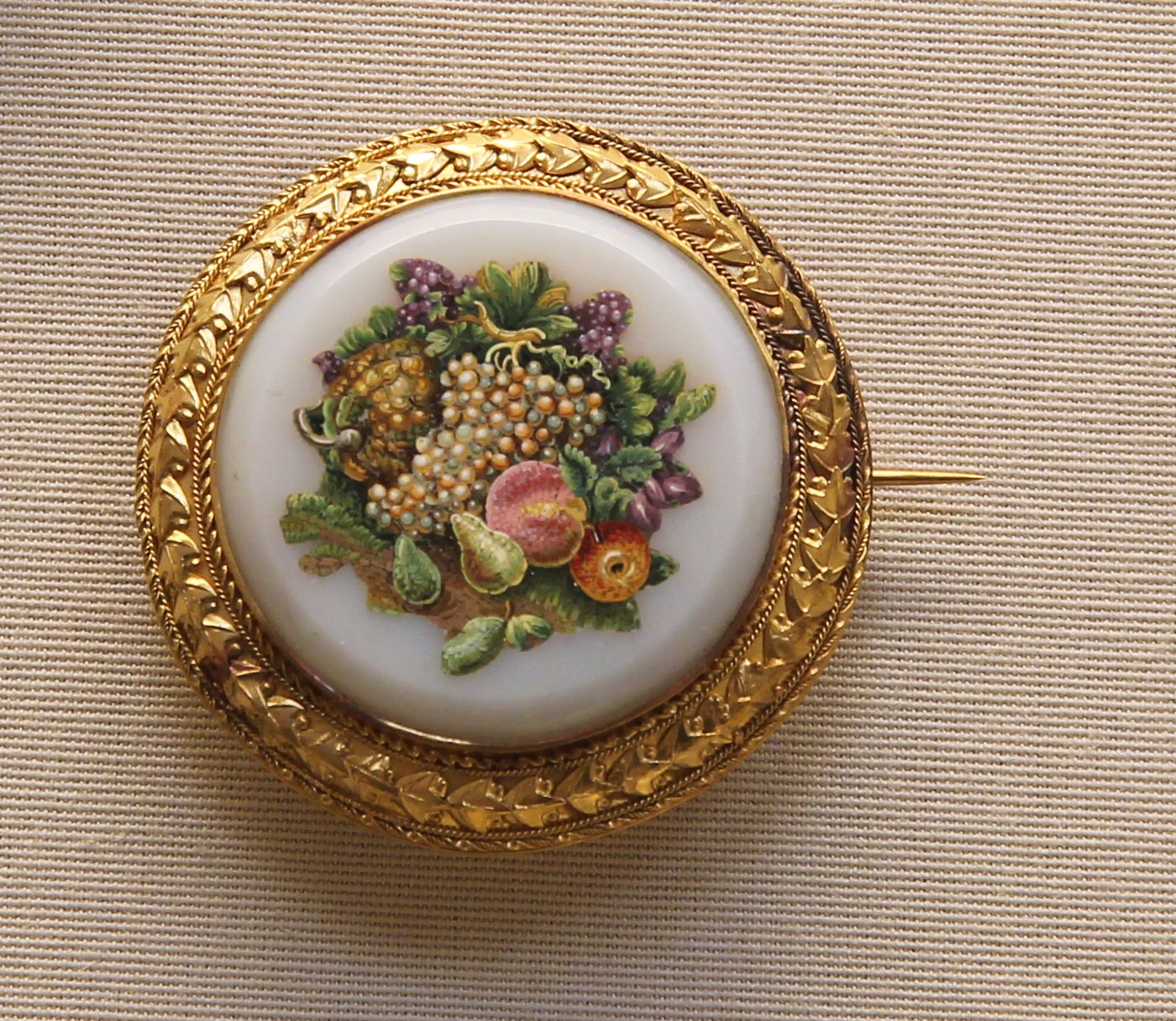
How Roman micromosaic was made from smalti filati, its roots in the Vatican Mosaic Studio, the makers who led it, and how it became a Grand Tour souvenir from the 1770s to the 1870s.