What Is a Parure?
What a parure and a demi-parure are, how matching sets developed at the Napoleonic court and spread through Georgian and Victorian jewellery, how they were cased and converted, and why so many survive broken up.
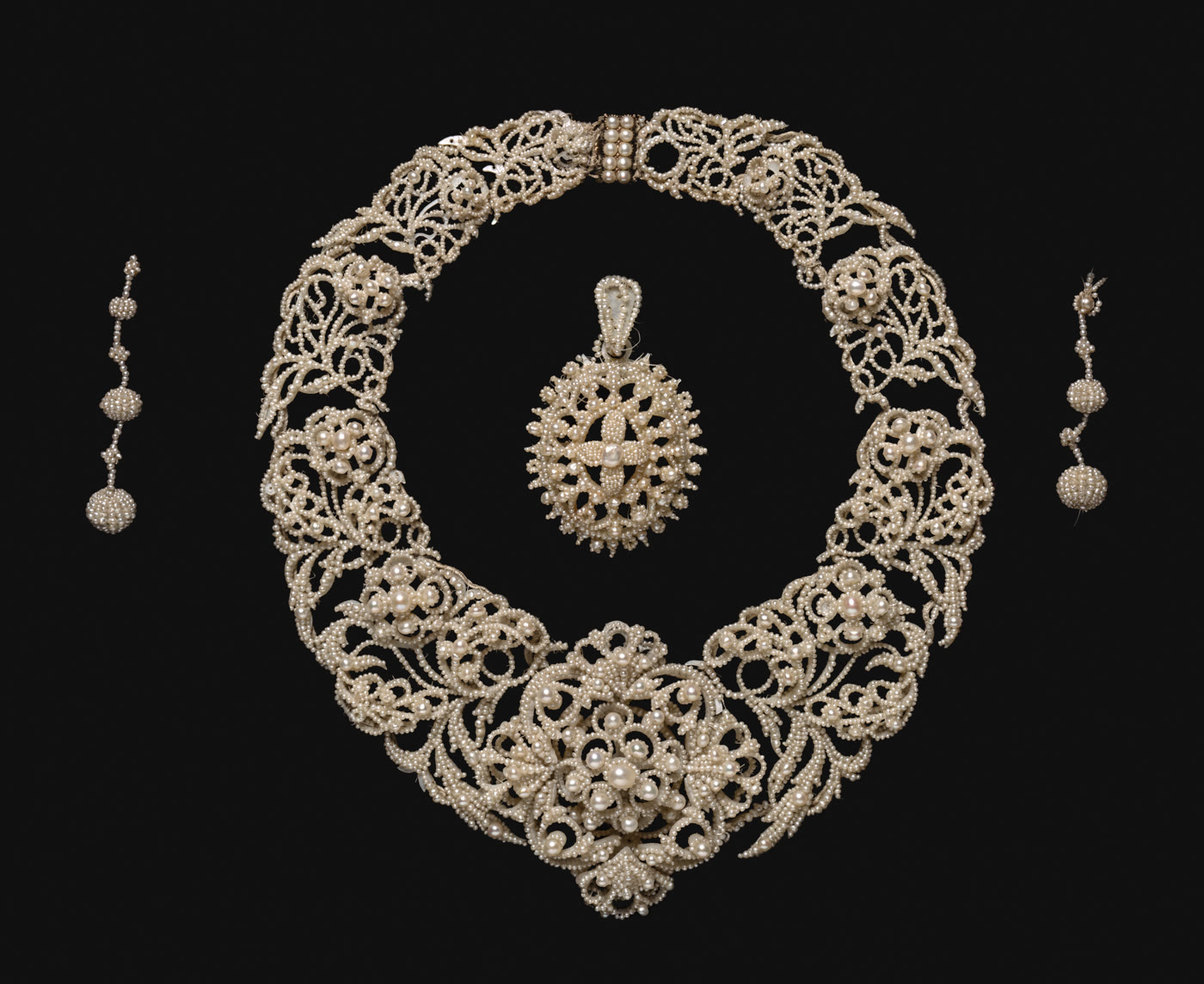
A parure is a matching set of jewellery designed to be worn together - typically a necklace, earrings, a brooch and bracelets, and in the grandest sets a tiara, comb or stomacher as well. A smaller set of two or three pieces, such as a brooch and earrings or a necklace and earrings, is called a demi-parure. The word is French, from parer, “to adorn”.
What Is a Parure?
The defining feature of a parure is unity of design: every piece uses the same stones, metal, motifs and workmanship, so that the set reads as one ensemble when worn. A full or grand parure might include:
- a tiara or diadem, or a hair comb
- a necklace, often a rivière or a necklace with drops
- a pair of earrings
- a brooch, or in the 18th century a stomacher
- one or two bracelets
- occasionally a belt clasp or ring
How to Recognise It
A parure is recognised by matching. Look for the same stone cut and setting style, the same gold colour and surface finish, and the same motifs across several pieces - and, ideally, a fitted case shaped to hold them all. Cases are strong evidence: a velvet- or silk-lined case with recesses for each piece, often stamped with the jeweller’s name in the lid, shows the set was sold together.
When Was It Worn?
Matched sets of jewellery existed earlier, but the parure as a formal ensemble belongs above all to the late 18th and 19th centuries. It reached its height at the court of Napoleon I, where Empress Joséphine and later Empress Marie-Louise received spectacular parures of diamonds, pearls, emeralds and engraved gems. Formal court and evening dress across Europe followed.
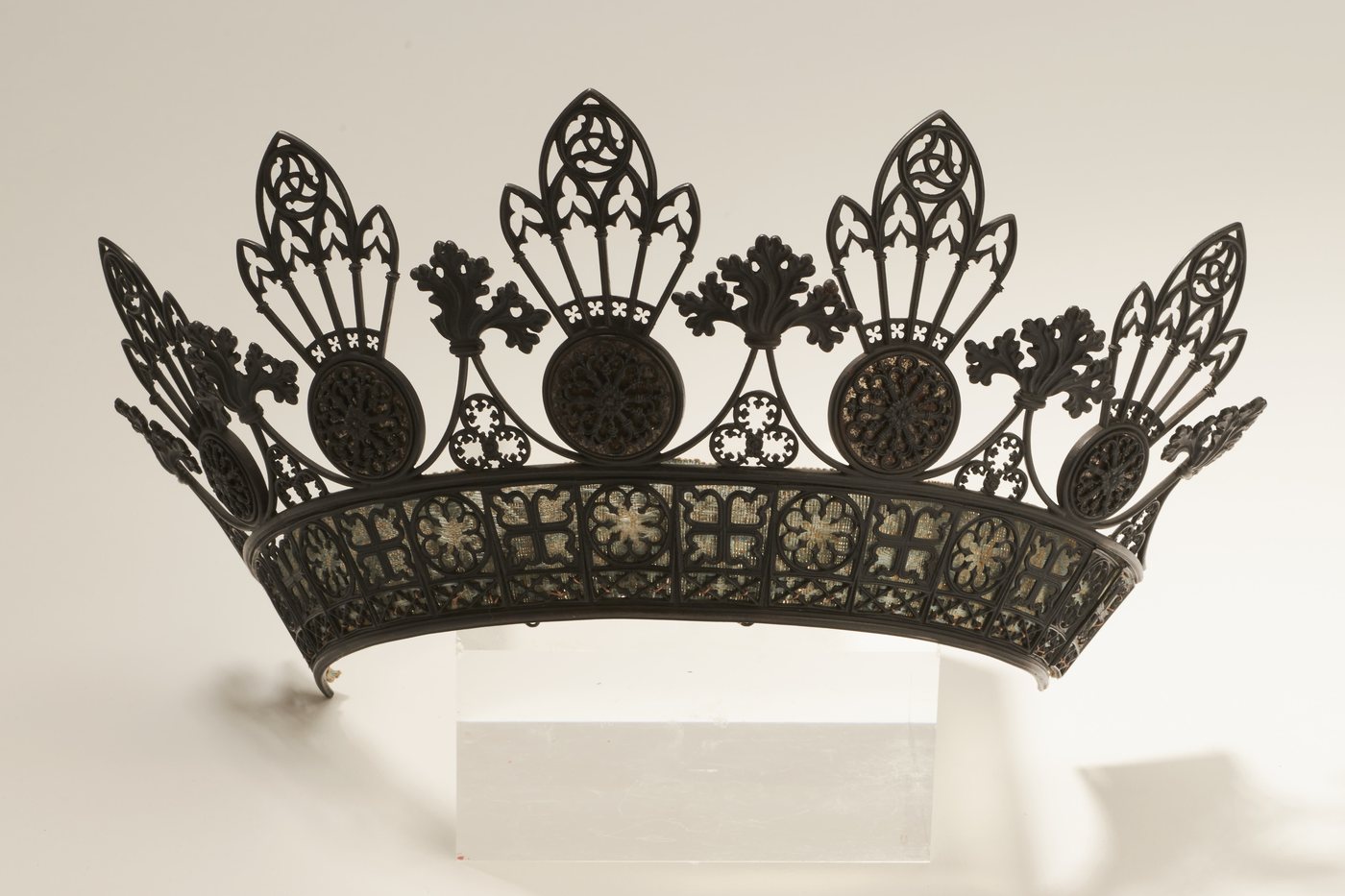
In Britain, the parure was the ideal for formal evening jewellery through the Regency and Victorian periods. Less costly parures were made in every material of the time: paste, cut steel, Berlin iron, coloured gold and cannetille with topaz or amethyst, coral, shell cameos, micromosaic and jet.
Origins
The word “parure” was used in French for ornament generally before it came to mean a matching set. Coordinated jewellery for formal dress developed in 18th-century European courts as gem-setting allowed matching stones to be cut and set in quantity. The Napoleonic court, keen to rival the old monarchies, made the grand parure a statement of imperial splendour.
How It Changed Over Time
- Late 18th century: sets of diamonds or paste in silver, and Neoclassical sets of cameos and intaglios.
- Napoleonic and Regency (c.1800-1830): grand parures of diamonds and coloured stones at court; gold and cannetille sets with topaz, amethyst or chrysoberyl for wealthy families; Berlin iron and cut-steel sets for patriotic or economical wear.
- Victorian (1837-1901): parures in every material, from diamonds to shell cameos, coral and archaeological-revival gold, often sold in fitted cases. Mourning parures of jet were common in the 1860s and 1870s.
- Late 19th century onward: as fashion moved towards individual statement pieces and lighter jewellery, full parures were made less often outside formal and royal jewellery. Costume jewellers revived matching sets in the mid-20th century.
Materials
Every jewellery material of the period appears in parures. The commonest surviving types are paste and cut steel from the 18th century, gold with coloured stones from the early 19th century, and coral, shell cameo, micromosaic, garnet and jet from the Victorian period.
Construction
Many parures were designed to be adaptable. Tiaras were mounted on removable frames, so the ornament could be detached and worn as a necklace or brooches; necklaces could be divided into bracelets; brooches had detachable drops; earrings had separate tops and pendants. This adaptability made a costly set more useful - and also made it easy to break up later.
How It Was Worn
A full parure was worn with formal evening or court dress, when a woman might wear every piece at once. For less formal occasions, part of a set - a brooch and earrings, or a necklace alone - would be worn. Etiquette writers of the 19th century often warned against wearing too much jewellery by day, so a parure was largely an evening possession.
Who Wore It?
Grand parures of precious stones were royal and aristocratic possessions, often heirlooms passed through a family. Middle-class women owned demi-parures in gold, coral, cameo or garnet, and paste and cut-steel sets brought the look to wider markets.
Notable Variations
- Demi-parure - a smaller set of two or three pieces.
- Mourning parure - a set in jet or black materials; see What Is Mourning Jewellery?.
- Souvenir parure - Grand Tour sets of micromosaic, lava cameos or coral, bought in Italy.
- Convertible parure - a set designed so that pieces combine or separate for different uses.
Terminology
“Parure” usually means a full set and “demi-parure” a partial one, but the distinction is not applied strictly. Many surviving “parures” are later assemblies of matching pieces rather than sets sold together, which is why an original fitted case is valued.
Similar Jewellery
A parure differs from a single piece made in convertible parts, such as a tiara that converts into a necklace: a parure is a group of separate jewels. It is also distinct from a simple pair, such as earrings, or a matching necklace and pendant.
Examples in Museum Collections
The Smithsonian’s National Museum of Natural History in Washington, DC, displays the Marie-Louise Diadem, part of a parure given by Napoleon to Empress Marie-Louise on their marriage in 1810. Its emeralds were removed and sold in the 1950s and replaced with turquoises, an example of how even the grandest parures were broken up and altered. Many decorative arts museums hold Georgian paste and cut-steel parures and Victorian coral, cameo and micromosaic sets in their original cases.
Read next
Eras
Regency Jewellery
A guide to Regency jewellery (c.1795-1837): Empire fashion, cameos and Neoclassical parures at Napoleon's court, coloured gold and cannetille, Berlin iron and cut steel, acrostic rings, and memorial jewellery for Nelson and Princess Charlotte.
Jewellery
What Is a Brooch?
What a brooch is, how its pin-and-catch fastening works, and how brooch styles moved from naturalistic Victorian sprays through mourning brooches to Art Deco geometry.

Jewellery
What Is a Cameo?
What a cameo is, how it differs from an intaglio, and how carved shell and hardstone cameos moved from Grand Tour souvenirs to mass-produced Victorian jewellery.

Jewellery
What Are Earrings?
An overview of earrings as a jewellery category, how earring fashion tracked hairstyle and headwear, and how fitting types shifted between pierced wire hooks and screw or clip backs.
Jewellery
What Is a Rivière Necklace?
What a riviere necklace is, why its unbroken line of individually set stones made it one of the most enduring necklace forms, and how it differs from a festoon or fringe necklace.

Jewellery
What Is a Tiara?
What a tiara is, how it differs from a full diadem, and how bandeau and convertible tiara styles developed alongside aristocratic and fashionable wear.