Egyptian Revival Jewellery
Three waves of Egyptian revival jewellery - after Napoleon's Egyptian campaign, in the 1860s around the Suez Canal and Aida, and after Tutankhamun's tomb in 1922 - with scarabs, lotus flowers, winged discs and how to tell revival pieces apart.
Egyptian revival jewellery borrowed the motifs of ancient Egypt - scarabs, lotus flowers, winged sun discs, cobras and pharaohs’ heads - and reworked them for European and American fashion. It was never a single continuous style but a series of revivals, each set off by events that brought Egypt into the news.

The First Wave: Napoleon in Egypt
Napoleon’s military expedition to Egypt in 1798-1801 took with it a large team of scholars, whose findings were published in the many volumes of the Description de l’Égypte from 1809. The expedition, and the decipherment of hieroglyphs by Jean-François Champollion in 1822, made Egyptian ornament fashionable in Empire France and Regency Britain. In jewellery it appeared mainly as details - sphinxes, lotus borders, obelisks - within otherwise Neoclassical designs. See Regency Jewellery.
The Second Wave: the 1860s and 1870s
Interest revived strongly in the mid-Victorian period. Excavations by Auguste Mariette, the creation of the Egyptian Museum in Cairo, the opening of the Suez Canal in 1869 and the premiere of Verdi’s opera Aida in Cairo in 1871 all kept Egypt in the public eye. Jewellers working in the archaeological revival style - the Castellani in Rome, Carlo Giuliano in London, and in Paris jewellers such as Gustave Baugrand and Froment-Meurice - made gold jewellery with enamelled lotus flowers, winged scarabs and hieroglyph-like ornament. Ancient faience and stone scarabs, bought by travellers in Egypt, were mounted in gold as rings, brooches and pendants.
The Third Wave: Tutankhamun
Howard Carter’s discovery of the largely intact tomb of Tutankhamun in November 1922 caused a sensation, and Egyptian motifs became one of the defining strands of Art Deco design. Cartier, Van Cleef & Arpels, Boucheron and Lacloche made brooches, bracelets and vanity cases in platinum, diamonds, onyx and coloured stones showing scarabs, pharaohs, lotus columns and the goddess Isis with outstretched wings. Some Cartier pieces of the 1920s incorporated genuine ancient faience fragments. At the other end of the market, costume jewellers produced Egyptian-style necklaces, bracelets and brooches in enamelled base metal and coloured glass in large quantities.
Common Motifs
- Scarab beetle - a symbol of rebirth, often with outspread wings.
- Winged sun disc and outstretched wings of Isis or Horus.
- Lotus and papyrus flowers, often as borders.
- Uraeus - the rearing cobra of royal headdresses; see Snake Jewellery.
- Pharaohs’ and queens’ heads, sphinxes, pyramids, obelisks and hieroglyphs.
- Eye of Horus; see Eye Symbolism in Jewellery.
How to Recognise Which Wave a Piece Belongs To
- Early 19th century: Egyptian details on Neoclassical gold or cut-steel jewellery, usually restrained.
- 1860s-1880s: yellow gold with granulation, wirework and coloured enamel in the archaeological manner; mounted ancient scarabs; Victorian brooch fittings such as C-catches and long pins.
- 1920s-1930s: platinum or white metal, calibré-cut coloured stones, onyx and diamonds in geometric settings; or bright enamel and glass on base metal in costume pieces.
Mounted scarabs need particular care: many “ancient” scarabs sold to 19th- and 20th-century tourists were modern copies. Whether a scarab is ancient is a question for a specialist in Egyptian antiquities.
Read next

Eras
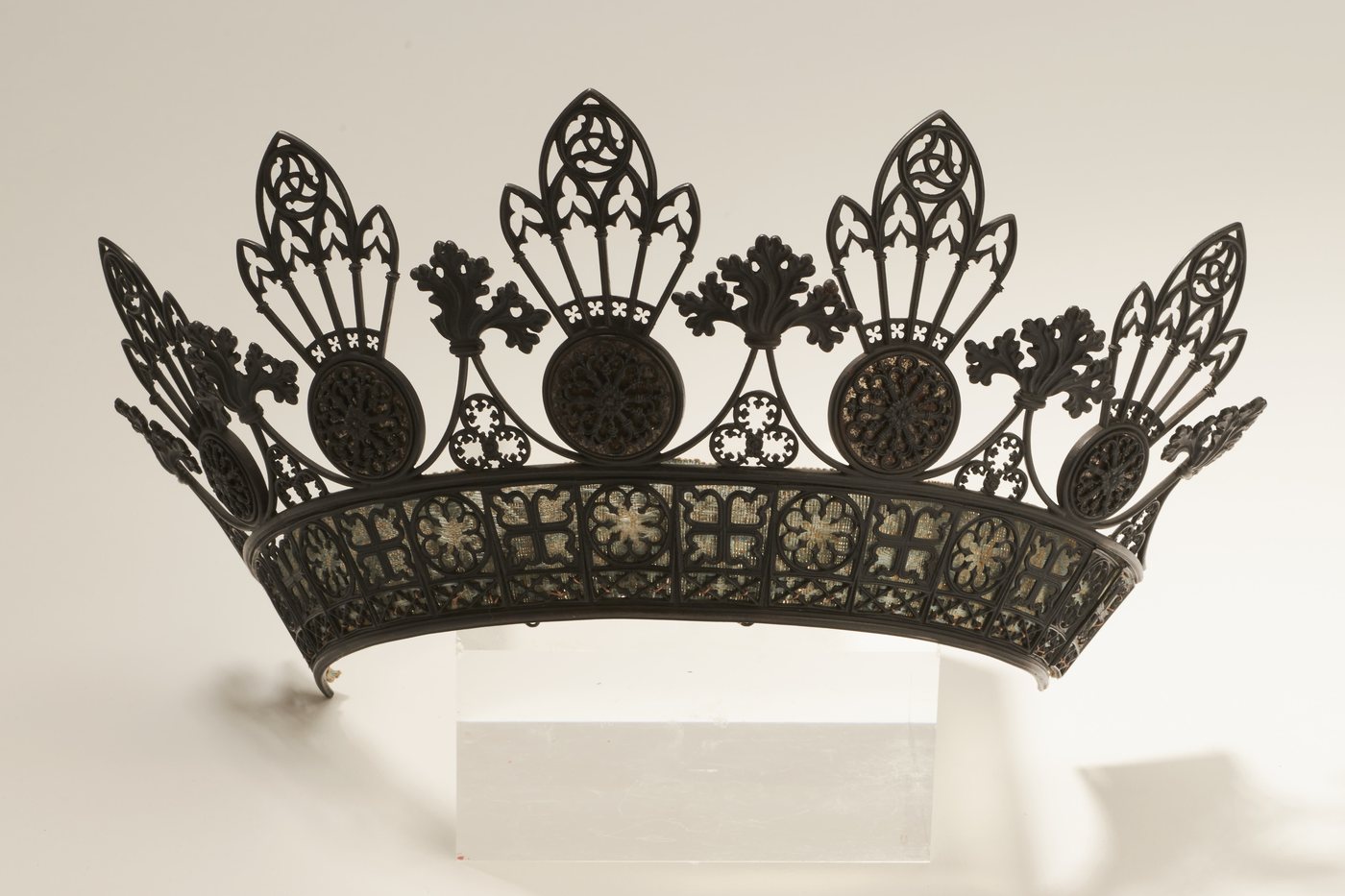
Art Deco Jewellery
A guide to Art Deco jewellery (c.1915-1935): geometric symmetry, the 1925 Paris Exposition, Cartier's Tutti Frutti and Van Cleef & Arpels' Mystery Set, the modernist jewellers, new stone cuts, Egyptian and Indian influences, and costume jewellery.
Eras
Regency Jewellery
A guide to Regency jewellery (c.1795-1837): Empire fashion, cameos and Neoclassical parures at Napoleon's court, coloured gold and cannetille, Berlin iron and cut steel, acrostic rings, and memorial jewellery for Nelson and Princess Charlotte.

Eras
Victorian Jewellery
A guide to Victorian jewellery (1837-1901): the Romantic, Grand and Aesthetic periods, the Great Exhibition, gold rushes and 9ct gold, mourning and Whitby jet, archaeological revival, Scottish jewellery, and how to recognise each phase.
Symbols
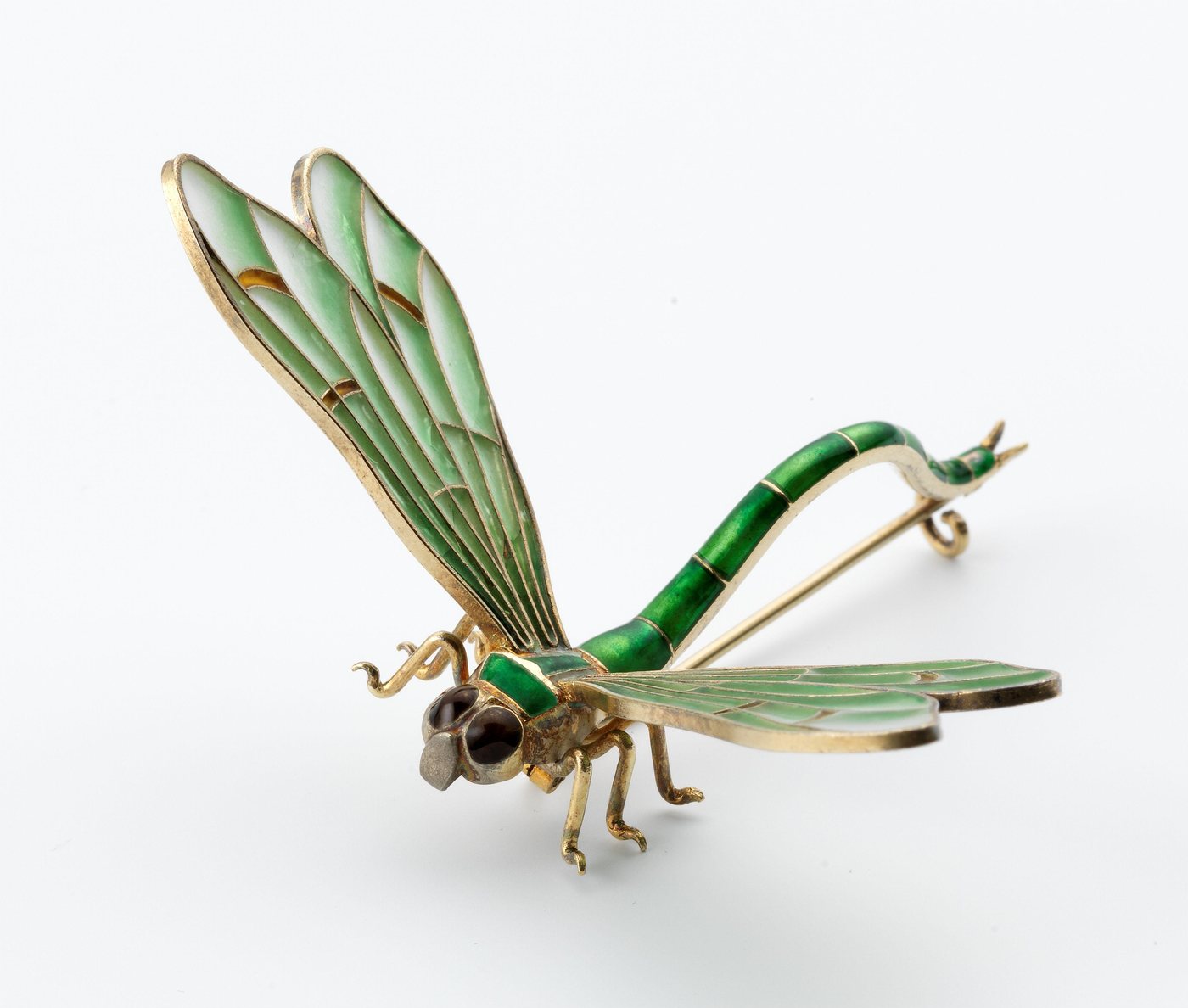
Insect Jewellery
Insect jewellery from the Napoleonic bee to Victorian diamond flies and Lalique's Dragonfly Woman: naturalistic and Art Nouveau traditions, scarabs and real beetle wings.
Symbols
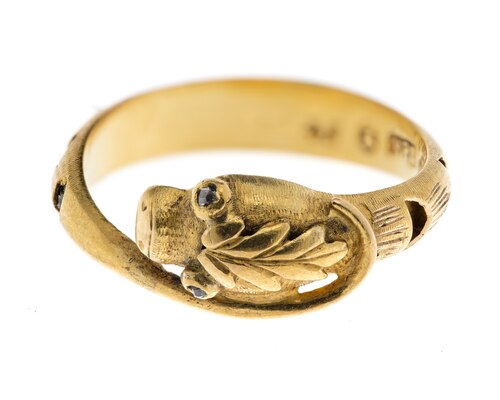
Snake Jewellery and Eternal Love
Why the snake, often shown biting its own tail, stood for eternal love in 19th-century jewellery - from Queen Victoria's 1839 emerald snake ring to Lalique's serpents.

Eras
Archaeological Revival Jewellery
How the Castellani of Rome, Carlo Giuliano in London and others revived Etruscan, Greek and Roman goldwork in the 19th century - granulation, filigree, mounted coins and scarabs - and how to recognise revival jewellery and its mass-produced imitations.