Snake Jewellery and Eternal Love
Why the snake, often shown biting its own tail, stood for eternal love in 19th-century jewellery - from Queen Victoria's 1839 emerald snake ring to Lalique's serpents.
The snake is one of the most recognisable symbolic motifs in 19th-century jewellery, most often representing eternity and everlasting love rather than anything sinister - a meaning drawn directly from the way the creature is depicted, coiled into a circle and biting or holding its own tail.
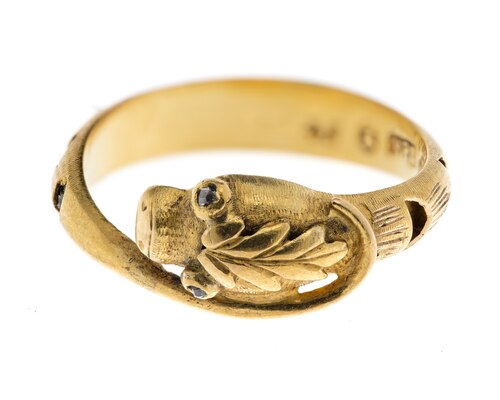
The Ouroboros and Eternal Love
A snake shown swallowing or gripping its own tail forms a continuous circle with no visible beginning or end - a form known in ancient symbolism as the ouroboros. In 19th-century jewellery this closed loop was read as a symbol of eternity and, by extension, of a love intended to last without end. This is the meaning behind the snake ring, snake bracelet and snake necklace as they were most commonly worn: not as an emblem of danger or temptation, but as one of the period’s clearest visual metaphors for permanence in a relationship.
Ancient Models
Snake jewellery was not a 19th-century invention. Gold snake bracelets and rings, coiled several times around the arm or finger, were worn in Hellenistic Greece and across the Roman world, and examples recovered from sites such as Pompeii were known to 18th- and 19th-century collectors. Jewellers working in the archaeological revival style of the mid-19th century copied these ancient coiled forms directly, so a Victorian snake bangle may owe as much to a museum case as to sentiment.
Georgian and Early Victorian Snakes
Snake rings were already fashionable in late Georgian and Regency England, typically in gold with an enamelled body and small rubies, garnets or diamonds for the eyes. The 1830s and 1840s produced the most characteristic form of all: the snake necklace. Its body was built either from hinged gold scales or from a flexible tube of woven gold mesh, so that it lay smoothly around the neck, and it fastened by the head gripping the tail or by a hook concealed under the jaw. The head was frequently pavé-set with small turquoise cabochons, with garnet or ruby eyes, and a heart-shaped pendant or locket often hung from the mouth - sometimes with a compartment for hair, which turned the necklace into a love token or a memorial. Examples of this type are held by the Victoria and Albert Museum.
Queen Victoria’s Engagement Ring
The motif’s popularity is closely tied to a specific, recorded event. Queen Victoria proposed to Prince Albert on 15 October 1839 - as reigning monarch, the proposal had to come from her - and Albert gave her an engagement ring in the form of a gold snake set with an emerald, her birthstone, at the head. They married on 10 February 1840. The fashionable interest that followed the Queen’s example is credited with giving snake jewellery a substantial boost through the Victorian period. The ring accelerated an existing fashion rather than starting one: the snake as a symbol of eternity is far older, and snake rings were already being made before 1839.
Typical Forms
Snake rings are the form most closely associated with the motif, typically coiling once or twice around the finger, with gems for the eyes or, as in Victoria’s ring, a stone marking the head itself. Double-headed rings, with two heads meeting at the front, were also made. Snake bracelets and bangles coil around the wrist or upper arm in one or more loops, a form that suited the sinuous line of a serpent well. Snake necklaces and chains sometimes use the animal more subtly, as a clasp shaped like a snake’s head gripping the chain’s other end, closing the piece into the same symbolic loop even when the body of the necklace is a plain chain.
Materials and Construction
Snake jewellery was made across the full range of materials and price points - gold, sometimes with enamelled scales in royal blue, green or black, and set with gemstones for finer pieces, down to gilt base metal versions for more affordable jewellery. Flexible, articulated gold snake bracelets and necklaces, built from small linked segments or a sprung mesh so the piece could coil and move like a body, are a notable feat of goldsmithing and appear across the 19th century in varying levels of sophistication. Black-enamelled snakes, sometimes with a hair compartment, served as mourning rings, where the eternity symbolism applied to remembrance rather than courtship.
Art Nouveau and After
At the end of the century the snake moved from sentiment to drama. René Lalique’s “Serpents” corsage ornament of about 1898-99, nine intertwined enamelled snakes falling from a central knot, is in the Calouste Gulbenkian Museum in Lisbon. In 1899 the Paris jeweller Georges Fouquet made a gold and enamel snake bracelet, linked by chains to a ring, to a design by Alphonse Mucha for the actress Sarah Bernhardt; Mucha had painted a similar bracelet on his 1898 poster for her production of Médée. Egyptian cobras (the uraeus) joined the repertoire in the Egyptian-revival fashion that followed the opening of Tutankhamun’s tomb in 1922. In Rome, Bulgari began making flexible serpent bracelet-watches in the late 1940s, and in 1968 Cartier made a large articulated snake necklace for the actress María Félix - both part of the motif’s long afterlife beyond 1950.
Earlier Love Rings
Sentimental rings carrying messages of love and commitment have a longer history than the snake ring. The posy ring, inscribed with a short verse or motto, reflects the same impulse to encode a message of devotion into a ring, using text rather than the snake’s visual symbolism.
Reading Snake Jewellery Today
A coiled snake motif, particularly one biting its own tail or forming a closed loop, in a ring, bracelet or necklace clasp is a strong indicator of the eternity-and-love symbolism described here. Snakes also appear in some Victorian and Art Nouveau jewellery for decorative or naturalistic reasons without necessarily carrying this specific meaning, so the piece’s overall design and any inscription or hair compartment should be considered alongside the motif itself.
Read next

Eras
Georgian Jewellery
A guide to Georgian jewellery (1714-1837): Brazilian diamonds, closed-back foiled settings, rococo and Neoclassical styles, paste, cut steel and pinchbeck, sentimental miniatures, girandoles, rivières and Sévigné bows.

Eras
Victorian Jewellery
A guide to Victorian jewellery (1837-1901): the Romantic, Grand and Aesthetic periods, the Great Exhibition, gold rushes and 9ct gold, mourning and Whitby jet, archaeological revival, Scottish jewellery, and how to recognise each phase.
Gemstones
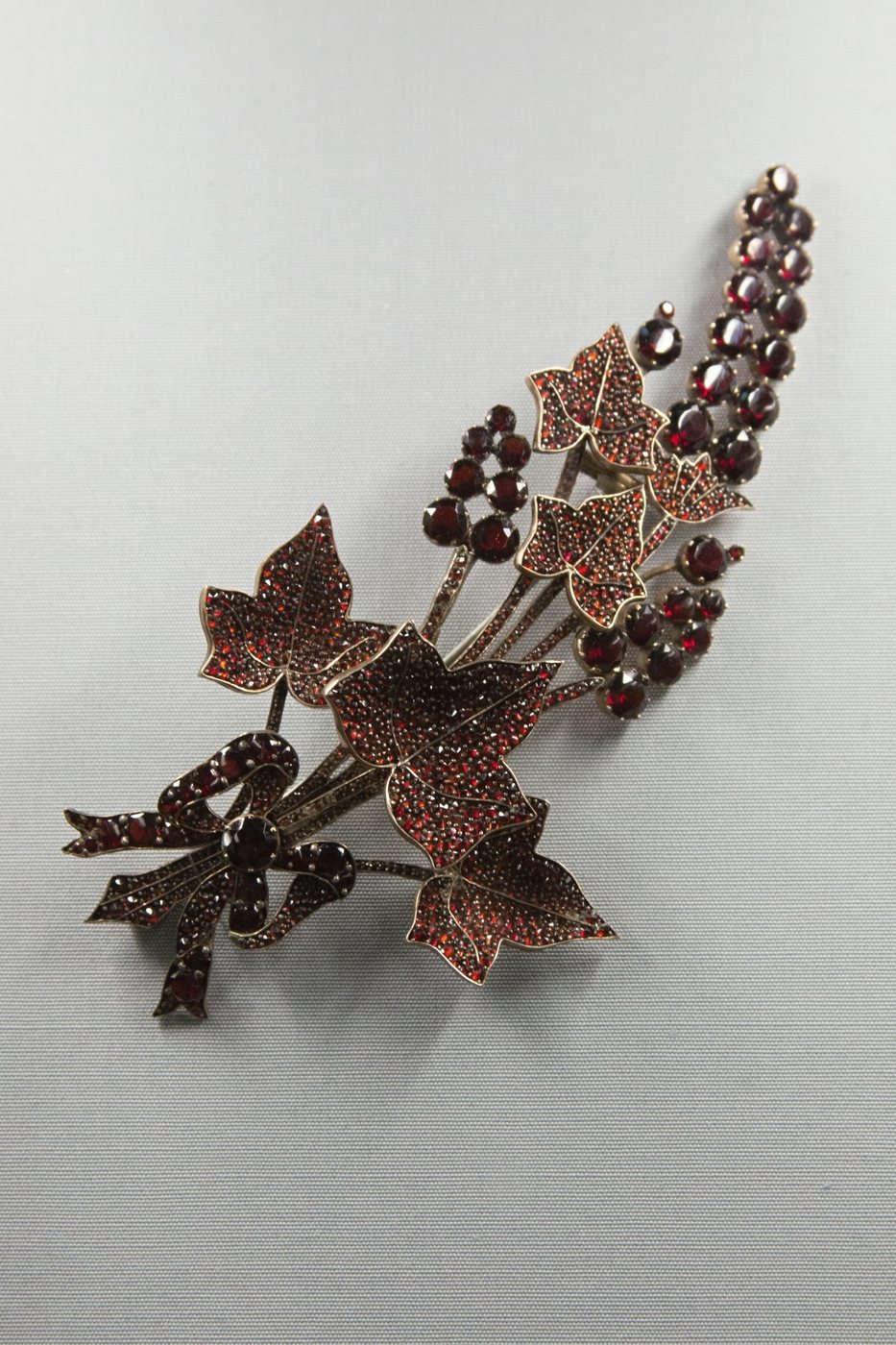
Garnets in Victorian Jewellery
Why Bohemian pyrope garnets from Třebenice, cut and set in Turnov and Prague, became a hallmark of Victorian jewellery, with carbuncles, demantoids, cluster settings and their meanings.
Jewellery
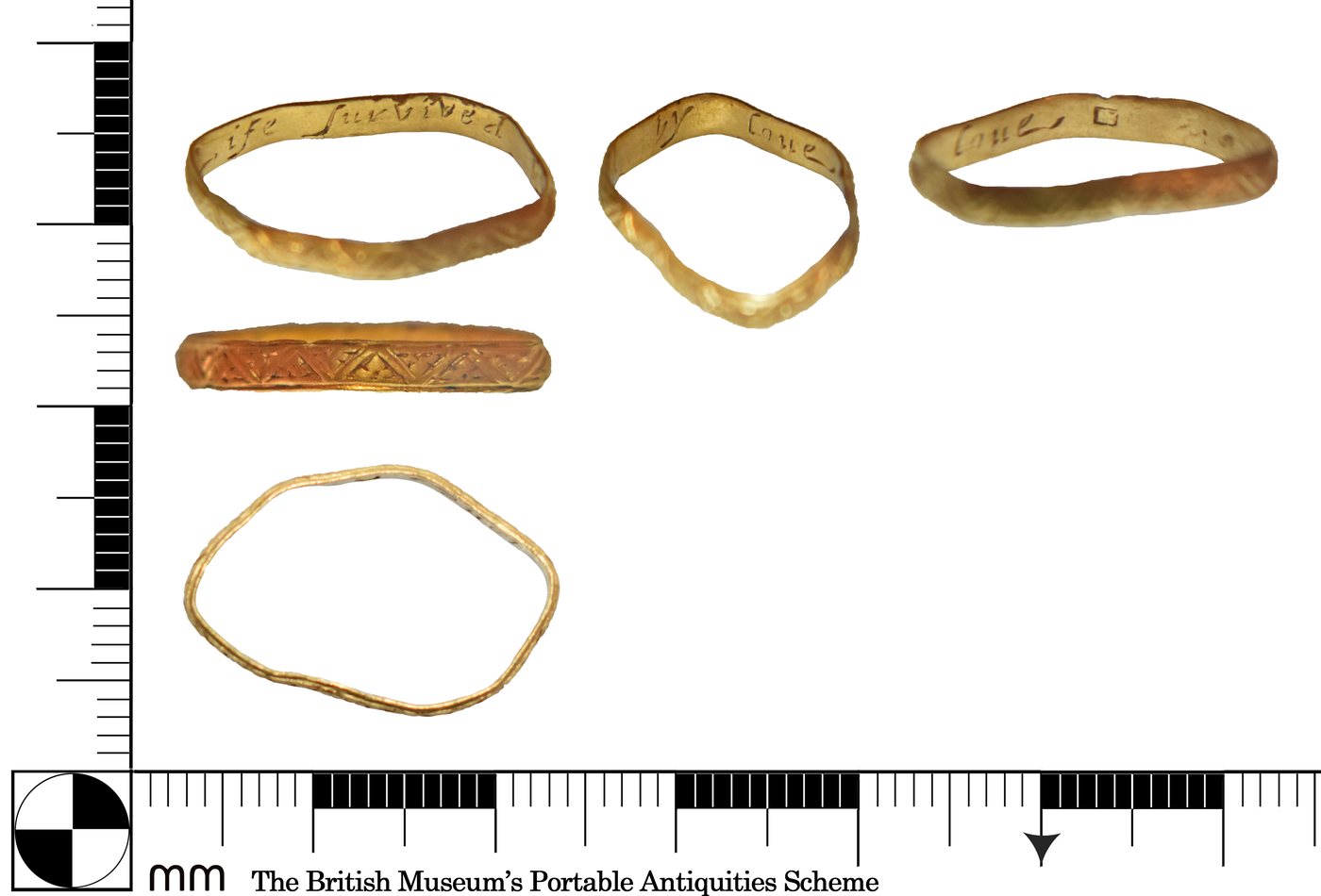
What Is a Posy Ring?
What a posy ring is, why its short engraved verse was often hidden on the inside of the band, and how the form declined from a common love token to a rarer survival by the Victorian era.
Mourning & Sentimental
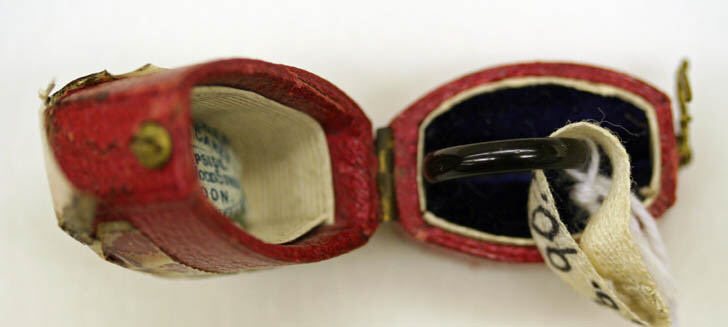
What Is a Mourning Ring?
What a mourning ring is, the custom of bequeathing them in wills from Shakespeare to Pepys, enamelled name-and-date inscriptions, and how their design changed from 1650 to the Victorian period.

Symbols
Heart Jewellery Through History
The heart in jewellery from 1700 to 1950: crowned hearts, Scottish luckenbooth brooches, Sacred Heart pendants, padlock-and-key pendants, Claddagh rings and wartime sweetheart brooches.