Heart Jewellery Through History
The heart in jewellery from 1700 to 1950: crowned hearts, Scottish luckenbooth brooches, Sacred Heart pendants, padlock-and-key pendants, Claddagh rings and wartime sweetheart brooches.
The heart is among the oldest love symbols in Western decorative art. Its use long predates 1700, but between then and 1950 it appears in a number of specific jewellery forms across Georgian, Victorian and early 20th-century jewellery that are worth examining individually.

A Long-Standing Symbol
The stylised heart shape was established as an emblem of love in European art by the late Middle Ages, and its meaning needs little explanation. What is specific to the 18th and 19th centuries is the range of distinct heart-based jewellery forms that developed, each with its own conventions.
Crowned Hearts and Georgian Regard Jewellery
The crowned heart - a heart surmounted by a small crown - was one of the most common sentimental devices of the late 17th and 18th centuries, found on ring bezels set with rose-cut diamonds or coloured stones, on small pendants and on silver brooches across Britain, France and the Low Countries. The crown is usually read as loyalty, or as the beloved’s rule over the giver’s heart. Hearts also appear widely in Georgian “regard” and sentimental jewellery, picked out in gemstones, worked in gold, or combined with a lock of hair or an inscribed motto, and heart-shaped lockets gave the form a practical use as well as a symbolic one.
The Luckenbooth Brooch
The best-known regional heart form is the Scottish luckenbooth brooch: a flat silver brooch formed from a single heart or two entwined hearts, usually surmounted by a crown. Its name comes from the luckenbooths - a row of lockable shops standing in Edinburgh’s High Street beside St Giles’ Cathedral, where silversmiths and jewellers were among the traders. The luckenbooths had been demolished by 1817, but the name stayed with the brooch. Luckenbooth brooches were made throughout the 18th and 19th centuries, in Edinburgh and in provincial Scottish towns, often engraved with initials on the back, and later in gold and set with stones.
They were given as love tokens and betrothal gifts. In Scottish folk custom they were also pinned to a baby’s clothing to ward off harm, and in that protective use - especially when the heart’s point is bent to one side - they are sometimes called “witch brooches”. A story that Mary, Queen of Scots, gave a luckenbooth brooch to Lord Darnley is often told but is not documented. Heart-and-crown brooches derived from the luckenbooth were also made by silversmiths in Montreal and elsewhere in North America in the late 18th and early 19th centuries as “trade silver” for exchange with Indigenous peoples, which is why the form is found in North American museum collections.
The Sacred Heart
In Catholic France, Italy, Spain and Ireland, the heart had a devotional as well as a romantic meaning. Devotion to the Sacred Heart of Jesus spread after the visions reported by the French nun Marguerite-Marie Alacoque in the 1670s, and Sacred Heart pendants and medals - a heart with flames rising from the top, often encircled by a crown of thorns or surmounted by a cross - were worn widely through the 18th and 19th centuries. A flaming heart with thorns or a cross is a religious piece, not a love token.
Heart Lockets, Padlocks and Keys
Heart-shaped lockets - opening to hold a photograph, miniature or a lock of hair - were a widely worn Victorian form, combining the heart’s symbolism with the locket’s use as a keepsake container. A related Victorian convention paired a heart-shaped padlock pendant with a small key, worn together or given as a matched gift, carrying the sentiment of “holding the key to my heart”. In the last quarter of the 19th century and the Edwardian years, a small heart-shaped padlock was also a standard fastening on gold curb-link bracelets, so a heart padlock may be the clasp of a bracelet rather than a pendant.
Claddagh Hands and Hearts
The Claddagh ring, associated with the fishing community of the Claddagh at Galway in the west of Ireland, shows two hands clasping a crowned heart, traditionally read as love (the heart), friendship (the hands) and loyalty (the crown). Tradition dates the first rings to around 1700 and credits them to the Galway goldsmith Richard Joyce. The history of the ring and its descent from the medieval clasped-hand fede ring are covered at hand jewellery symbolism.
Hearts in Mourning and Sentimental Jewellery
Heart motifs overlap with mourning and memorial jewellery as well as romantic gifts - a heart-shaped locket or brooch could commemorate a dead loved one as easily as celebrate a living relationship, often distinguished only by an inscription, a hair compartment or a black enamel border. The same taste for coded jewellery that produced acrostic jewellery, spelling out a word through a sequence of gemstones, made the heart the simplest and most readable of all Victorian sentimental devices. Hearts were also combined with an anchor and a cross in the Faith, Hope and Charity trio, the heart standing for Charity - see anchor jewellery.
Sweetheart Jewellery of the World Wars
During the First and Second World Wars, servicemen gave wives, mothers and girlfriends “sweetheart” jewellery - brooches and pendants based on a regimental, naval or air-force badge, often heart-shaped or combined with a heart, made in silver, enamel, gilt metal or mother-of-pearl. Heart-shaped lockets made to hold a soldier’s photograph were sold in large numbers for the same purpose. These pieces are among the most common heart jewellery surviving from the first half of the 20th century.
Identifying Period Heart Jewellery
A crowned single or double heart in flat silver points to the Scottish luckenbooth tradition; hands clasping a crowned heart point to the Claddagh; a flaming heart with thorns or a cross is a Sacred Heart devotional piece; a heart combined with a military badge is wartime sweetheart jewellery. A plain heart-shaped locket or a heart paired with a key is consistent with general Victorian sentimental jewellery. Dating any of these more precisely depends on construction, hallmarks and materials alongside the motif itself.
Read next

Eras
Georgian Jewellery
A guide to Georgian jewellery (1714-1837): Brazilian diamonds, closed-back foiled settings, rococo and Neoclassical styles, paste, cut steel and pinchbeck, sentimental miniatures, girandoles, rivières and Sévigné bows.

Eras
Victorian Jewellery
A guide to Victorian jewellery (1837-1901): the Romantic, Grand and Aesthetic periods, the Great Exhibition, gold rushes and 9ct gold, mourning and Whitby jet, archaeological revival, Scottish jewellery, and how to recognise each phase.
Jewellery
What Is a Locket?
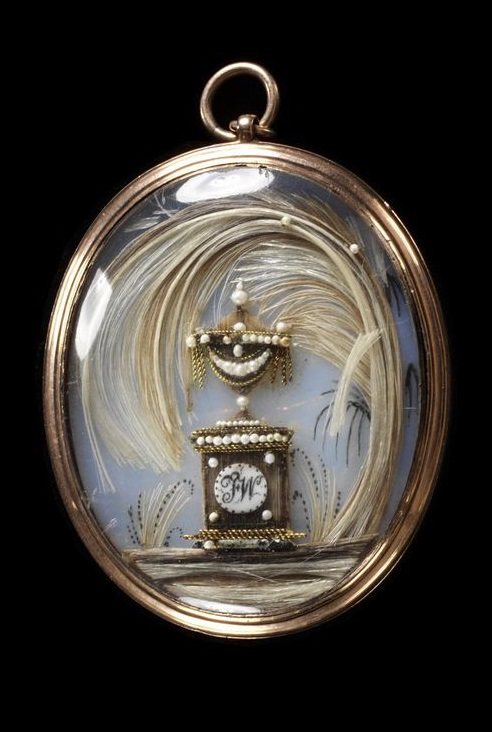
What a locket is, how its hinged compartment was used to hold a photograph, portrait or hair, and how the form evolved from plain Georgian cases to elaborate Victorian mourning lockets.
Jewellery
What Is a Pendant?
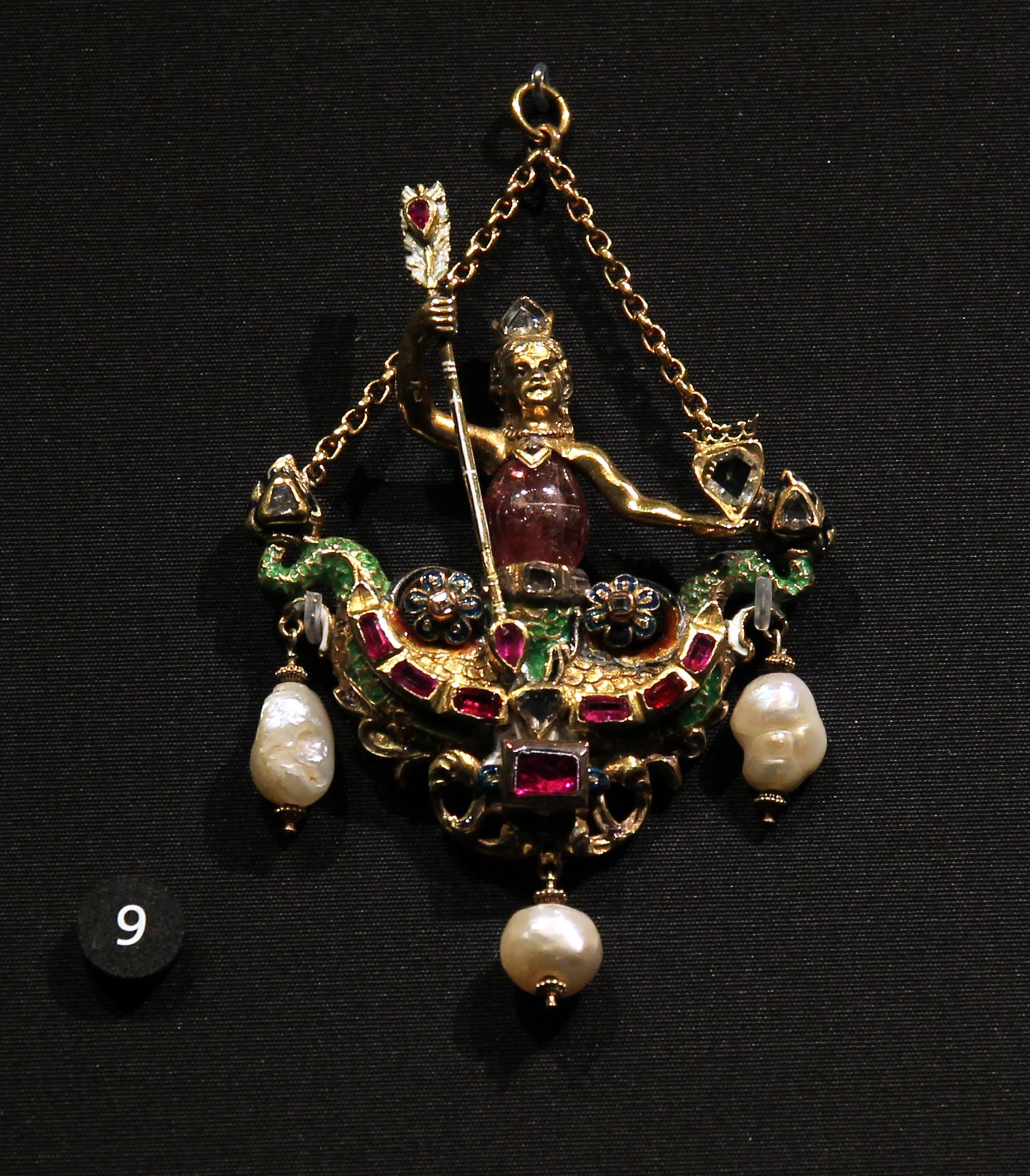
What a pendant is, how it differs from an integrated necklace centrepiece, and how forms like the locket, lavalier and negligee pendant developed within the broader category.
Mourning & Sentimental
What Is Acrostic Jewellery?
What acrostic jewellery is, how REGARD and DEAREST rings spell words in gemstones, the Paris jewellers who popularised it, and why it is sentimental rather than mourning jewellery.

Symbols
Lover's Knot Jewellery
The true love knot in Georgian and Victorian jewellery: ribbon bows and Sévigné brooches, the Hercules knot, knots worked in hair, and Celtic-revival interlace.