Lover's Knot Jewellery
The true love knot in Georgian and Victorian jewellery: ribbon bows and Sévigné brooches, the Hercules knot, knots worked in hair, and Celtic-revival interlace.
The lover’s knot, sometimes called the true love knot, is an interlaced knot motif, its ends hidden within the pattern, used across Georgian and Victorian sentimental and betrothal jewellery as a symbol of a bond intended to last without a clear beginning or end.

An Intuitive Symbolic Reading
A knot rendered as a continuous, interlaced pattern with its ends worked out of sight reads naturally as a bond with no visible start and no visible finish - an image of attachment meant to be permanent. The reading is intuitive rather than resting on any single documented origin story. The same interlacing that makes the knot pleasing as ornament carries its meaning: a viewer does not need a coded system, as with language-of-flowers motifs, to grasp what an endless knot suggests.
Ribbons, Bows and Favours
In the 17th and 18th centuries “love knot” or “true lover’s knot” often meant a knot or bow of ribbon. Knots of coloured ribbon were given as love tokens and distributed as favours at weddings, and jewellers translated them into gold, silver and gemstones. The large ribbon-bow brooch worn at the centre of the bodice from the late 17th century - often called a Sévigné, after the French letter-writer Madame de Sévigné, though the name is a later convention - was set with table-cut or rose-cut diamonds, coloured stones or paste, and is the direct ancestor of the bow and knot brooches of the 18th century. Bows and knots returned in force in the “garland style” of about 1900-1914, when Cartier and other Paris jewellers made diamond and platinum ribbon bows based on 18th-century ornament.
The Hercules Knot
A related ancient knot is the Hercules knot - a reef knot of two interlocking loops. In Greek and Roman tradition it had protective and marital associations: the bride’s girdle was said to be tied with it, to be untied by the groom, which is often given as the origin of the phrase “tying the knot”. Hellenistic goldsmiths made Hercules-knot diadems, necklace centres and bracelet clasps, often set with garnets, and jewellers of the archaeological revival copied the form in the mid-19th century. A Victorian brooch or bracelet with a reef knot at its centre may draw on this classical source as much as on the English love knot.
A Shared Logic With the Ouroboros, a Different Motif
The lover’s knot’s “no beginning, no end” meaning shares its logic with the ouroboros - the snake biting its own tail - covered at snake jewellery. The two reach a similar conclusion by different routes and should not be treated as variants of one motif. The knot’s meaning rests on the abstract geometry of interlacing, while the snake’s depends on the image of a serpent and, in the Victorian period, drew extra momentum from Prince Albert’s 1839 gift of a snake engagement ring to Queen Victoria, an event the knot has no equivalent to.
Typical Jewellery Forms
The lover’s knot appears most often as a ring motif, where an interlaced knot might form the bezel, be engraved into the shoulders, or form the shank itself - knot rings of twisted or plaited gold wire were made through the late 18th and 19th centuries. Like the earlier posy ring, these rings encoded a sentimental message into the ring’s form. The knot also appears as a brooch or pendant, worked in gold wire or picked out in small gemstones following its outline. In Victorian jewellery of the 1860s to 1880s, knot brooches and bracelets in polished or textured gold were a standard design, often with a small stone or pearl at the centre of the knot, and two hearts joined by a knot was a common motif on bar brooches.
Worked in Hair as Well as Metal
A notable variant was worked in a lover’s own hair, plaited or woven into a knot and set behind glass or rock crystal, or mounted as the centre of a ring, brooch or pendant. This belongs to the Georgian and Victorian tradition of hair jewellery, in which hair was either displayed behind glass or worked into the structure of a piece. The knot suited hairwork particularly well, since the hair itself could be interlaced into the same ends-concealed form the motif called for, uniting material and message.
Celtic Interlace: A Separate Tradition
Interlaced knotwork of a different kind entered jewellery through the Celtic revival. The Tara Brooch, an early medieval Irish brooch covered in fine interlace, was reportedly found in 1850 near Bettystown, County Meath; the Dublin jeweller Waterhouse & Co. acquired it, showed it at the Great Exhibition of 1851 and sold copies in large numbers, along with other “Irish antique” brooches. From 1899 the London store Liberty & Co. sold its “Cymric” range of silver and gold jewellery, much of it designed by Archibald Knox, whose flowing interlace drew on Celtic manuscripts and metalwork - see Arts and Crafts. This ornamental interlace is related to the lover’s knot in appearance but not in meaning, and pieces of this kind should not automatically be read as love tokens.
Materials and Construction
Beyond hairwork, lover’s knot motifs were rendered in gold - often as twisted or plaited wirework mimicking a real knot - and in silver and gilt base metal for more modest pieces. Finer examples pick out the knot’s outline in small diamonds, pearls or other gemstones, following the interlaced path in a continuous line of stones.
Era and Typical Use
The lover’s knot appears across the Georgian and Victorian periods as a betrothal and sentimental motif, especially in rings, alongside brooches and pendants. Its meaning made it a natural gift for an engagement or a settled attachment, in the same tradition as heart jewellery, though its abstract form gave it a more understated character than a heart or clasped hands.
Reading Lover’s Knot Jewellery Today
An interlaced knot with no visible start or end, in metal, gemstones or hair, is a strong indicator of the lover’s knot tradition. A ribbon bow with trailing ends belongs to the bow-brooch tradition; a reef knot in the antique manner points to the Hercules knot and archaeological revival; dense, flowing interlace in silver points to the Celtic revival or Liberty’s Cymric range. Because the motif was used over a long span, precise dating depends more on construction, materials and any inscription than on the knot itself.
Read next

Eras
Georgian Jewellery
A guide to Georgian jewellery (1714-1837): Brazilian diamonds, closed-back foiled settings, rococo and Neoclassical styles, paste, cut steel and pinchbeck, sentimental miniatures, girandoles, rivières and Sévigné bows.

Eras
Victorian Jewellery
A guide to Victorian jewellery (1837-1901): the Romantic, Grand and Aesthetic periods, the Great Exhibition, gold rushes and 9ct gold, mourning and Whitby jet, archaeological revival, Scottish jewellery, and how to recognise each phase.
Jewellery
What Is a Posy Ring?
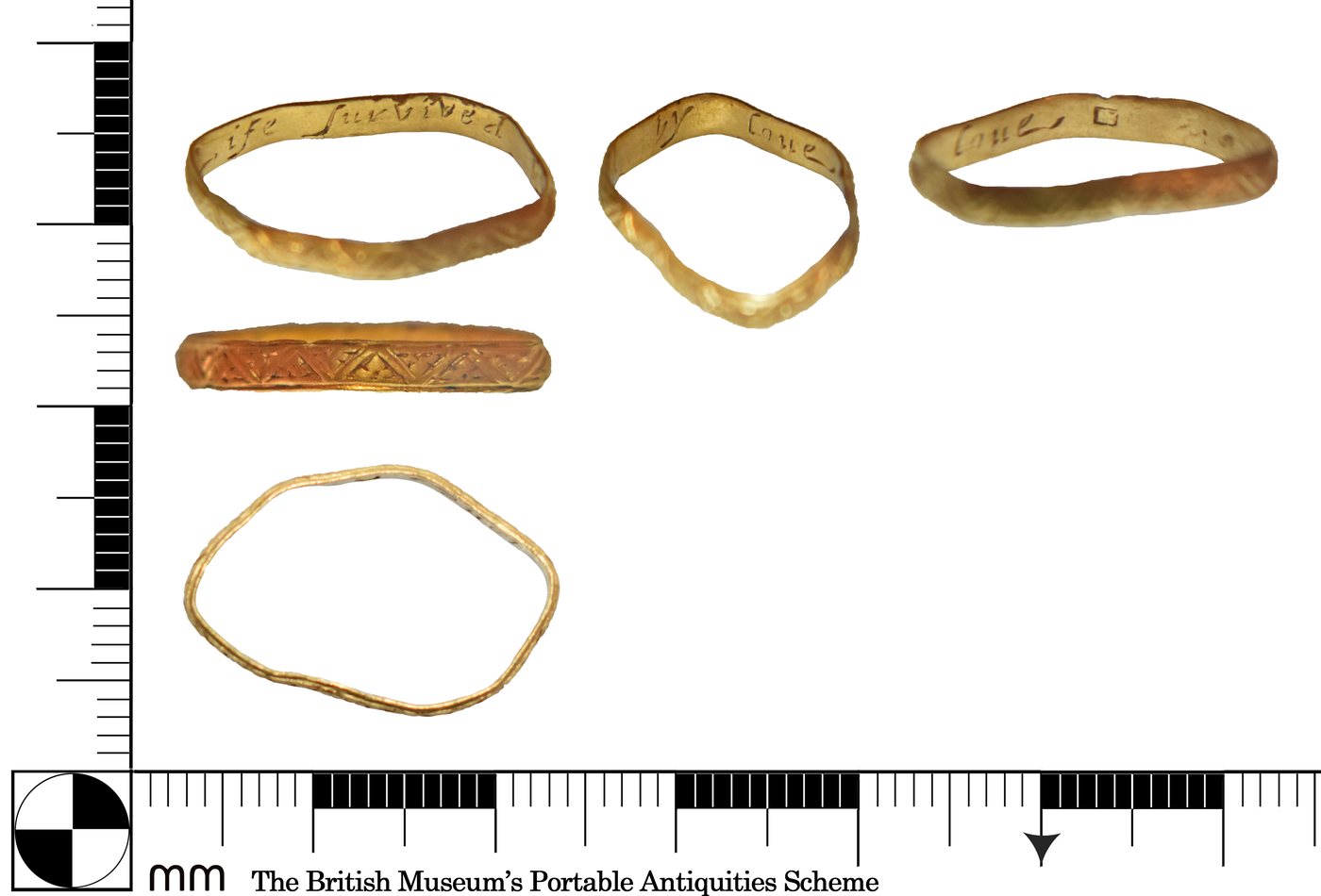
What a posy ring is, why its short engraved verse was often hidden on the inside of the band, and how the form declined from a common love token to a rarer survival by the Victorian era.

Mourning & Sentimental
What Is Hair Jewellery?
What hair jewellery is, how table-work and palette-work hairwork were made, the hairworkers and manuals behind the craft, and why it served sentimental as well as mourning purposes.

Symbols
Heart Jewellery Through History
The heart in jewellery from 1700 to 1950: crowned hearts, Scottish luckenbooth brooches, Sacred Heart pendants, padlock-and-key pendants, Claddagh rings and wartime sweetheart brooches.
Symbols
Snake Jewellery and Eternal Love
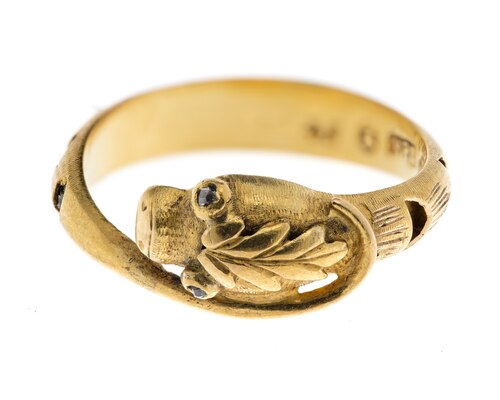
Why the snake, often shown biting its own tail, stood for eternal love in 19th-century jewellery - from Queen Victoria's 1839 emerald snake ring to Lalique's serpents.