Hand Jewellery Symbolism
The clasped-hand fede ring from Roman times onward, the Claddagh ring of Galway and the Richard Joyce tradition, and hand brooches and amulets in 19th-century jewellery.
The clasped hand is one of the oldest symbolic motifs in Western jewellery, used across many centuries to represent trust, faith and union - most famously in the fede ring, and later in its Irish variant, the Claddagh ring.
Roman Origins
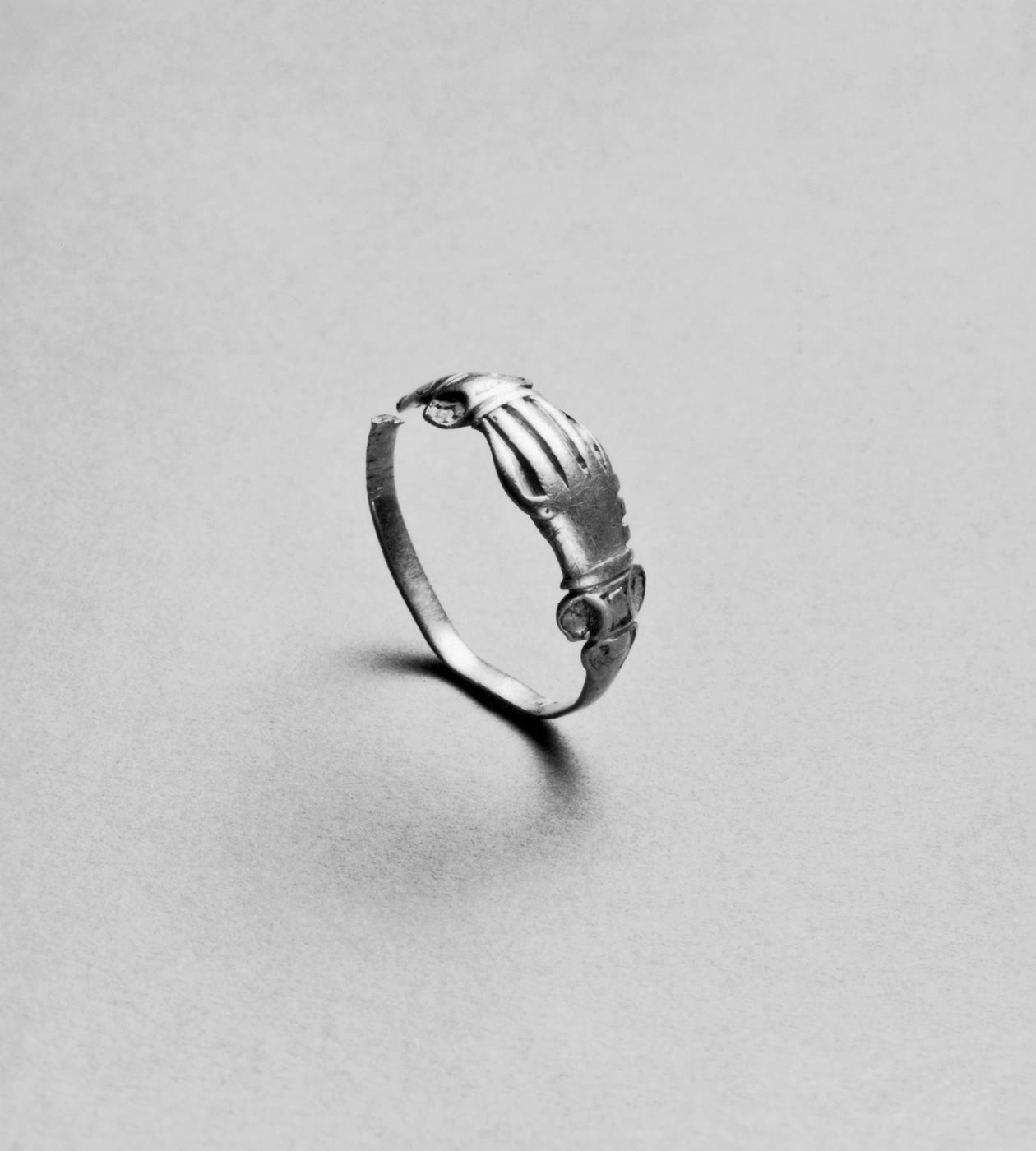
The image of two joined right hands goes back to Roman marriage. The dextrarum iunctio - the joining of the right hands of bride and groom - was a central moment of the ceremony, and it is carved on Roman marriage sarcophagi and stamped on coins as an emblem of concord. Gold, silver and bronze rings with a pair of clasped hands on the bezel were made in the Roman Empire from about the 2nd century AD, and survive in numbers in the British Museum and other collections of ancient jewellery.
The Fede Ring
The fede ring takes its name from the Italian phrase mani in fede, “hands joined in faith” or “in trust”, and shows two clasped right hands, usually worked so that the shank forms the arms leading to a small clasped-hand bezel, often with carved or engraved cuffs at the wrists. Fede rings were common in medieval Europe from around the 12th century, frequently inscribed with a motto or a religious formula, and were widely used as betrothal and wedding rings in England in the 14th and 15th centuries.
In the 16th and 17th centuries the fede was combined with the twin-hooped gimmel ring: when the two hoops of a fede-gimmel are slid together, the hands meet, and in some examples they close over a hidden heart. Fede rings continued to be made into the 18th and 19th centuries, sometimes with a heart between the hands or a small stone on the cuffs, alongside the posy ring, which carried its message in an inscribed verse rather than a pictorial device. The clasped hands read plainly without an inscription: a pledge of trust between two people, most often given at betrothal or marriage, but also used to mark friendship.
The Claddagh Ring
The best-known descendant of the fede tradition is the Claddagh ring, named after the Claddagh, the old fishing community just outside the walls of Galway in the west of Ireland. The Claddagh combines the fede’s clasped hands with a heart held between them and a crown set above the heart. Each element is traditionally read as standing for a virtue - the hands for friendship, the heart for love and the crown for loyalty - a reading repeated consistently in writing on the ring, though the ring’s earliest history is less firmly documented than its symbolism.
Tradition credits the design to Richard Joyce, a Galway man said to have been captured by Algerian corsairs in the late 17th century, enslaved in Algiers and trained there by a goldsmith. According to the story he was released around 1689, in an exchange of captives negotiated after William III came to the throne, returned to Galway, set up as a goldsmith and made the first Claddagh rings. Some early surviving rings carry a maker’s mark attributed to him, which is the main evidence connecting him to the form; the rest of the story, including the details of his captivity, comes from later tradition and should be presented as such. Other Galway goldsmiths of the 18th century are also recorded as making the ring.
Through the 18th and early 19th centuries the Claddagh was a local wedding ring, handed down in families in the Claddagh and the west of Ireland. The name “Claddagh ring” and the wider fashion for it belong mostly to the mid- and late 19th century, when Galway and Dublin jewellers sold it to visitors and to a market interested in Irish identity, and when Irish emigration carried it to Britain, the United States and Australia.
Worn Convention
The Claddagh ring is also associated with a convention of wear said to signal the wearer’s romantic status - for example, worn on the right hand with the point of the heart towards the fingertip to show the wearer is unattached, and turned inward, or moved to the left hand, to show an engagement or marriage. This convention is widely repeated in popular writing, but it is a popular custom of uncertain age rather than a documented historical rule, and it should not be presented as a strict or universally observed code.
Hands Elsewhere in Sentimental Jewellery
A single hand, or a pair of hands, appears elsewhere in Georgian and Victorian jewellery as a more general symbol of friendship and connection. A brooch showing two hands clasped together, without a heart or crown, could serve as a friendship token between any two people rather than only a courting couple. A single hand offering a flower, a wreath or a heart was a common Victorian gift or remembrance motif, the hand standing for the act of giving. Carved hand brooches of this kind were made in Whitby jet, ivory and coral in the middle decades of the 19th century; a jet hand holding a wreath or a spray of flowers was a typical mourning brooch.
Protective Hands
A different hand tradition is protective rather than sentimental. The figa - a clenched fist with the thumb pushed between the first two fingers - was worn in Italy, Spain and Portugal as an amulet against the evil eye. In Spain and Portugal it was carved in jet (azabache); in southern Italy it was carved in red coral at Naples and Torre del Greco, along with the mano cornuta, the hand with index and little finger extended. Nineteenth-century visitors to Naples brought coral hands home as souvenirs, and they appear in British and American jewellery of the period - see coral in historical jewellery. They should not be confused with the clasped hands of the fede.
Materials and Construction
Fede and Claddagh rings were made predominantly in gold, ranging from thinly modelled hands in modest pieces to carefully worked examples with articulated fingers, cuffs and, in the Claddagh’s case, a well-defined crown and heart. Broader hand-motif brooches and pendants were made across the full range of materials, including silver, gilt base metal, jet and coral, sometimes with engraved detail or a small gem standing in for an object held in the hand.
Related Motifs
The Claddagh’s heart connects it to heart jewellery, including the Scottish luckenbooth brooch’s crowned-heart form. Both the Claddagh and the luckenbooth combine a heart with a crown, but they belong to different regional traditions and should not be conflated. Betrothal rings more generally are covered in the history of engagement rings and history of wedding rings.
Reading Hand Motifs Today
A ring showing two clasped hands alone is consistent with the fede tradition; the addition of a heart and crown points to the Claddagh and its Irish association. A single or paired hand in a brooch, especially holding a wreath or flowers, more likely reflects friendship or remembrance than betrothal. A clenched fist or horned hand in coral or jet is a protective amulet. As with any symbolic motif, an inscription or the piece’s documented history is the most reliable guide where it survives.
Read next

Eras
Georgian Jewellery
A guide to Georgian jewellery (1714-1837): Brazilian diamonds, closed-back foiled settings, rococo and Neoclassical styles, paste, cut steel and pinchbeck, sentimental miniatures, girandoles, rivières and Sévigné bows.

Eras
Victorian Jewellery
A guide to Victorian jewellery (1837-1901): the Romantic, Grand and Aesthetic periods, the Great Exhibition, gold rushes and 9ct gold, mourning and Whitby jet, archaeological revival, Scottish jewellery, and how to recognise each phase.
Jewellery
What Is a Posy Ring?
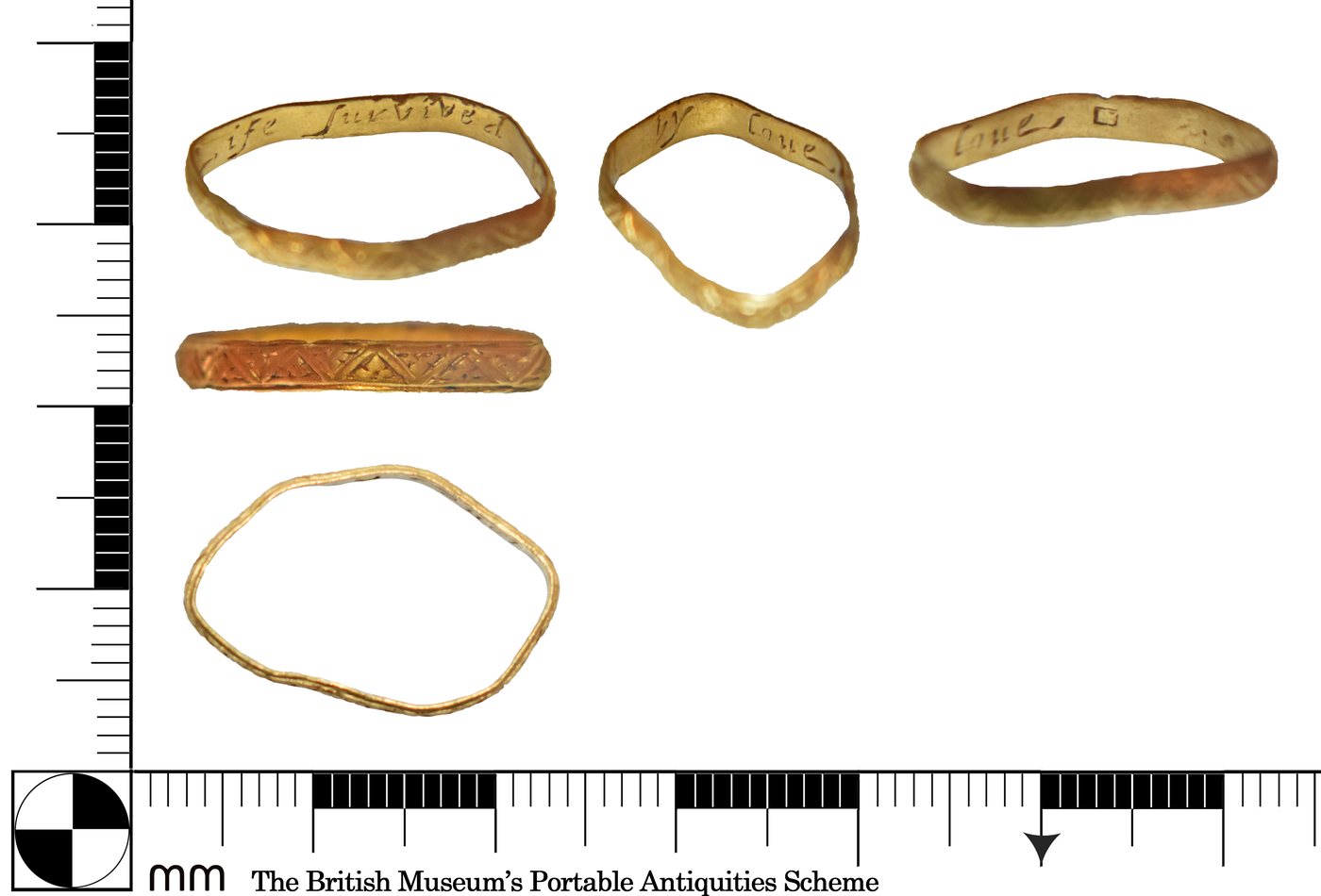
What a posy ring is, why its short engraved verse was often hidden on the inside of the band, and how the form declined from a common love token to a rarer survival by the Victorian era.
Mourning & Sentimental
History of Engagement Rings
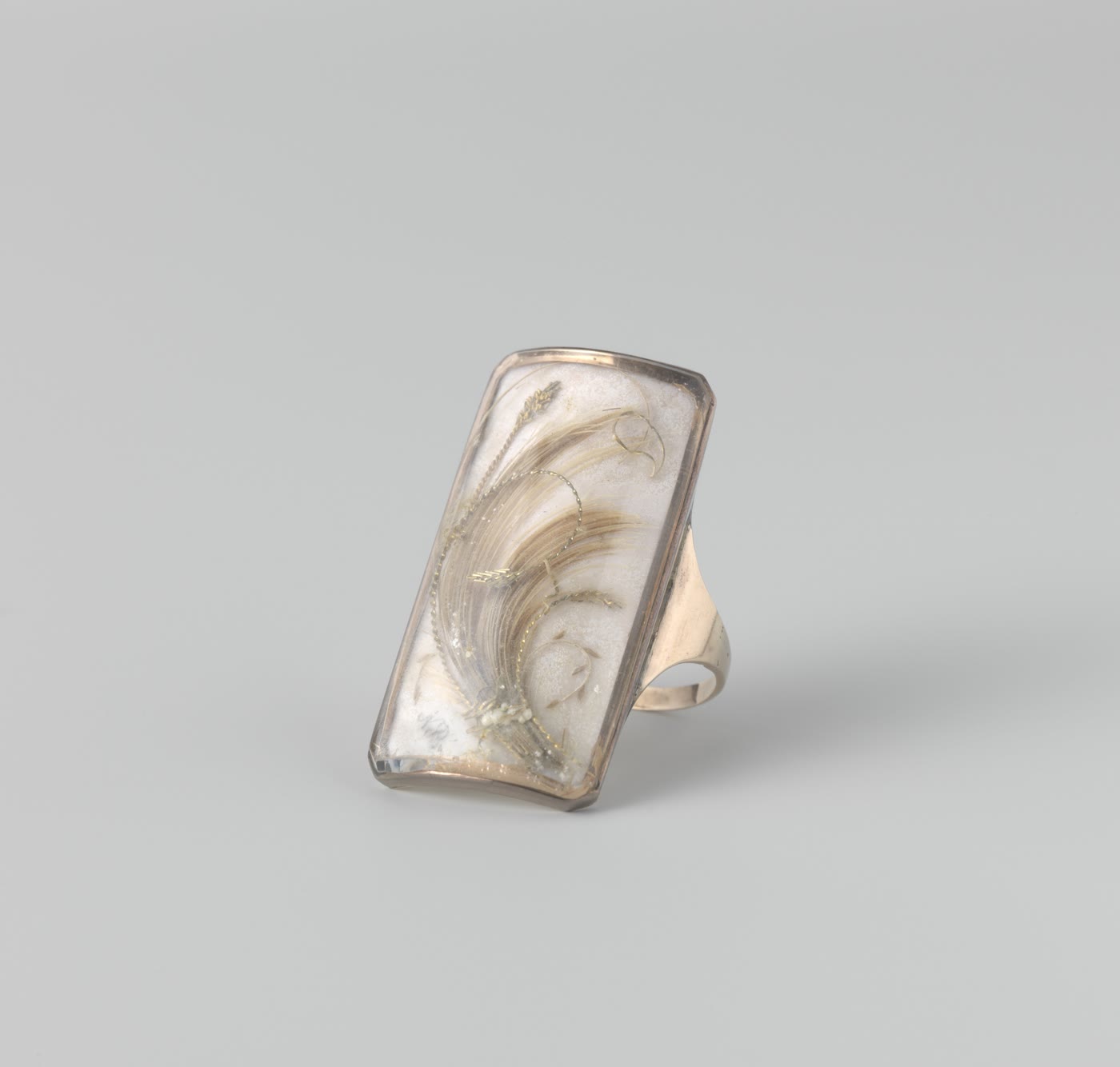
How the engagement ring moved from posy and gimmel rings through Georgian regard rings to the diamond solitaire - Kimberley, the Tiffany setting and De Beers' 1947 slogan.
Mourning & Sentimental
History of Wedding Rings
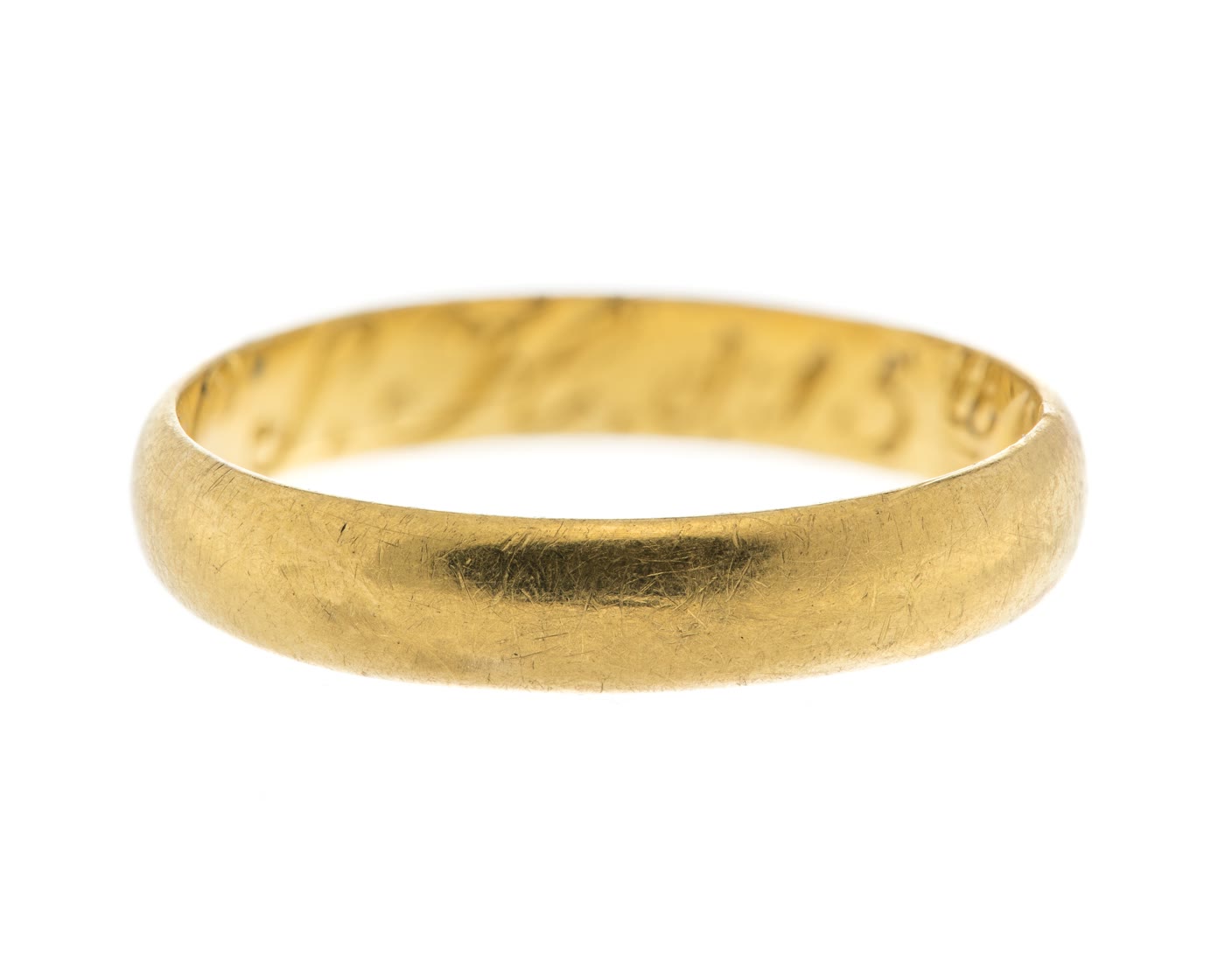
The plain gold band as the Western wedding ring: the Book of Common Prayer, the vena amoris tradition, 22ct Victorian bands, men's rings and wartime Utility rings in Britain.

Symbols
Heart Jewellery Through History
The heart in jewellery from 1700 to 1950: crowned hearts, Scottish luckenbooth brooches, Sacred Heart pendants, padlock-and-key pendants, Claddagh rings and wartime sweetheart brooches.