History of Engagement Rings
How the engagement ring moved from posy and gimmel rings through Georgian regard rings to the diamond solitaire - Kimberley, the Tiffany setting and De Beers' 1947 slogan.
The engagement ring as understood today - a ring given specifically to mark a promise of marriage, most often set with a diamond - is the end point of a much longer and more varied history of betrothal rings, sentimental rings and gemstone symbolism.
Early Betrothal Rings
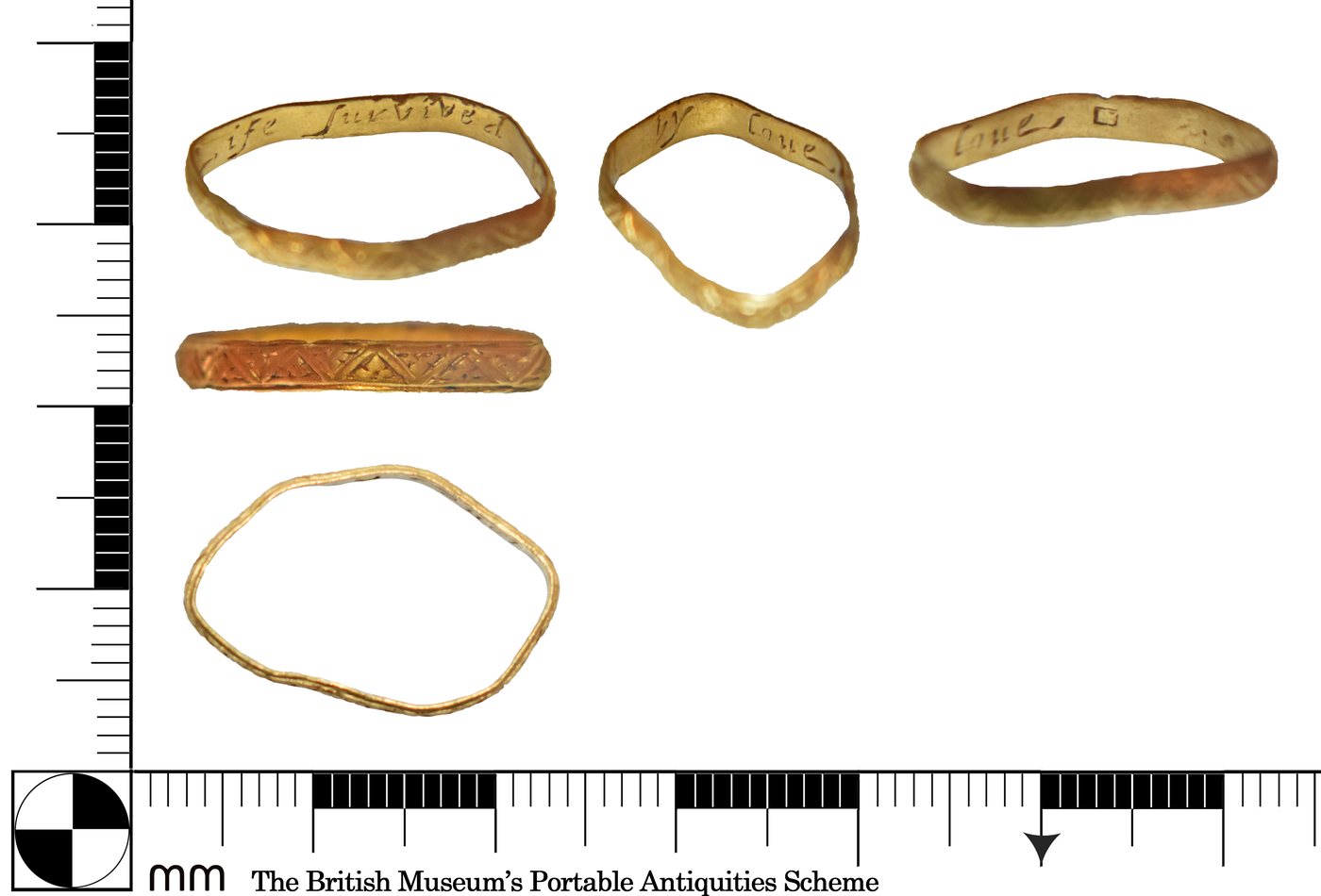
Long before the diamond solitaire became the default choice, betrothal was marked with simpler ring forms. The posy ring - a plain gold band engraved with a short verse or motto, usually on the inside - was a common betrothal and love token from the medieval period through the 18th century, prized for its private inscription rather than any gemstone display. Fede rings, with two clasped hands on the bezel, were another long-lived betrothal form.
The diamond ring had a precedent among the very rich. The ring that Archduke Maximilian of Austria gave Mary of Burgundy on their betrothal in 1477 is often cited as the earliest recorded diamond betrothal ring; contemporary accounts mention a diamond ring, though no surviving ring can be identified with it. Diamonds of the 15th to 17th centuries were point-cut or table-cut and dark by later standards, valued for their hardness - a symbol of constancy - as much as for sparkle.
The gimmel ring, made of two or three interlocking hoops that close into a single band, was fashionable as a betrothal and wedding ring in the 16th and 17th centuries. A tradition holds that the hoops were divided between the couple at the betrothal and rejoined at the wedding, though direct evidence for that practice is limited. See History of Wedding Rings for how the form also served as a combined betrothal-and-wedding ring.
Georgian Rings
The Georgian period produced its own betrothal and courtship rings, built around symbolism and colour rather than a single dominant stone. The regard ring set a sequence of gemstones - typically ruby, emerald, garnet, amethyst, ruby and diamond - whose first letters spelled out “REGARD”. The same principle extended to other acrostic jewellery, where gemstone sequences spelled other sentimental words.
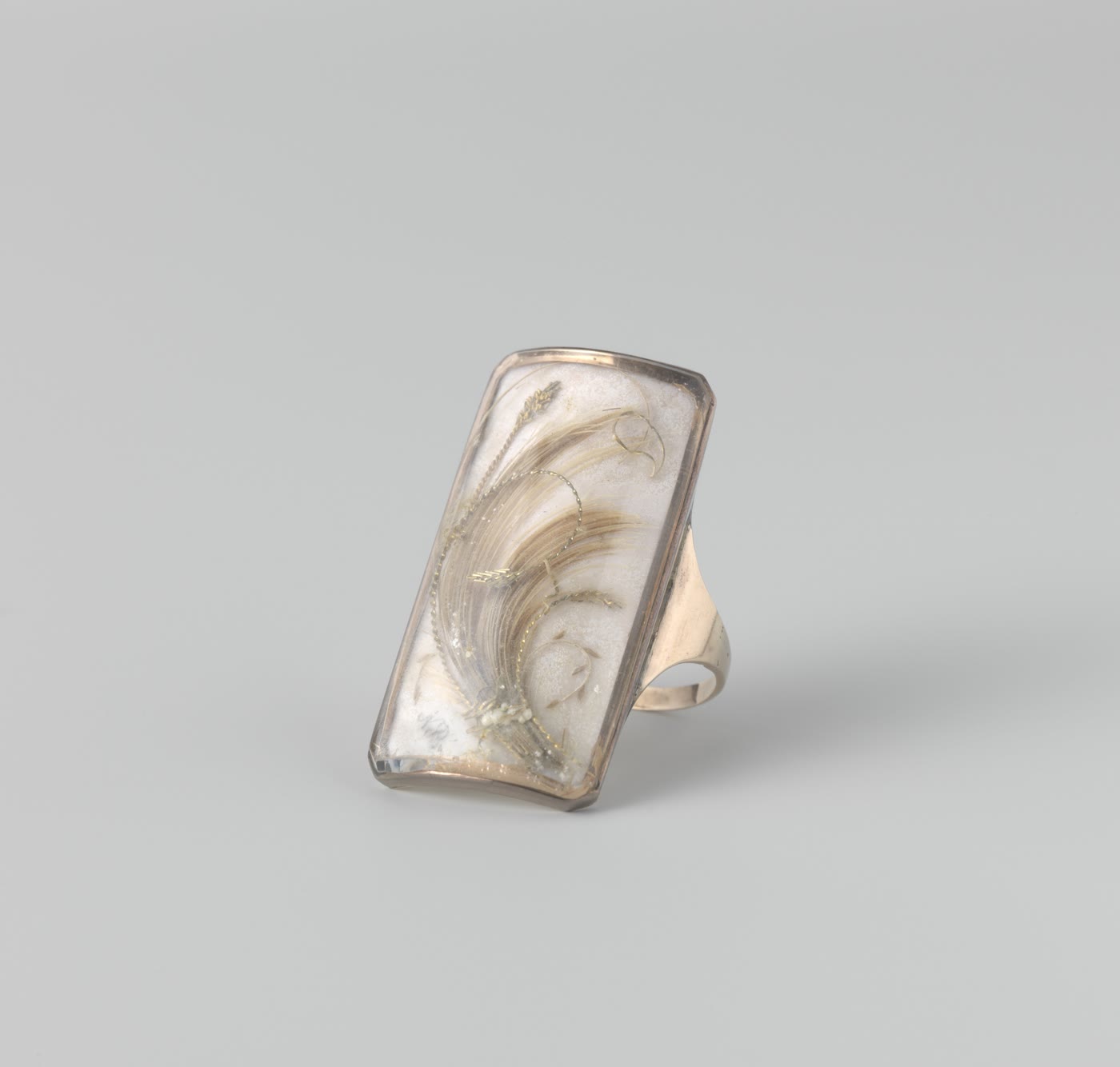
Other common 18th-century forms include cluster rings of rose-cut diamonds in closed-back silver settings, giardinetti rings with small stones arranged as a basket of flowers (fashionable around the mid-century), and the long navette or marquise-shaped bezels of the 1770s and 1780s, often with a blue enamel or glass ground. Diamonds, where used, were typically one element among several rather than a single large stone.
Victorian Rings
When Prince Albert proposed to Queen Victoria in 1839, he gave her a gold ring in the form of a snake set with an emerald, her birthstone. The choice is typical of the early Victorian engagement ring: symbolic (the snake for eternity), coloured, and not centred on a diamond. Through the mid-century, half-hoop rings set with a row of three or five stones - diamonds, or diamonds alternating with rubies, sapphires, turquoise or pearls - became the standard form, alongside cluster rings and gypsy-set rings with stones sunk flush into a heavy band.
The Rise of the Diamond Solitaire
The shift toward a single diamond as the expected engagement-ring stone unfolded gradually. A major factor was supply. Diamonds were found in South Africa in 1867, and the mines at Kimberley, opened from 1871, raised world production far above anything known from India or Brazil. In 1888 Cecil Rhodes’s De Beers Consolidated Mines brought most of the Kimberley output under a single company, which came to control the supply of rough diamonds for much of the 20th century.
Setting design changed at the same time. In 1886 Tiffany & Co. introduced a six-prong mount that raised a single brilliant-cut diamond above the band, letting light into the stone from the sides; the “Tiffany setting” became a model for solitaire rings that has been copied ever since. In the Edwardian period, platinum allowed claw and millegrain settings fine enough to almost disappear, and three-stone and five-stone diamond rings, solitaires and marquise-shaped clusters were all popular engagement choices. Marcel Tolkowsky’s 1919 calculations for the modern round brilliant, and the cutting improvements that followed, made diamonds brighter still; see How to Date a Diamond by Its Cut.
Advertising in the 20th Century
Diamond sales fell sharply during the Depression of the 1930s. In 1938 De Beers engaged the American advertising agency N. W. Ayer & Son to promote diamond engagement rings in the United States, using magazine advertisements and the publicity value of film stars’ rings. In 1947 an Ayer copywriter, Frances Gerety, wrote the slogan “A Diamond Is Forever”, which De Beers used from 1948 and for decades afterwards. The campaign is one of several causes rather than the single cause of the diamond solitaire’s dominance - increased supply, better cutting and changing fashion had been moving in the same direction since the 1880s - but it did much to make the diamond the expected stone in the United States, and later in Britain and elsewhere.
What This Means for Older Rings
Because the diamond solitaire convention is comparatively recent, engagement rings from the Georgian and much of the Victorian period are far more varied than modern expectations might suggest - coloured gemstone clusters, symbolic stone sequences, half-hoops and plain inscribed bands were all normal choices for a ring marking a promise of marriage, and the absence of a large central diamond in an older ring is not unusual or a sign that it served some other purpose.
Frequently Asked Questions
Did Georgians and early Victorians use diamonds in engagement rings at all? Yes, but typically as one stone within a cluster, half-hoop or symbolic sequence rather than as a single large solitaire, which only became the dominant convention later.
Is the gimmel ring the same as a wedding ring? Not exactly - it could serve as either a betrothal ring, a wedding ring, or both in sequence, depending on regional and period custom; see History of Wedding Rings for more detail.
Read next
Compare
Engagement Ring vs Wedding Ring: What's the Difference?
The direct historical comparison between the engagement ring, which varied widely by era, and the wedding ring, which stayed a plain gold band for most of the 1700-1950 period.

Eras
Georgian Jewellery
A guide to Georgian jewellery (1714-1837): Brazilian diamonds, closed-back foiled settings, rococo and Neoclassical styles, paste, cut steel and pinchbeck, sentimental miniatures, girandoles, rivières and Sévigné bows.

Gemstones
Diamonds in Jewellery History
From Indian and Brazilian diamonds to the 1867 South African discoveries and Kimberley, famous stones such as the Regent, Hope and Cullinan, and how diamond cutting and setting changed 1700-1950.
Jewellery
What Is a Posy Ring?
What a posy ring is, why its short engraved verse was often hidden on the inside of the band, and how the form declined from a common love token to a rarer survival by the Victorian era.
Jewellery
What Is a Regard Ring?
What a regard ring is, how its row of gemstones spells out the word REGARD through their first letters, and how it relates to the wider acrostic jewellery tradition.
Mourning & Sentimental
What Is Acrostic Jewellery?
What acrostic jewellery is, how REGARD and DEAREST rings spell words in gemstones, the Paris jewellers who popularised it, and why it is sentimental rather than mourning jewellery.