What Is a Regard Ring?
What a regard ring is, how its row of gemstones spells out the word REGARD through their first letters, and how it relates to the wider acrostic jewellery tradition.
A regard ring is a ring set with a row of gemstones chosen so that the first letter of each stone’s name spells out “REGARD” - Ruby, Emerald, Garnet, Amethyst, Ruby, Diamond - a specific and well-documented example of the wider Georgian tradition of acrostic jewellery.
What Is a Regard Ring?
The regard ring belongs to the broader category of acrostic jewellery, which used the first letters of a sequence of gemstones to spell a word or name hidden in plain sight. “REGARD” is among the most recognisable and consistently documented examples of that convention, given its directness as a romantic sentiment, and this page focuses specifically on the “REGARD” ring as its own well-established named form, rather than repeating the fuller explanation of the acrostic convention generally, including other words such as “DEAREST,” which is covered on the main acrostic jewellery page.
How to Recognise It
Look for a ring set with a row of six small stones across its face, in this specific order: ruby, emerald, garnet, amethyst, ruby, diamond. The stones are typically small and closely set, prioritising the correct sequence and legibility of the acrostic over the size or individual brilliance of any one stone; a ring with stones in a different order, or missing one of the six, is not a genuine regard ring regardless of how similar it looks at a glance.
When Was It Worn?
Regard rings were worn as romantic and betrothal tokens, given between couples as an expression of affection, with the form’s popularity concentrated in the late Georgian and early Victorian periods before declining as sentimental jewellery fashions shifted.
Origins
The regard ring emerged from the broader 18th-century fascination with jewellery that concealed a personal message - whether through engraved text, as in the posy-ring, or through the deliberate choice and ordering of gemstones, as in acrostic jewellery generally. “REGARD” stands out among acrostic words for spelling a fitting sentiment using stones that were all readily available to Georgian jewellers, which likely contributed to its enduring popularity relative to some other acrostic words.
How It Changed Over Time
The regard ring was most fashionable in the first half of the 19th century, produced in gold rings set with a straightforward row of the six required stones. As with acrostic jewellery generally, the form’s popularity as an everyday romantic token declined through the Victorian period, giving way to other forms of sentimental jewellery, though the underlying acrostic principle continued to appear occasionally in later 19th-century pieces.
Materials
Gold was the standard band material. The six stones - ruby, emerald, garnet, amethyst, ruby and diamond, in that order - were chosen specifically for the letters they supplied rather than for uniform value or rarity, meaning a genuine regard ring could combine notably different stone qualities and sizes within a single small setting.
Construction
A regard ring is built as a gold band with a row of six small stones set across the face of the ring, most often in simple closed-back collet settings typical of Georgian stone-setting, arranged in the fixed order needed to spell the word correctly when read from left to right.
How It Was Worn
Worn on the finger as a romantic or betrothal token, functioning in daily wear like any other ring while carrying its sentimental message in a form legible only to those who recognised the acrostic convention.
Who Wore It?
Regard rings were exchanged between couples as tokens of affection, worn by both men and women depending on who received the gift, in keeping with the wider Georgian custom of sentimental jewellery given between partners.
Similar Jewellery
The regard ring is closely related to the posy-ring, which carries a hidden romantic message through an engraved verse rather than a sequence of gemstones, and to other acrostic jewellery using different words; confirming the exact stone sequence is the clearest way to identify a genuine regard ring rather than another acrostic piece.
Examples in Museum Collections
No museum record of an actual REGARD ring could be confirmed online, but the same acrostic appears on other jewels whose catalogue entries spell out the stones:
- Heart-shaped padlock locket, c.1840. Victoria and Albert Museum, London, M.6-1986. Gold set with turquoise and with a ruby, emerald, garnet, amethyst, ruby and diamond spelling REGARD. The museum’s record notes that this arrangement of stones “was also popular in ‘regard’ rings”.
- Two-colour gold locket, English, c.1830. Victoria and Albert Museum, London, M.20-1983. Set with ruby, emerald, garnet, amethyst, ruby and diamond spelling REGARD; the record describes the “language of stones” behind the arrangement.
See What Is Acrostic Jewellery? for other words spelled in stones.
Read next
Compare
Posy Ring vs Regard Ring: What's the Difference?
How the Georgian posy ring's engraved verse differs from the regard ring's acrostic sequence of gemstones, and why both count as hidden-message jewellery.

Eras
Georgian Jewellery
A guide to Georgian jewellery (1714-1837): Brazilian diamonds, closed-back foiled settings, rococo and Neoclassical styles, paste, cut steel and pinchbeck, sentimental miniatures, girandoles, rivières and Sévigné bows.
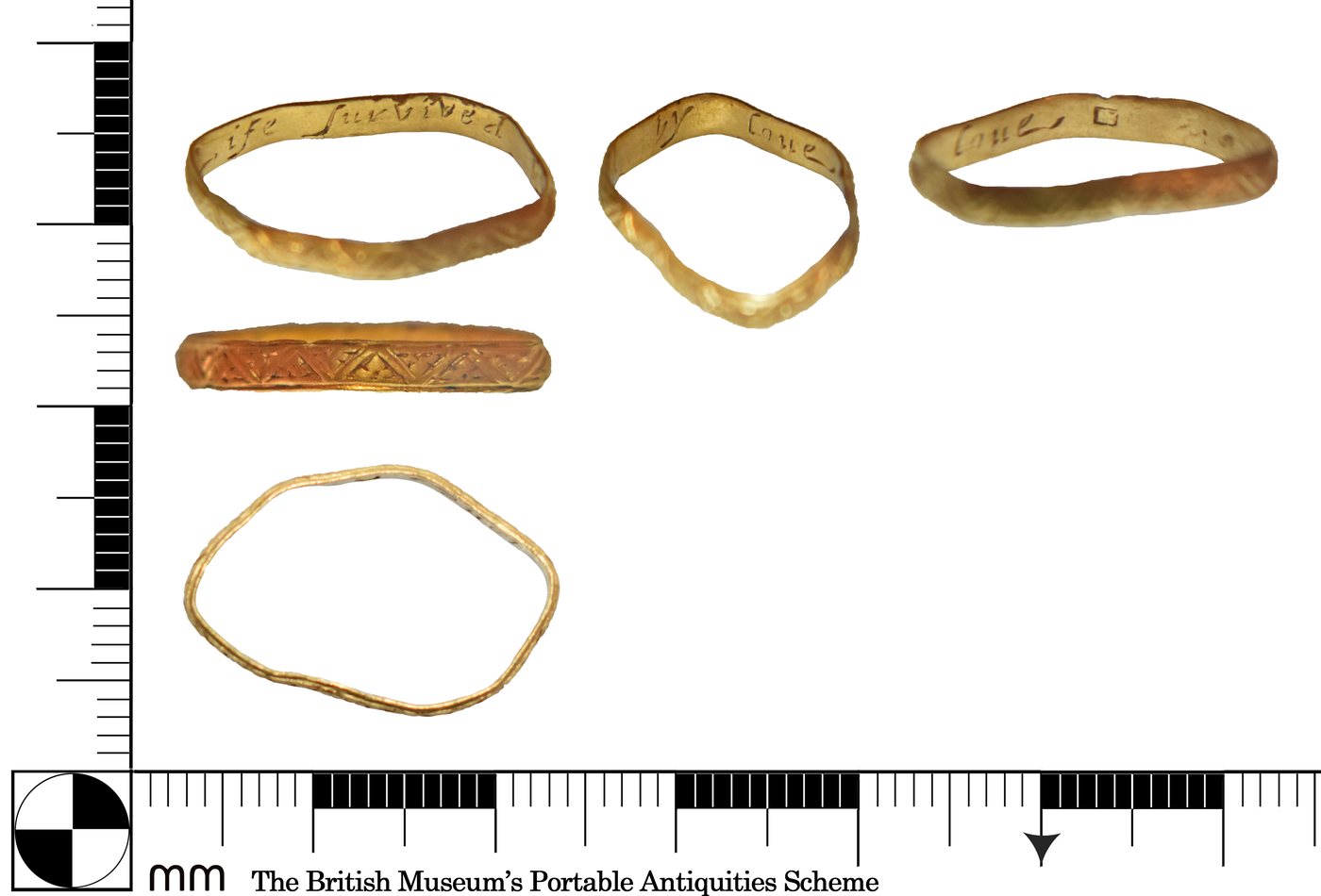
Jewellery
What Is a Posy Ring?
What a posy ring is, why its short engraved verse was often hidden on the inside of the band, and how the form declined from a common love token to a rarer survival by the Victorian era.
Mourning & Sentimental
What Is Acrostic Jewellery?
What acrostic jewellery is, how REGARD and DEAREST rings spell words in gemstones, the Paris jewellers who popularised it, and why it is sentimental rather than mourning jewellery.
Mourning & Sentimental
History of Engagement Rings
How the engagement ring moved from posy and gimmel rings through Georgian regard rings to the diamond solitaire - Kimberley, the Tiffany setting and De Beers' 1947 slogan.

Symbols
Heart Jewellery Through History
The heart in jewellery from 1700 to 1950: crowned hearts, Scottish luckenbooth brooches, Sacred Heart pendants, padlock-and-key pendants, Claddagh rings and wartime sweetheart brooches.