Citrine in Jewellery History
Citrine from Georgian seals and Scottish 'cairngorm' brooches to bold 1930s and 1940s Retro gold, its old trade names as 'topaz', and its long relationship to heat-treated amethyst.
Citrine is a warm yellow-to-amber variety of quartz, and its relative abundance compared with the traditional “precious” coloured gemstones made it a practical and popular choice wherever fashion called for a large, richly coloured stone at accessible cost. Its name comes from the French citron, lemon.
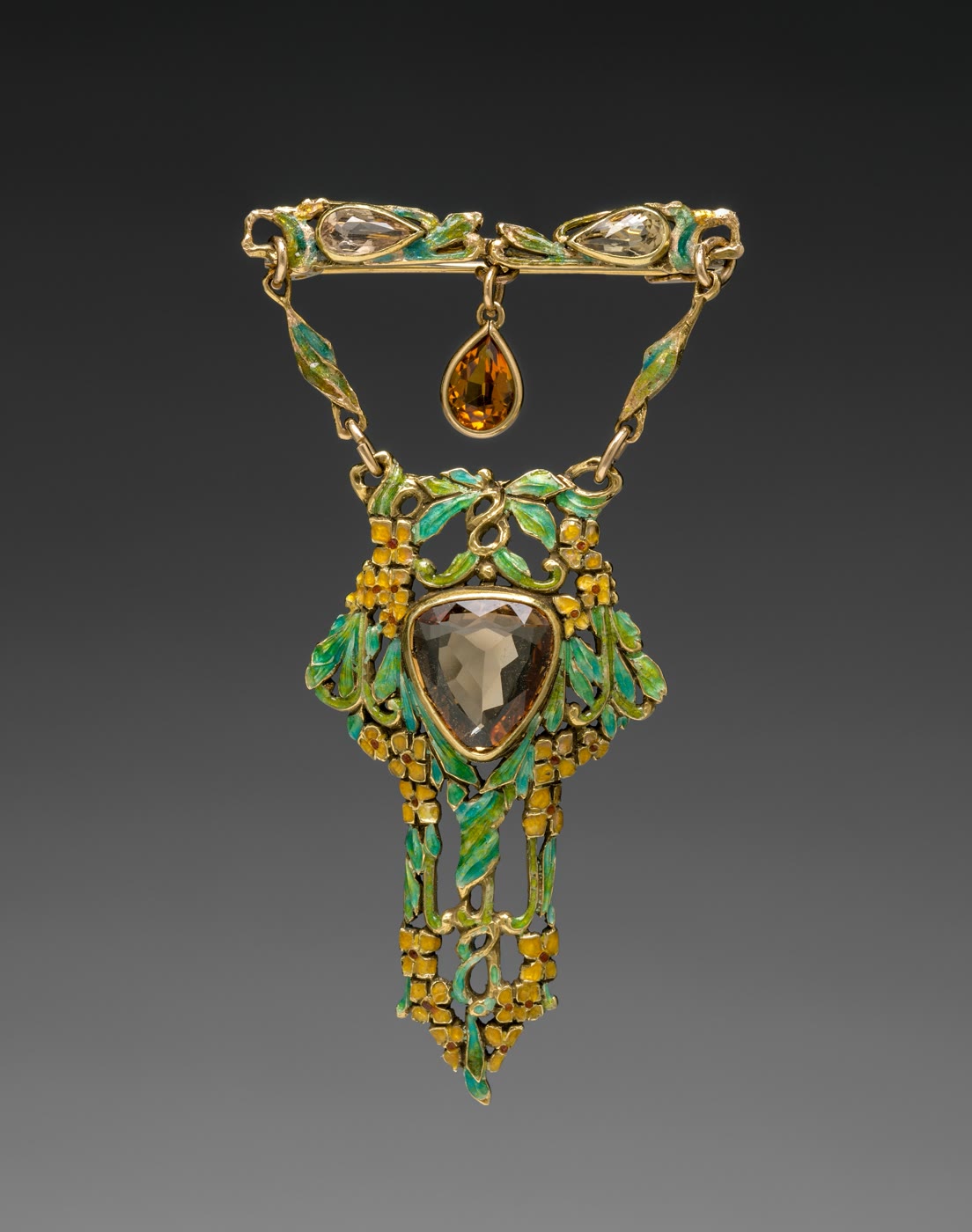
Colour and Composition
Citrine belongs to the quartz family, the same broad mineral group that includes amethyst, and its colour ranges from a pale straw yellow through to a deep, warm amber or golden-brown. Because quartz occurs abundantly and in large, clean crystals, citrine has historically been available in bigger sizes and at a lower cost than gemstones such as topaz, garnet or sapphire in comparable warm tones - a combination of colour and affordability that shaped how it was used across several periods of jewellery history.
Naturally yellow quartz is comparatively uncommon; Brazil, Madagascar and the Ural Mountains of Russia are among the recorded sources. Most citrine in the trade since the 19th century has been made by heating amethyst or smoky quartz (see below).
A Stone Sold Under Other Names
For most of its history citrine was not sold as citrine. Jewellers and merchants called yellow and brown quartz “topaz”, qualified by a place name that often had little to do with its origin: “Madeira topaz” for deep reddish-brown stones, “Spanish topaz”, “Bahia topaz” and others. Gemmologists from the late 19th century onward pushed for the name citrine to be used instead, but the topaz names lingered in the trade well into the 20th century. This is why period inventories and old jewellers’ labels describing a stone as “topaz” cannot be taken at face value; see Topaz in Historical Jewellery for the other side of this overlap.
Earlier Use: Seals, Parures and Scottish Jewellery
Citrine was known and worn well before the 20th century. In Georgian and Regency jewellery it was a common stone for seals: quartz takes a crisp engraved design, and many gold fob seals of c.1780-1830 have a citrine matrix, alongside carnelian, bloodstone and amethyst. One in the Victoria and Albert Museum, made c.1815-20, has a swivelling three-sided stone catalogued as citrine, engraved in reverse with Nelson’s Trafalgar signal “England expects…”. Citrine also appears in the gold cannetille parures of the 1820s and 1830s alongside topaz and amethyst.
In Victorian Britain, yellow and brown quartz had a separate life in Scottish jewellery, where it was called “cairngorm” after the Cairngorm mountains in which smoky quartz was found. Large faceted cairngorms were set in silver plaid brooches, kilt pins and the hilts of dirks and sgian-dubhs, a fashion boosted after Queen Victoria and Prince Albert took the lease of Balmoral in 1848, buying it in 1852. Native Scottish supply was small, and many stones sold as cairngorms by the later 19th century are thought to have been imported Brazilian quartz, some of it heated.
Citrine and the Retro Period
Citrine found its most distinctive period of fashionability in the bold, large-scale jewellery of the 1930s and 1940s, where large citrine stones were a recurring presence in substantial cocktail rings and sculptural gold brooches. As Art Deco’s tighter geometric style relaxed into the rounder, more three-dimensional forms of the Retro period, jewellery design increasingly called for a single large, warm-coloured stone able to anchor a substantial setting - and citrine’s availability in large, eye-clean, richly saturated crystals suited that requirement especially well.
Its warm amber-gold tone also complemented the rose and yellow gold mounts that dominated fine jewellery through the 1940s in particular, when wartime platinum restrictions pushed jewellers toward gold settings. Paris houses and the New York jewellers who flourished during the war years used citrine in this way in fine gold, while American costume jewellery makers copied the look in gilt sterling silver with yellow glass.
Typical Cutting Styles
Citrine intended as a substantial single stone was most often cut in step-cuts, emerald-cuts and large faceted cushion or oval forms, styles chosen to display the stone’s colour and clarity across a broad surface rather than to maximise brilliance through small, densely faceted cutting. Much of this cutting was done at Idar-Oberstein in Germany, the centre of the quartz-cutting trade since the 19th century, and later also in Brazil itself.
Typical Settings
Citrine of the Retro period is found overwhelmingly in gold - yellow and rose gold especially - set as a large principal stone in cocktail rings, brooches and, less commonly, pendants, often within the sculptural, scrolled or ribbon-like mounts typical of Retro design. It appears far less frequently as a small accent stone, since much of its appeal lay in the visual impact of one substantial, clean stone.
Citrine and Heat-Treated Amethyst
Citrine and amethyst are both varieties of quartz, and heating amethyst turns it yellow, orange or reddish-brown. The gem trade has produced citrine this way since at least the 19th century, when the cutting workshops of Idar-Oberstein heated Brazilian and Uruguayan amethyst to supply the demand for “topaz” coloured stones, and the practice continues today. This is a general point of historical and market context about the material rather than a method for determining how any individual stone was produced - heat-treated and naturally occurring citrine cannot reliably be distinguished by eye, and confirming the origin of a specific stone requires laboratory gemmological testing.
How to Recognise It
A warm yellow to amber-brown stone, generally clean and often cut as a large single feature in a bold gold setting, is broadly consistent with citrine as described here, though other yellow-brown gemstones - topaz in particular - can resemble it closely enough that visual assessment alone is not a reliable means of identification. Confirming a specific stone’s identity requires examination by a qualified gemmologist.
Frequently Asked Questions
Is citrine the same mineral as amethyst? They are both varieties of quartz, and citrine has long been produced commercially by heat-treating amethyst, though citrine also occurs as a naturally yellow variety of quartz in its own right - the two cannot generally be told apart by eye once cut.
Why was citrine especially associated with 1930s and 1940s jewellery? Its availability in large, clean, warmly coloured crystals suited the bold, generously scaled gold settings fashionable in that period particularly well, at a time when a single large coloured stone was often the visual centre of a piece.
Is a “cairngorm” the same as citrine? Strictly, a cairngorm is smoky quartz from the Scottish Highlands, but in the jewellery trade the name was applied loosely to yellow and brown quartz in general, including citrine.
Read next
Compare
Natural vs Synthetic Gemstones: What's the Difference?
The conceptual difference between natural, synthetic and simulant gemstones, and the historical turning point that made synthetic corundum widely available.
Eras
Jewellery in the 1930s
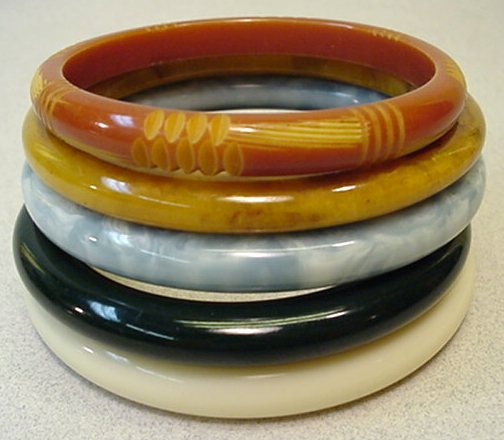
A guide to 1930s jewellery: all-white diamond and platinum, dress clips and double clips, Van Cleef & Arpels' Mystery Set, Belperron and Boivin, Chanel and Schiaparelli, Hollywood, Bakelite and marcasite, and the move towards Retro.

Eras
Jewellery in the 1940s
A guide to 1940s jewellery: wartime platinum bans and the rose-gold Retro style, Cartier's caged bird, Van Cleef & Arpels and Verdura in New York, American costume jewellery in sterling and Lucite, British Utility rings, sweetheart badges and the New Look.

Gemstones
Amethyst in Historical Jewellery
How amethyst went from a costly stone, prized in its deep 'Siberian' colour from the Urals, to an affordable one after Brazilian supply grew, and its royal, ecclesiastical and mourning uses.
Gemstones
Topaz in Historical Jewellery
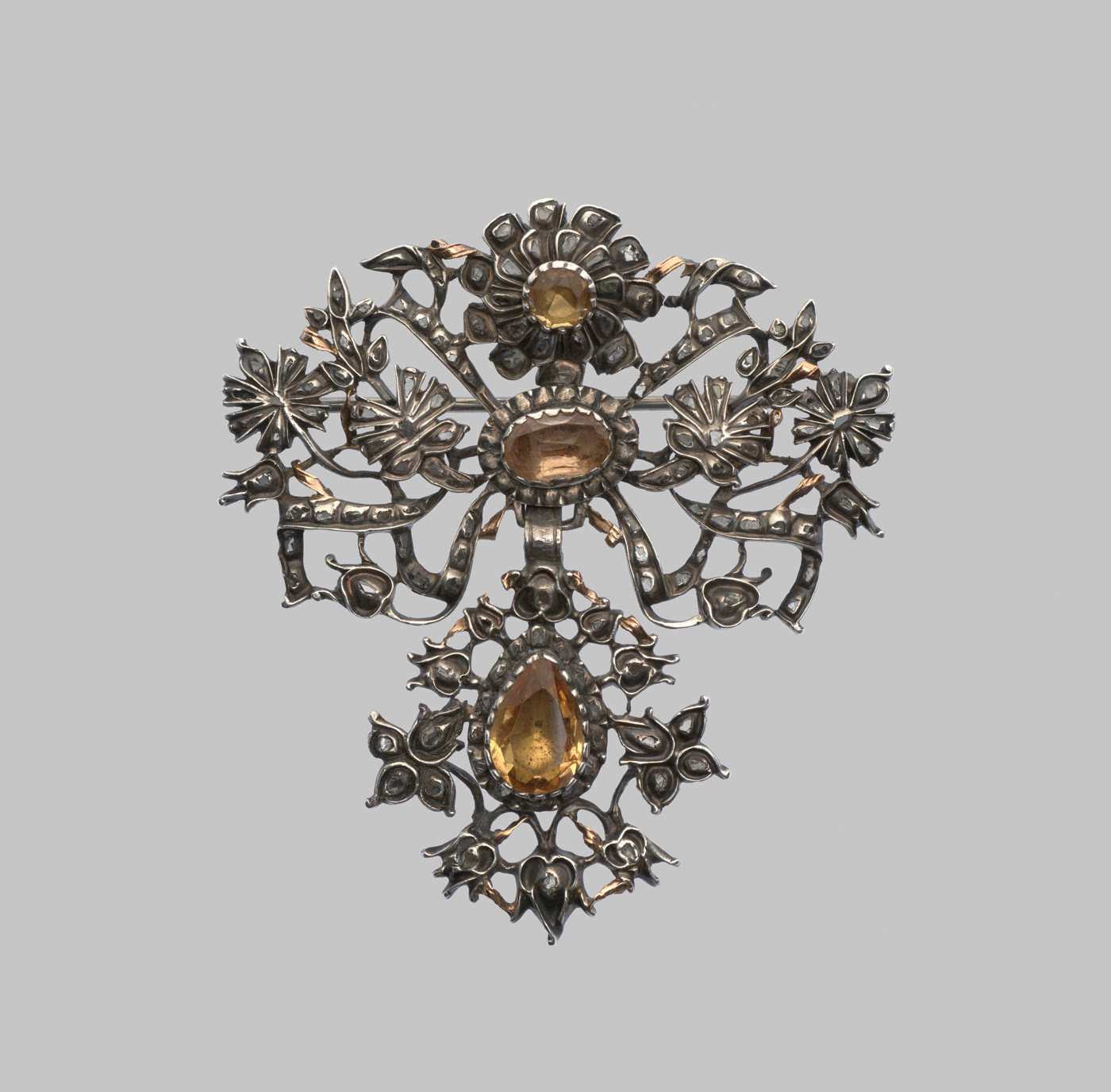
Golden 'precious' topaz from Ouro Preto in Brazil, Saxon and Russian topaz, pink 'pinked' and colourless stones, Georgian topaz parures, the loose old use of the name, and modern treated blue topaz.
Materials
Gold in Historical Jewellery
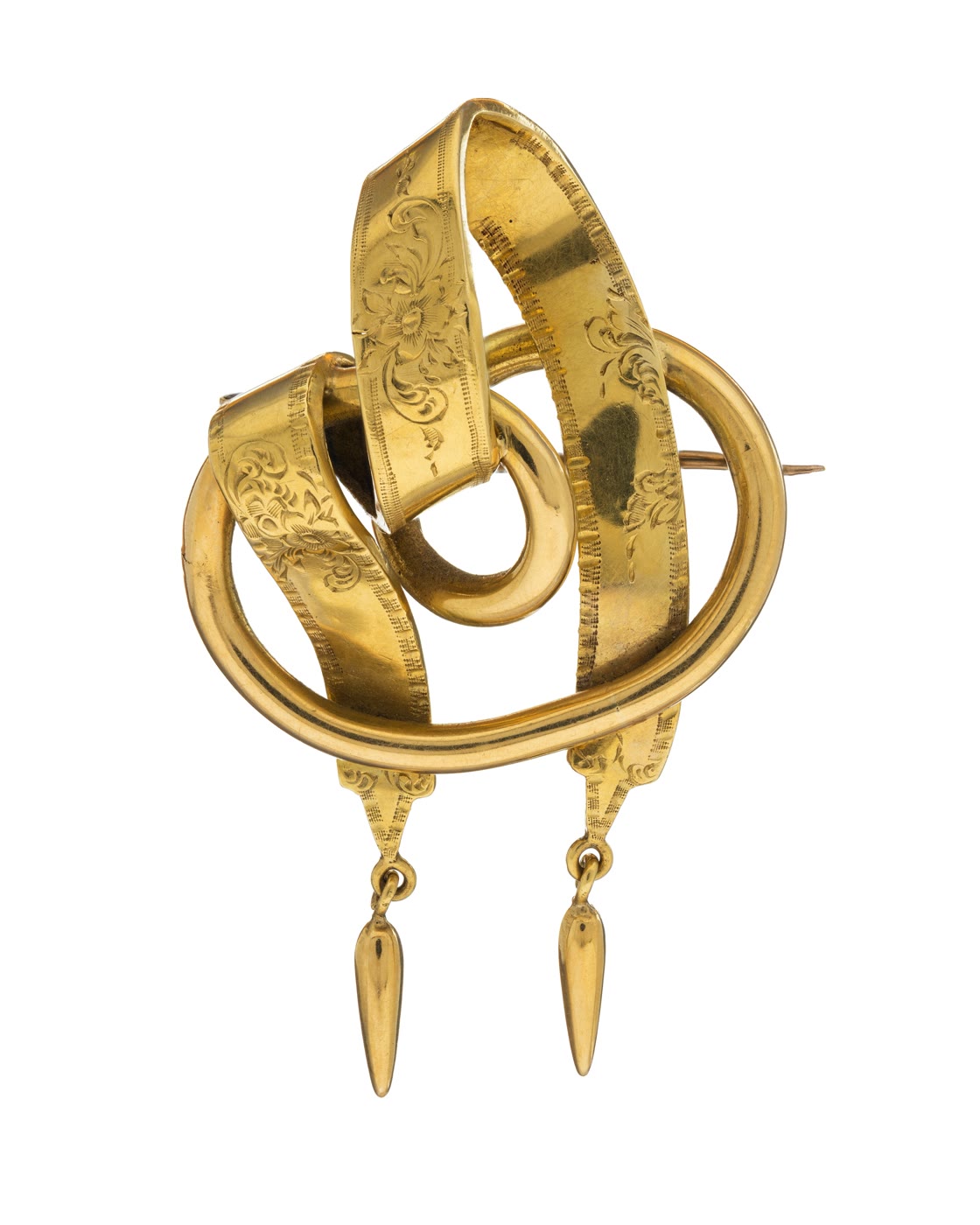
How gold standards, supply, colour and working methods changed from Georgian to 1940s jewellery - the 1854 standards, the gold rushes, bloomed and coloured gold, rolled gold - and gold's imitations.