What Does 9ct Mean?
What a 9ct or 375 gold mark means, why the 1854 introduction of 9 carat gold transformed British jewellery, how 9ct marks changed over time, and what 9ct looks and feels like.
A “9ct” mark means the piece is 9 carat gold: 9 parts pure gold out of 24, or 37.5%. The remaining 62.5% is other metal, usually silver and copper. In modern British hallmarks the same standard appears as “375”. Nine-carat is the lowest standard that can legally be sold as gold in Britain, and since its introduction in 1854 it has been the everyday gold of British jewellery.
How 9ct Came About
Before 1854, gold could only be hallmarked in Britain at 22 or 18 carats. Cheaper alternatives existed - pinchbeck, gilt metal and unmarked low-carat gold - but legally marked gold jewellery was expensive. Legislation in 1854 introduced three lower standards: 15, 12 and 9 carats. The timing matched demand. Gold discoveries in California (1848) and Australia (1851) increased supply, and a growing middle class wanted gold jewellery they could afford. Birmingham’s jewellery manufacturers in particular turned 9ct into a mass-market material.
The 15ct and 12ct standards were abolished in 1932 and replaced by 14ct, but 9ct survived, and today it is still the most common gold standard in British jewellery.
How 9ct Is Marked
| Period | How the standard appears |
|---|---|
| 1854-1975 (hallmarked) | “9” and “.375”, usually in separate or combined shields |
| 1854-1975 (unassayed) | “9ct”, “9c” or “9” stamped by the maker, without office mark or date letter |
| From 1975 | A crown and “375” in a shield, with the assay office mark |
The appearance of the mark is therefore a dating clue in itself. “9 .375” belongs to the period 1854-1975; a crown with “375” means 1975 or later. A bare “9ct” stamp is common on Victorian and Edwardian pieces that were exempt from hallmarking, and it’s the maker’s claim rather than a tested mark.
What 9ct Looks and Feels Like
Because it contains less gold, 9ct is paler and less intensely yellow than 18ct or 22ct, and noticeably lighter in the hand for its size. It is also harder and more scratch-resistant, which is one reason it was favoured for everyday rings, chains and brooch pins. Its alloy can be adjusted for colour: copper-rich 9ct gives the pinkish rose gold typical of late Victorian and 1940s pieces, while 9ct with more silver can look slightly greenish.
Nine-carat gold can tarnish faintly over time, because of its high proportion of base metal - something higher carats rarely do.
Where You’ll Find 9ct in Antique Jewellery
- Late Victorian sentimental jewellery - bar brooches, lockets, gate bracelets and Mizpah brooches, many made in Birmingham.
- Edwardian and later chains - watch chains, Albert chains and fine necklace chains.
- Signet and keeper rings - see What Is a Signet Ring?.
- 1940s Retro jewellery - especially in rose gold, during wartime shortages; see Jewellery in the 1940s.
What 9ct Doesn’t Tell You
The standard mark describes the alloy of the marked part only. A 9ct mark on a clasp doesn’t establish that the rest of a necklace is gold, and a 9ct mark on a ring shank says nothing about the stones. Read the mark together with the rest of the hallmark - see British Gold Hallmarks Explained - and with the style and construction of the piece.
Read next

Eras
Victorian Jewellery
A guide to Victorian jewellery (1837-1901): the Romantic, Grand and Aesthetic periods, the Great Exhibition, gold rushes and 9ct gold, mourning and Whitby jet, archaeological revival, Scottish jewellery, and how to recognise each phase.
Identify
British Gold Hallmarks Explained
Every British gold standard from 22ct to 9ct, when each was legal, how each was marked before and after 1975, and how to read a gold standard mark as a dating clue.
Identify
What Does 18ct Mean?
What an 18ct or 750 gold mark means, when the British 18 carat standard was introduced in 1798, how it was marked before and after 1975, and why 18ct dominated fine jewellery.
Identify
What Is a Hallmark?
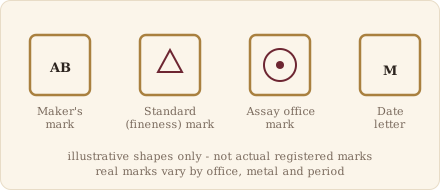
What a British hallmark is, the four marks that make up a traditional set, how the system developed from 1300 to the 1973 Hallmarking Act, and why so much antique jewellery is unmarked.
Materials
Gold in Historical Jewellery
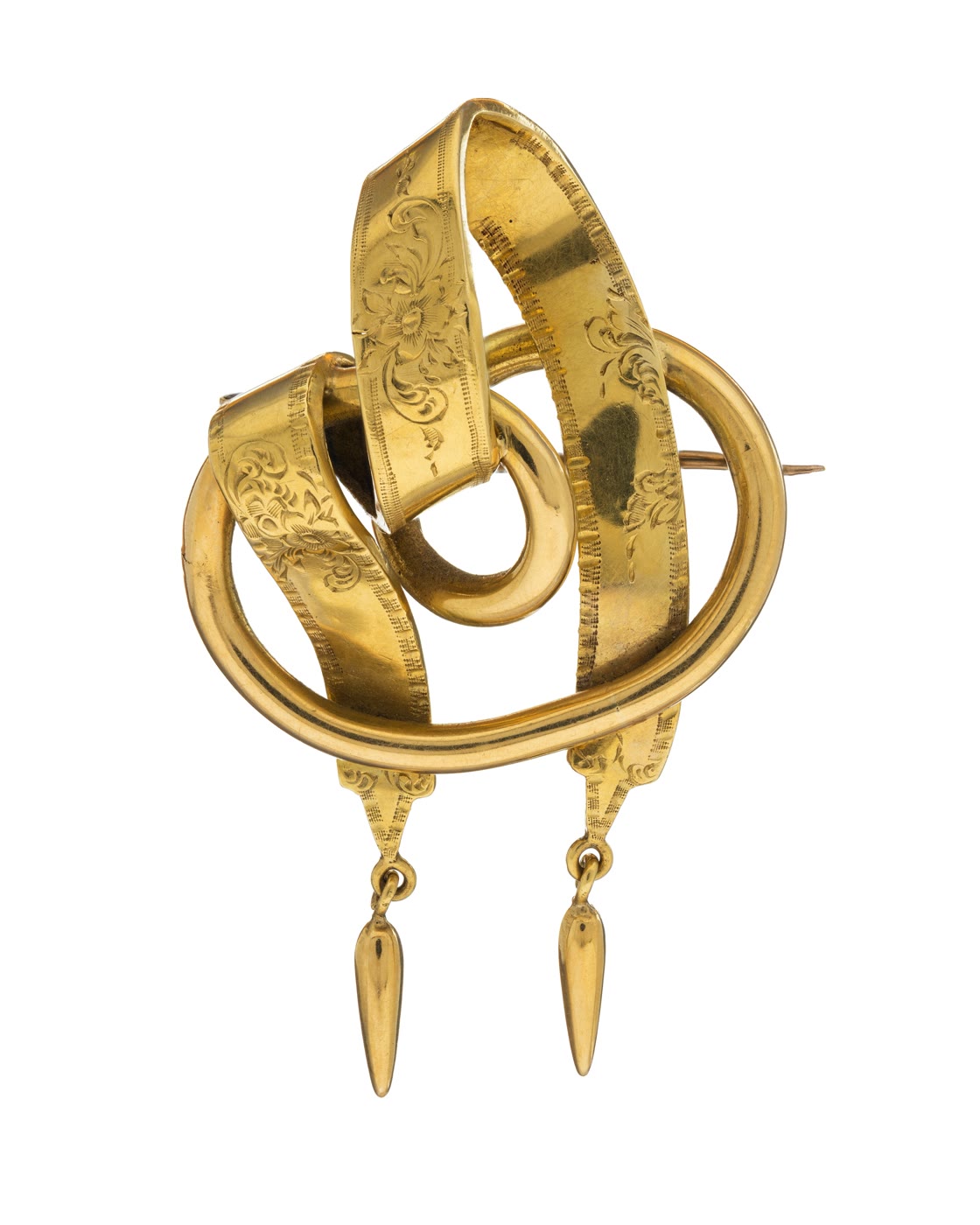
How gold standards, supply, colour and working methods changed from Georgian to 1940s jewellery - the 1854 standards, the gold rushes, bloomed and coloured gold, rolled gold - and gold's imitations.
Materials
What Is Pinchbeck?
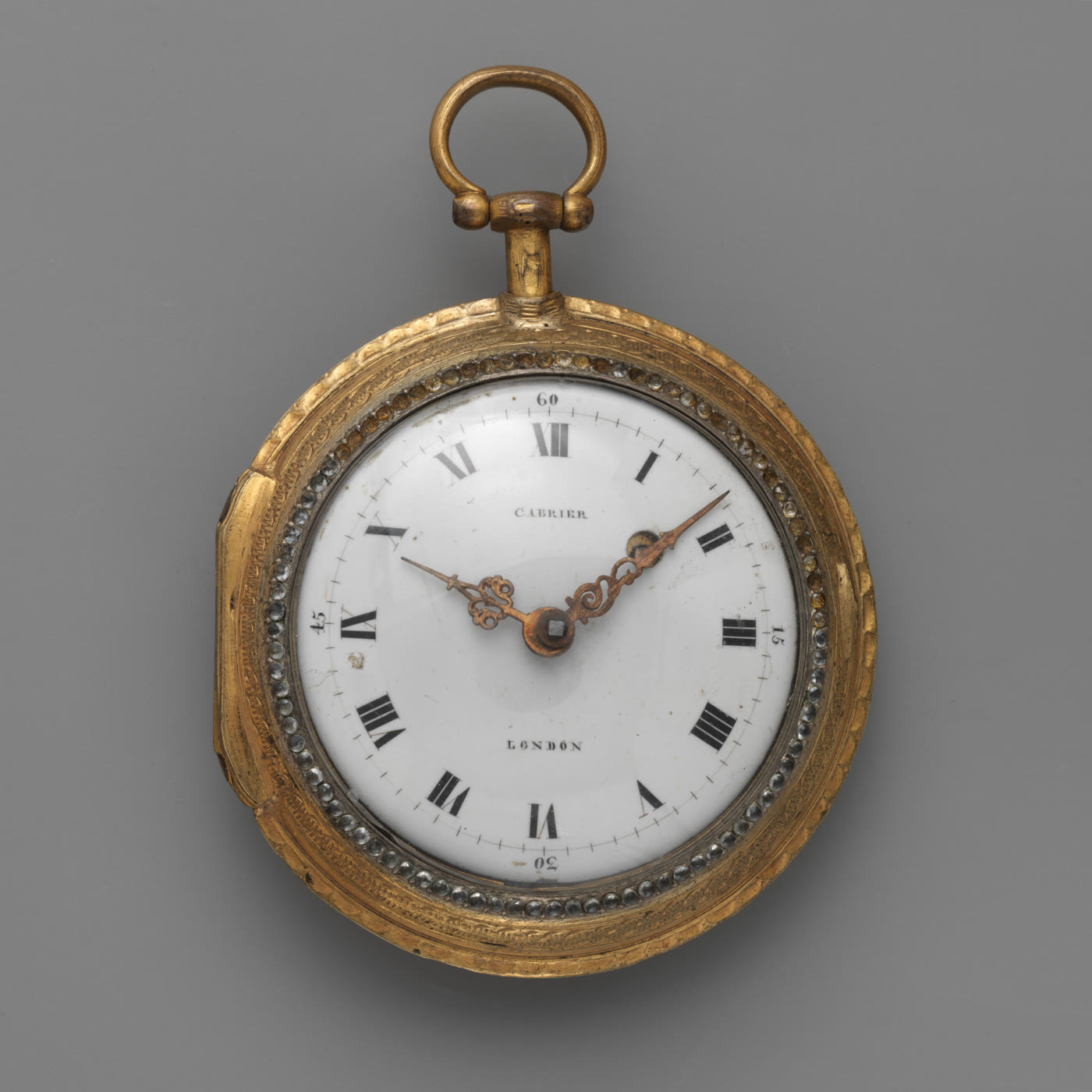
What pinchbeck is, how Christopher Pinchbeck's gold-coloured alloy imitated gold in Georgian jewellery and watch cases, why it declined after 1854, and how it is collected today.