Swallow Jewellery
The swallow as a jewellery motif for safe return, loyalty and reunion, drawn from its seasonal migration: sailors' lore, Victorian swallow brooches and 1920s-30s marcasite swallows.
The swallow, a migratory bird, is a jewellery motif used to symbolise safe return, loyalty and hope for reunion - a meaning drawn from the bird’s most familiar habit: swallows leave each year and reliably come back, making them an intuitive symbol for a departure expected to end in a safe homecoming.
Migration as Symbol
The swallow’s seasonal pattern - leaving in autumn and returning in spring, often to the same nest - made it an easily understood symbol of reunion after separation. Its arrival has marked the coming of spring since antiquity; Aristotle’s remark that one swallow does not make a spring became the English proverb “one swallow does not make a summer”. Where the birds went was long a mystery. In The Natural History of Selborne (1789), the naturalist Gilbert White still weighed the old idea that some swallows spent the winter hidden or dormant in Britain, and it was only in the early 20th century that bird ringing proved British swallows wintered in southern Africa. For most of the period in which swallow jewellery was made, then, the meaning rested on the certainty of return rather than knowledge of the journey. Unlike motifs that depended on a published key, it needed no explanation, and it suited a gift marking any expected absence, not only a voyage.
Sailors’ Lore
The swallow also has an association with sailors. Because swallows do not fly far out to sea, seeing one was taken as a sign that land was near. In sailors’ folklore swallows were also said to carry the souls of drowned men to heaven. The best-known expression of this is the sailor’s swallow tattoo, often worn in pairs on the chest, which tradition says marked a sailor’s experience - a common version holds that a swallow was earned for every 5,000 nautical miles sailed - and his hope of returning home. These explanations are popular lore, repeated in many versions, rather than documented rules, and the tattoo tradition belongs mainly to the late 19th and 20th centuries.
Era and Typical Use
Swallow motifs are most closely associated with the Victorian and Edwardian periods and the fashion for naturalistic bird and animal jewellery. The motif is found most often in brooches and pendants, where a bird in flight offered a graceful, elongated silhouette. Some pieces show the swallow in naturalistic detail, with individually worked feathers and an accurate forked tail; others simplify it into a stylised silhouette. Swallows were also a favourite subject in Japanese prints and decorative arts, and the Japanese-inspired fashion that followed the display of Japanese work at the London International Exhibition of 1862 encouraged the bird’s use in Western design.
How Swallow Jewellery Changed
- 1860s-1880s: gold swallow brooches with chased or engraved feathers, sometimes enamelled in blue or set with turquoise or garnets; swallows carrying a letter, a ring or a ribbon in the beak.
- 1880s-1910s: diamond-set swallows in silver-topped gold and later platinum, often with a ruby or sapphire eye, made singly or in flights of two or three on a bar brooch; half-pearl swallows for a cheaper market.
- 1920s-1930s: swallows in marcasite set in silver, in paste, and later in plastics and enamelled base metal - one of the commonest costume-jewellery brooch designs of the inter-war years.
Materials and Construction
Swallow jewellery was made across the range of materials, from gold brooches with the bird’s body picked out in fine chasing or engraving and small diamonds or other gems for the eye, down to silver and gilt base metal versions. A swallow carrying a small object in its beak - a twig, a ring, a letter or a ribbon bearing an inscription - added a message of connection to the bird’s own meaning of return.
Related Sentimental Motifs
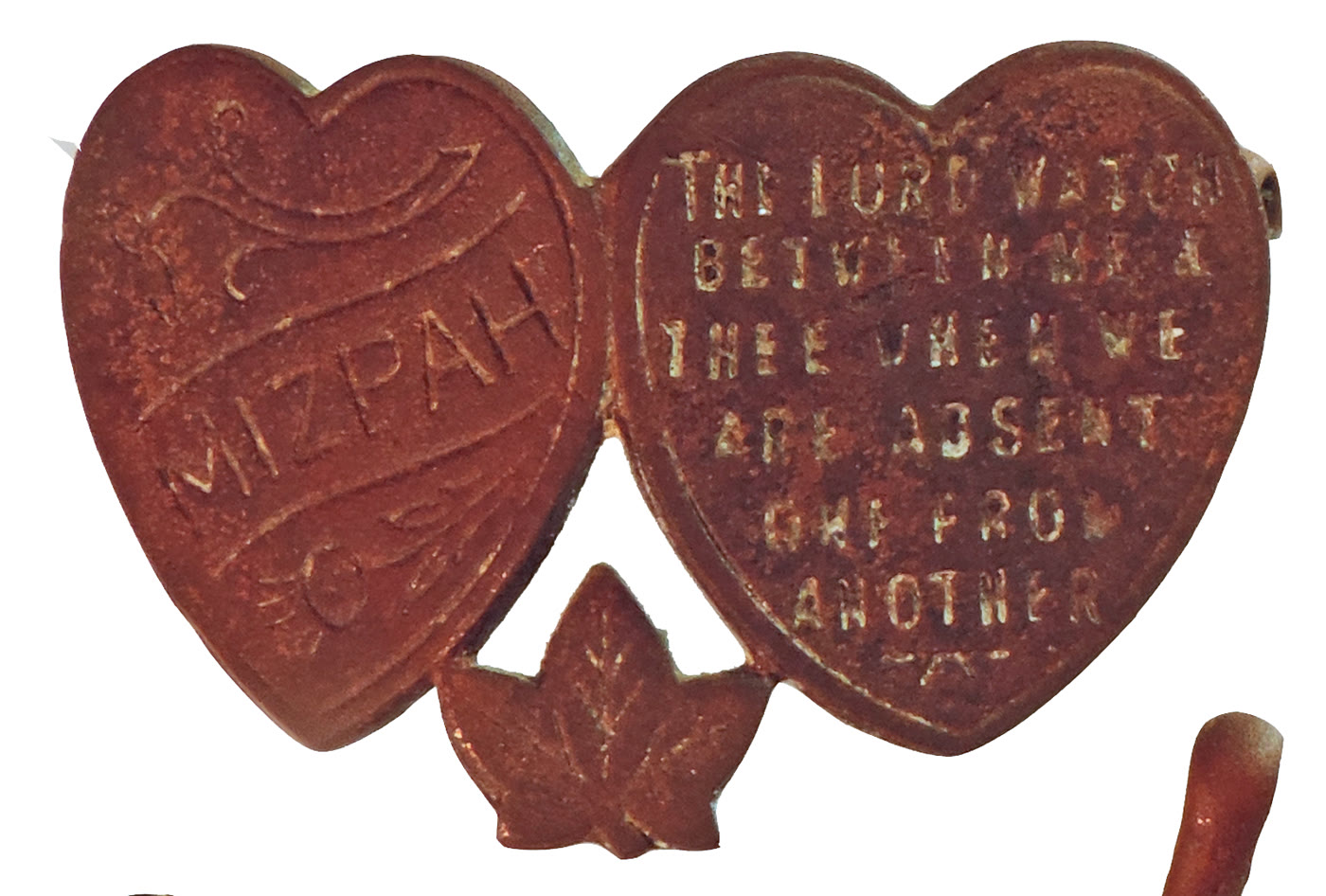
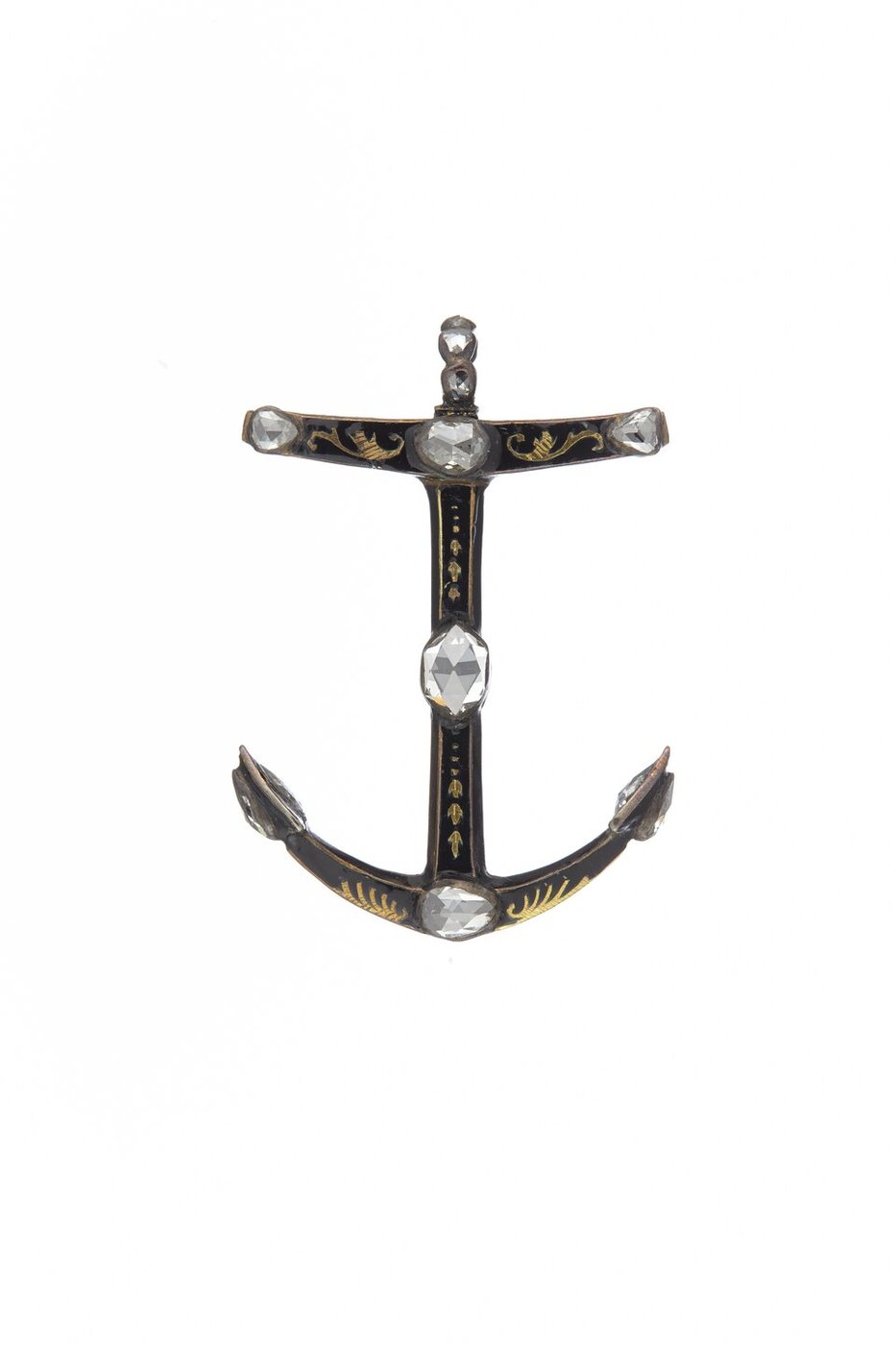
Swallow jewellery belongs to the same family of sentimental motifs about separation and reunion as the anchor, whose meaning of hope overlaps closely, and the mizpah brooch, which expressed the same sentiment through an inscribed word. A swallow paired with a heart combines the message of safe return with a romantic one.
Bird Symbolism More Broadly
The swallow sits within a wider tradition of birds as sentimental jewellery subjects. The dove stood for peace, devotion and, in religious jewellery, the Holy Spirit - the Saint-Esprit pendant, a dove with outspread wings hanging from a cross or ornament, was widely worn in France, especially Normandy, in the 18th and 19th centuries. Lovebirds and paired doves stood for courtship, and the robin for winter and Christmas. Within this pattern, the swallow’s meaning is comparatively well defined, because it follows so directly from the bird’s behaviour.
Reading Swallow Motifs Today
A bird in flight with a long, deeply forked tail is a strong indicator of the swallow, as opposed to other birds with rounded tails. Gold with chasing or enamel suggests the mid-Victorian decades; diamonds in silver-topped gold suggest about 1880-1910; marcasite in silver suggests the 1920s or 1930s. The swallow was also used simply as an attractive bird subject, so inscriptions, paired motifs and the piece’s sentimental context remain useful alongside the motif.
Read next

Eras
Victorian Jewellery
A guide to Victorian jewellery (1837-1901): the Romantic, Grand and Aesthetic periods, the Great Exhibition, gold rushes and 9ct gold, mourning and Whitby jet, archaeological revival, Scottish jewellery, and how to recognise each phase.
Jewellery
What Is a Brooch?
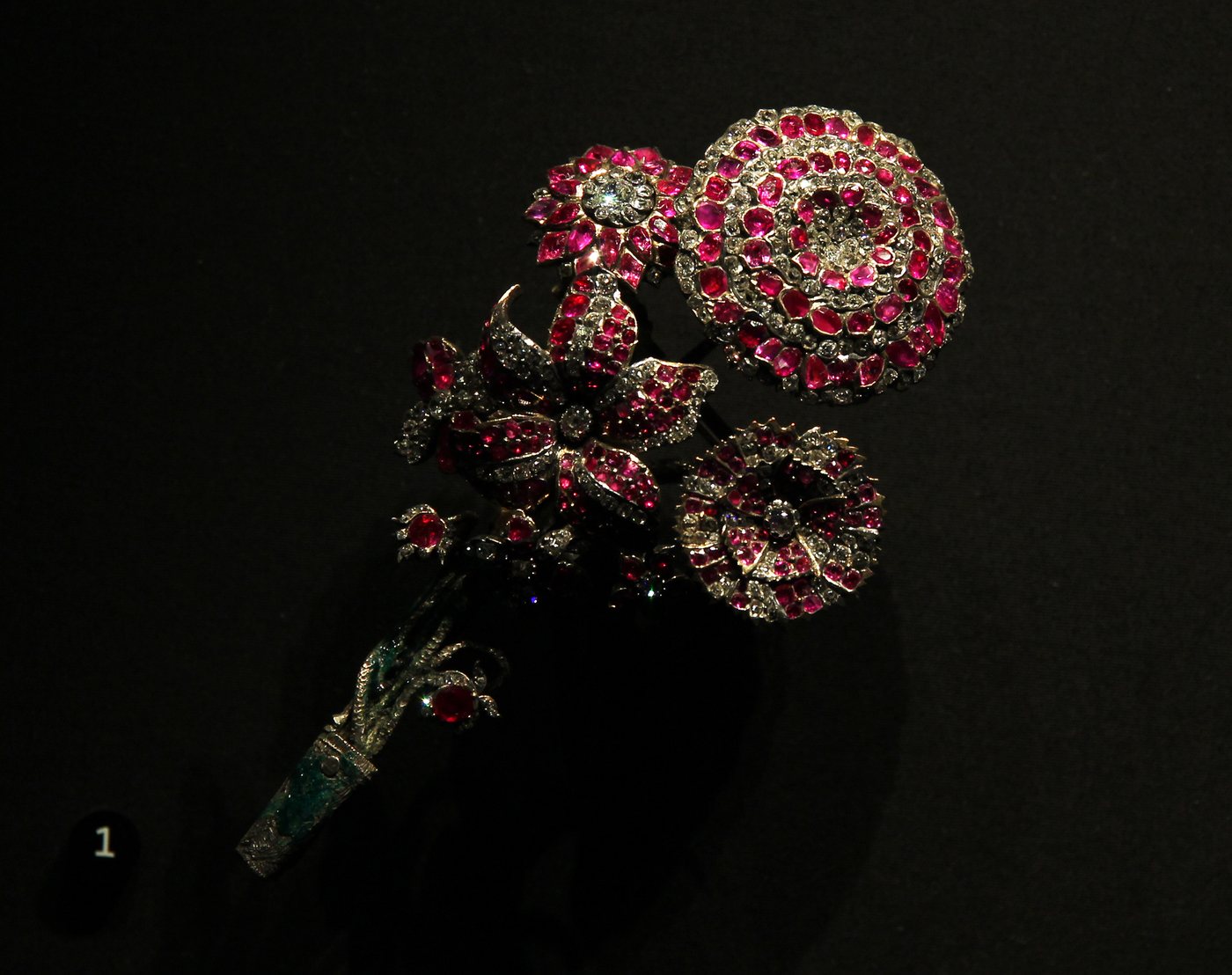
What a brooch is, how its pin-and-catch fastening works, and how brooch styles moved from naturalistic Victorian sprays through mourning brooches to Art Deco geometry.
Jewellery
What Is a Pendant?
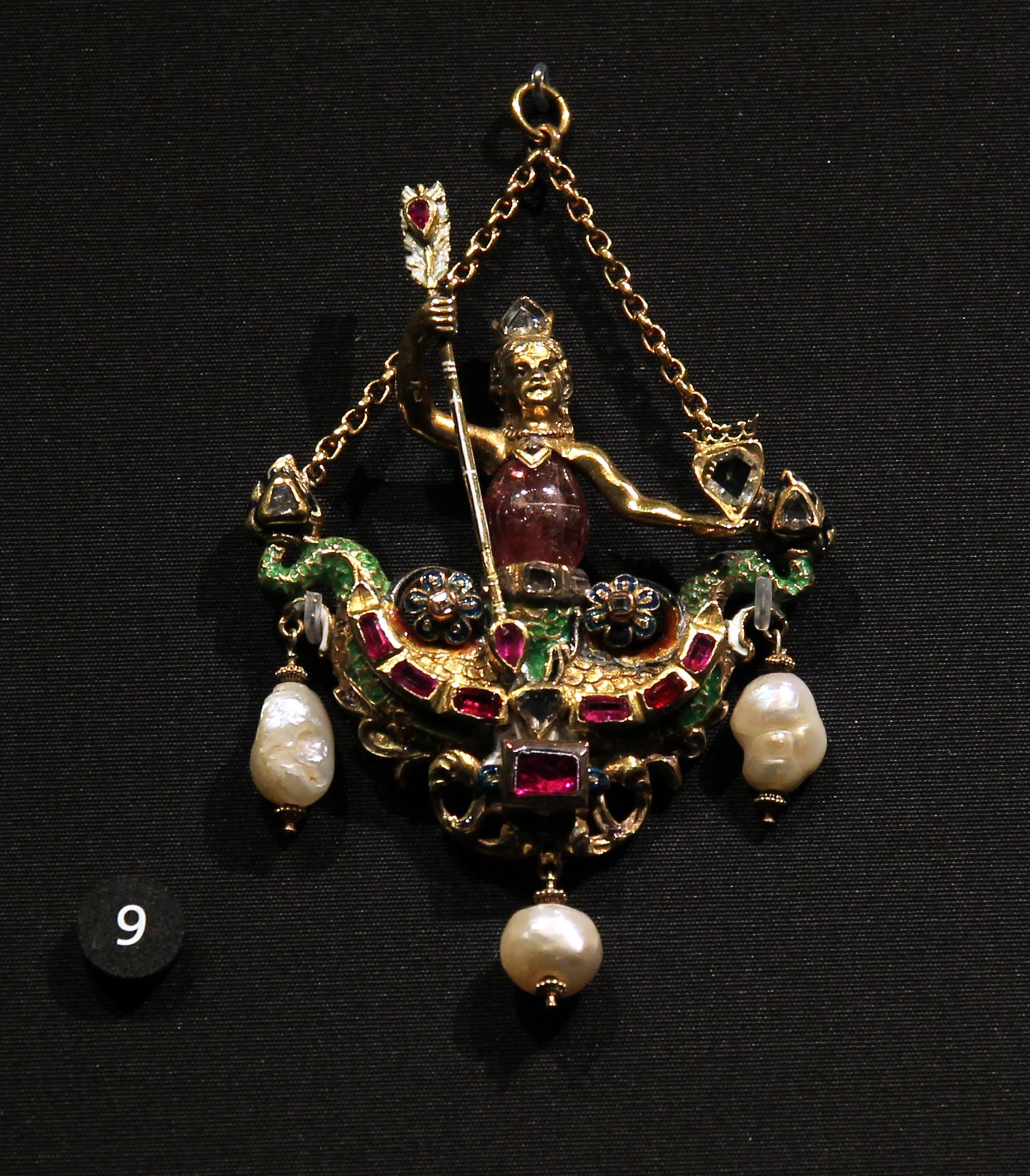
What a pendant is, how it differs from an integrated necklace centrepiece, and how forms like the locket, lavalier and negligee pendant developed within the broader category.
Mourning & Sentimental
What Is a Mizpah Brooch?
What a Mizpah brooch is, the Genesis 31:49 verse behind the word, its mass production in Birmingham c.1880-1915, and why it was a token of parting rather than a mourning piece.
Symbols
Anchor Jewellery
The anchor as a jewellery motif for hope and steadfastness: its early Christian roots, the Faith, Hope and Charity trio, the naval fouled anchor and sweetheart brooches.

Symbols
Heart Jewellery Through History
The heart in jewellery from 1700 to 1950: crowned hearts, Scottish luckenbooth brooches, Sacred Heart pendants, padlock-and-key pendants, Claddagh rings and wartime sweetheart brooches.