Men's Jewellery: A Historical Overview
An overview of men's jewellery from the Georgian era through the 1940s - watch chains, fobs, cufflinks, shirt studs, signet rings and Masonic jewellery.
Men’s jewellery through the 1700-1950 period was almost always tied to a practical function - fastening a cuff, securing a watch, sealing a letter - in a way women’s jewellery, freer to be purely decorative, generally wasn’t.
A Different Starting Point
Where a Victorian woman might wear an elaborate gem-set brooch purely for its own decorative sake, the equivalent men’s accessory nearly always did a job first and looked good second. This isn’t a hard rule - a fine signet ring or a jewelled Masonic pin was certainly also a display of status and taste - but it explains why men’s jewellery of this period clusters so heavily around fasteners, seals and watch accessories rather than the freestanding brooches, necklaces and tiaras that dominate women’s jewellery history.
Watch Accessories
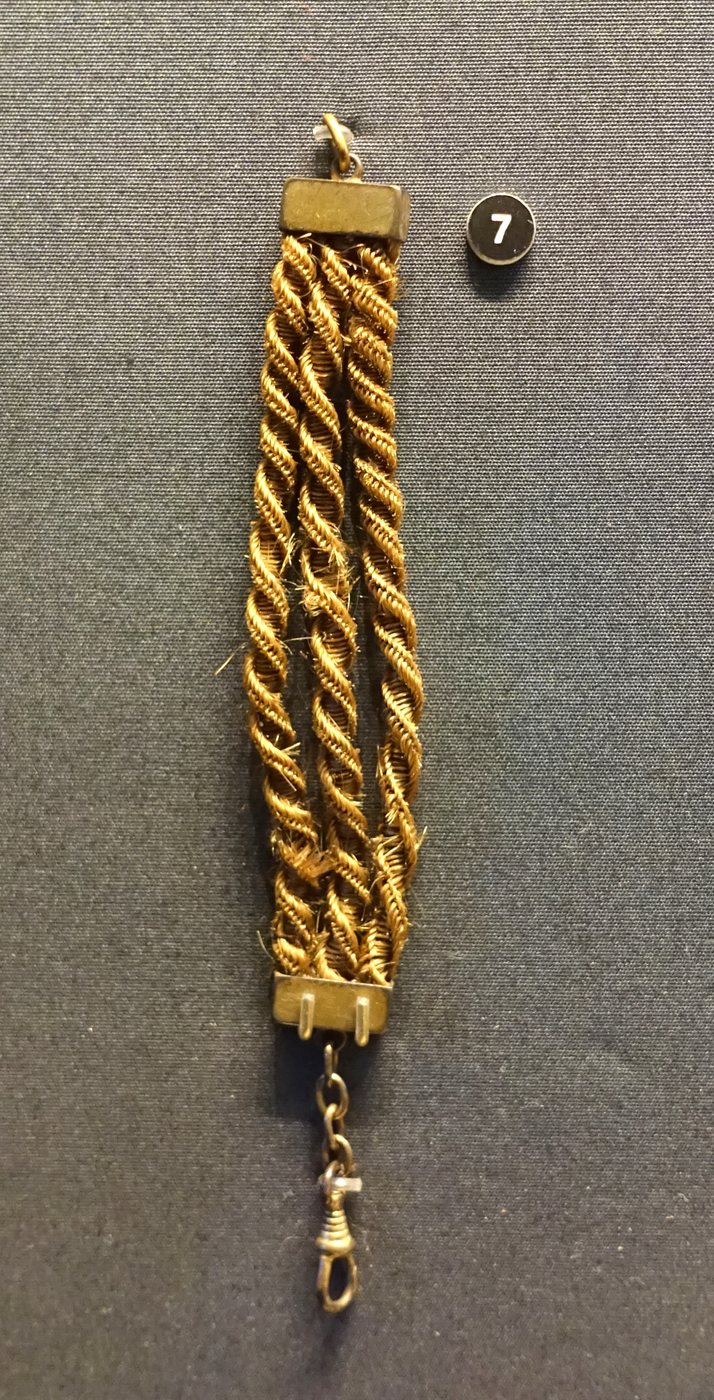
The pocket watch was the single biggest driver of men’s jewellery for most of this period. A watch chain - often an Albert chain, fastened through a waistcoat buttonhole - kept the watch secure and visible, and commonly carried a fob seal: a small pendant set with an engraved intaglio, historically used to press a wax seal on correspondence, and closely related in function to a signet ring worn on the hand instead. As sealing wax fell out of everyday use through the 19th century, fob seals increasingly became decorative survivals of a once-practical object.
Formal Dress Fasteners
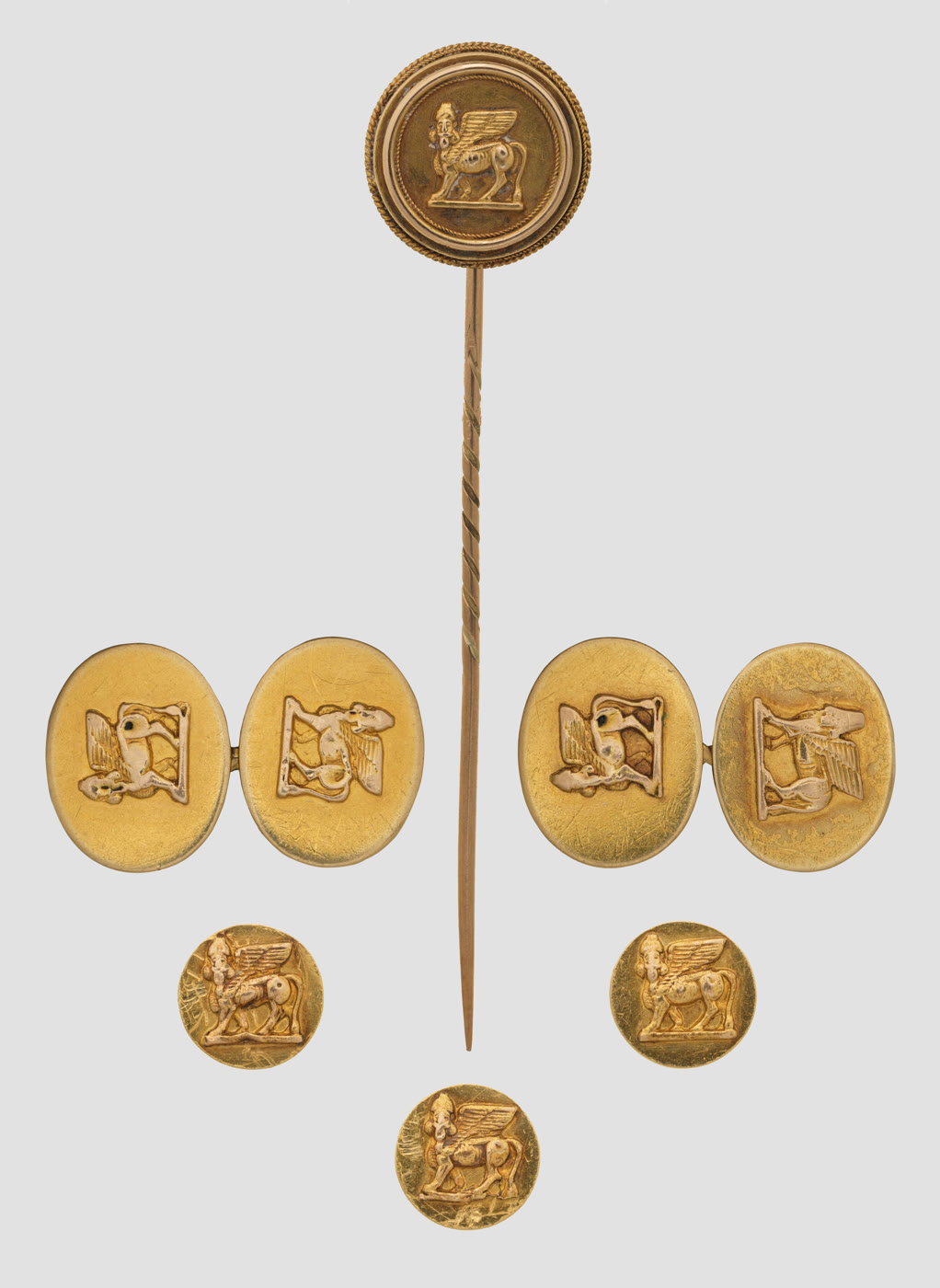
Formal shirt design created its own small category of jewellery. A starched shirt front with no buttonholes suited to ordinary buttons needed shirt studs instead, and a French or double cuff needed cufflinks rather than a sewn button. The two were often bought and worn as a matched set, in materials ranging from plain gold and mother-of-pearl to fully jewelled formal-evening versions.
Rings and Pins
The signet ring, its flat bezel engraved with a monogram or crest, was one of the few pieces of jewellery a man wore visibly on the hand through most of this period, carrying real practical weight as a sealing tool as well as a mark of identity. On the chest, the stickpin - a single decoratively-headed pin pushed through a necktie or cravat, with no hinge or catch at all - offered a small, structurally simple point of decoration distinct from a woman’s more elaborate hinged brooch.
Fraternal and Masonic Jewellery
Membership in Freemasonry and other fraternal organisations was especially widespread through the 19th and early 20th centuries, and Masonic jewellery - rings, watch fobs, tie pins and cufflinks bearing recognisable Masonic emblems - forms a distinct, well-documented category of men’s jewellery from this period, worn to signal membership rather than purely for ornament.
Wartime Sentimental Jewellery
Men’s jewellery wasn’t only self-worn. Small sentimental gifts moved in both directions between servicemen and the people waiting for them, particularly during the World Wars - see Jewellery in the 1940s for sweetheart jewellery, a documented wartime category of patriotic tokens exchanged as keepsakes.
Where to Go Next
Each linked entry above covers its specific form in full - construction, materials, dating clues and typical variations. See also Chatelaines, which, while worn predominantly by women, shares the same practical, implement-carrying logic that defines so much men’s jewellery of this period.
Examples in Museum Collections
- Watch chain with pendant charms, Germany, 1850-70. Victoria and Albert Museum, London, 1398-1873. Silver, hung with charms of a horse and grooming combs. The museum notes that men rarely wore jewellery but made an exception for watch chains, often hung with pendants relating to their work or interests. See What Is a Watch Chain?.
- Gold signet ring with a garnet crest, English, c.1830. Victoria and Albert Museum, London, M.53-1974. A square bezel set with a garnet engraved with a crest of an armoured arm holding a scimitar - one of the few jewels a man wore openly on the hand. See What Is a Signet Ring?.
- Pair of gold cufflinks engraved with ivy leaves, made by Bragg, Birmingham, 1912-13. Victoria and Albert Museum, London, M.102-1978. Oval gold plaques joined by a figure-of-eight link - a plain, typical Edwardian pair. See What Is a Pair of Cufflinks?.
Read next
Jewellery
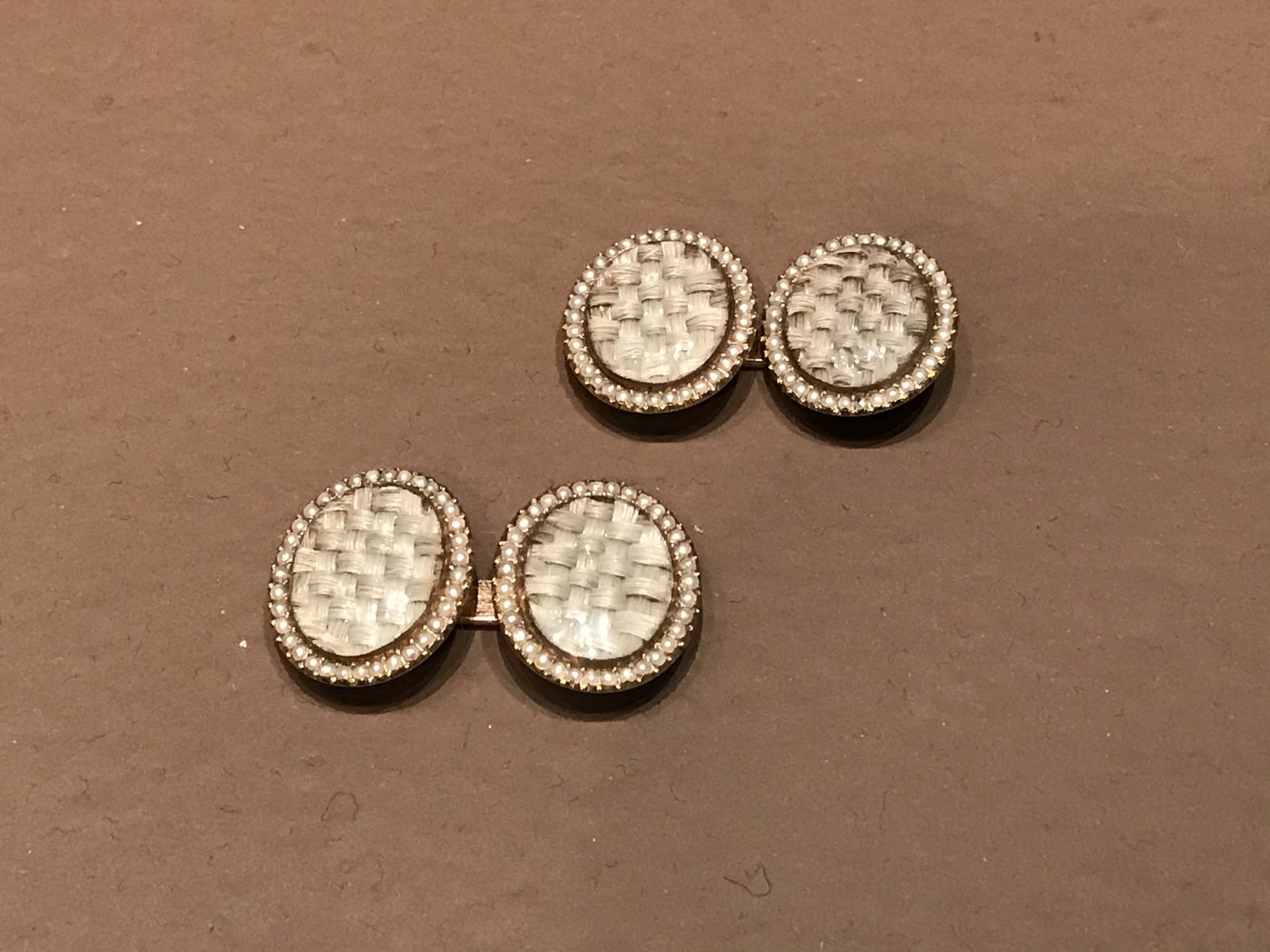
What Is a Pair of Cufflinks?
What cufflinks are, how they developed alongside the standardised French shirt cuff, and how their materials and motifs shifted from Victorian gold and enamel to Art Deco geometry.
Jewellery
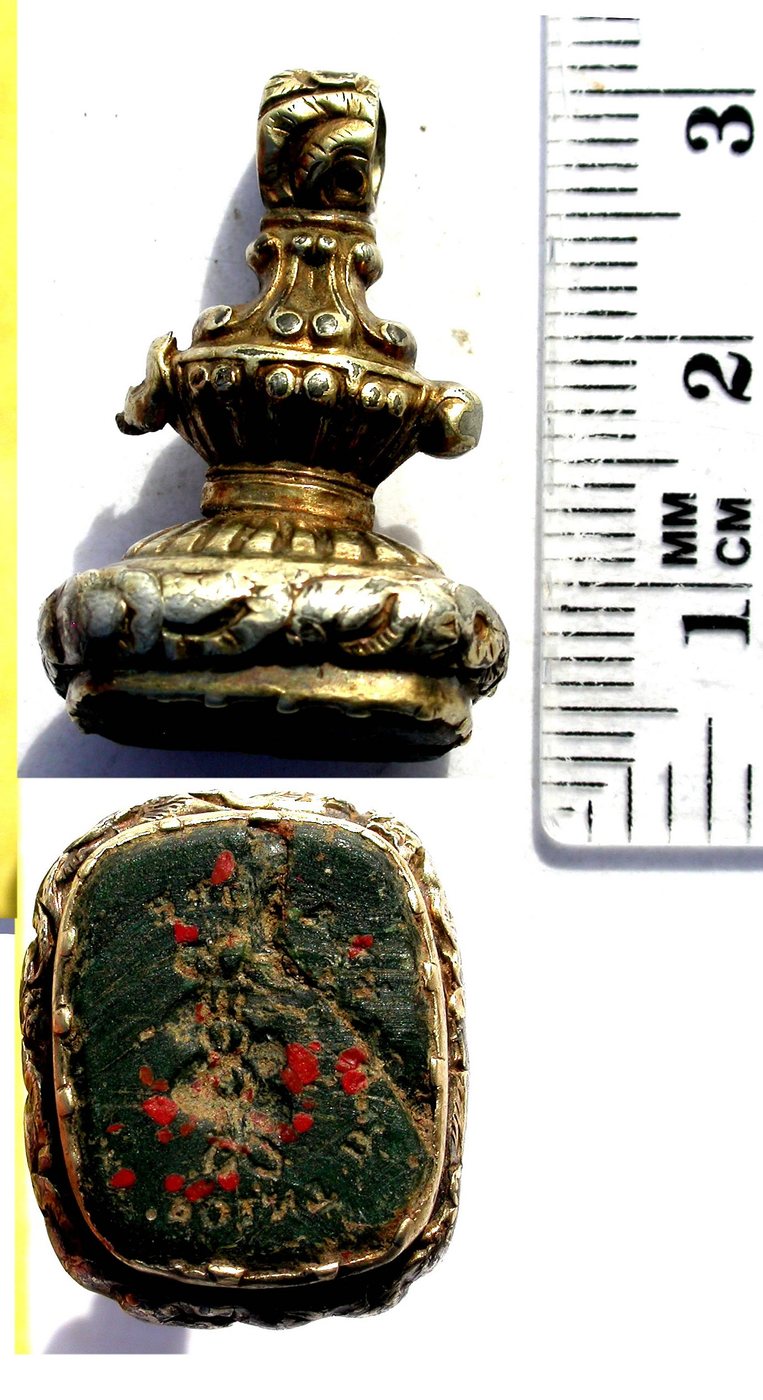
What Is a Fob Seal?
What a fob seal is, how its engraved intaglio face could press a wax seal, and why sealing wax's decline through the 19th and 20th centuries reduced the fob seal to a decorative watch-chain ornament.
Jewellery
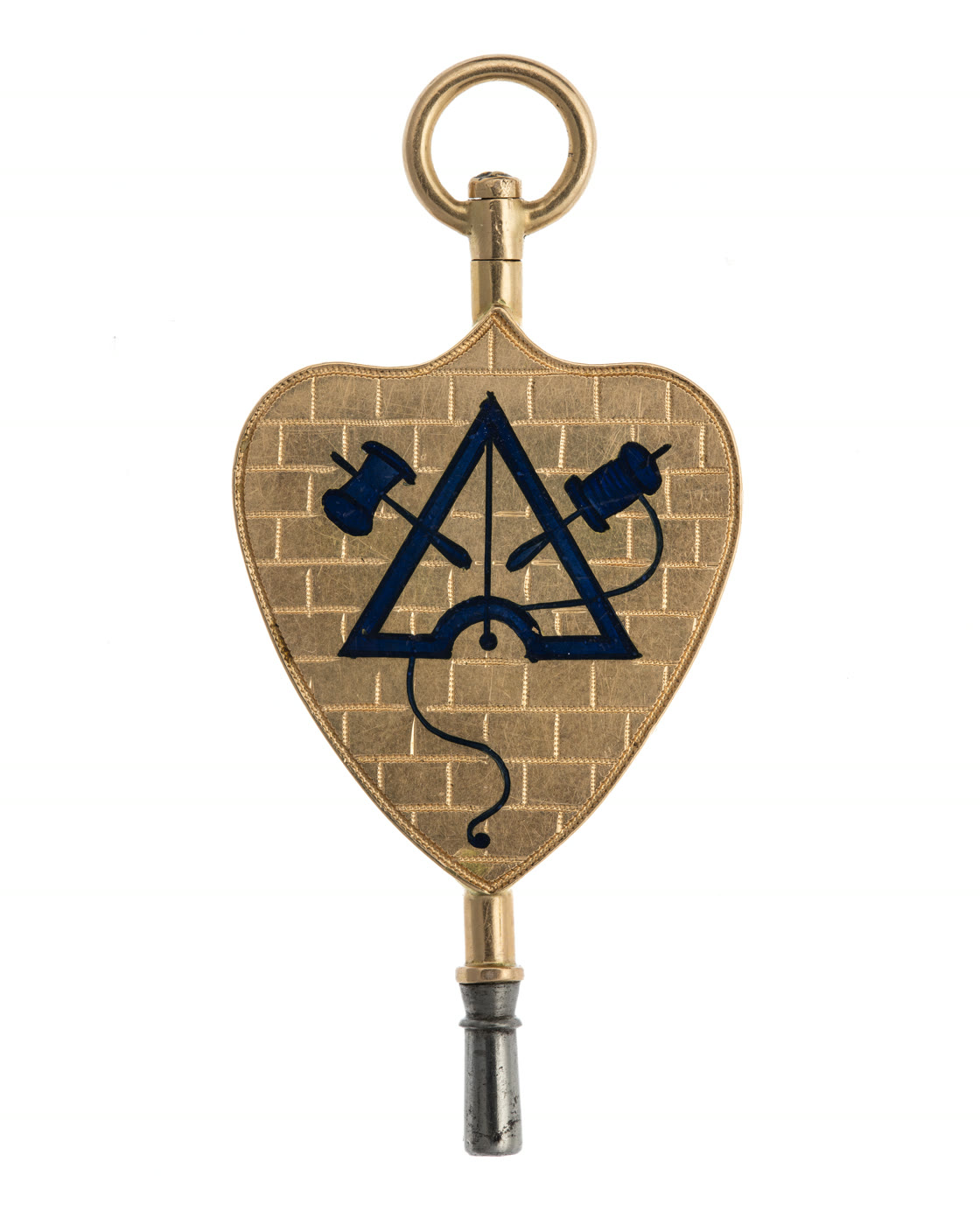
What Is Masonic Jewellery?
An overview of Masonic jewellery as a documented historical category - the rings, watch fobs, pins and cufflinks bearing recognisable Masonic emblems worn to signal fraternal membership.
Jewellery
What Is a Shirt Stud?
What a shirt stud is, how it closed a stiff formal shirt front where an ordinary button did not work, and its close relationship to matching cufflinks as a coordinated dress set.

Jewellery
What Is a Signet Ring?
What a signet ring is, how its engraved bezel was historically used to seal documents in wax, and how it became a largely decorative, strongly male-associated accessory.
Jewellery
What Is a Watch Chain?
What a watch chain is, how the Albert chain secured a man's pocket watch across a waistcoat, and how women wore an equivalent longer guard chain around the neck or on a brooch.