Aquamarine in Historical Jewellery
Aquamarine from Brazil and the Urals, its foiled Georgian settings, and why its cool colour and large, clean stones suited Art Deco platinum and bold Retro gold jewellery.
Aquamarine is a pale blue to blue-green gemstone, a member of the beryl family and so a close relative of emerald, whose cool, clear colour and availability in large, clean faceted stones made it especially well suited to the bold, geometric jewellery of the Art Deco period. Its name is Latin for “sea water”.
Colour and Composition
Aquamarine belongs to the beryl mineral family, the same family that produces emerald, though the two stones differ greatly in appearance and in typical clarity. Where emerald is prized for a deep, saturated green and is almost always included, aquamarine occurs in much paler, cooler tones ranging from a faint blue-green to a clearer sky blue. Its colour comes from traces of iron. Beryl crystals of this kind grow in granite pegmatites and can reach a great size, so aquamarine is often found as large crystals with good internal clarity - a combination that sets it apart from many other coloured gemstones.
Gently heating greenish or yellowish beryl removes the yellow component and leaves a purer blue. This treatment has been widely used in the trade during the 20th century, and many aquamarines on the market today have been heated; it cannot be detected by eye.
Where It Came From
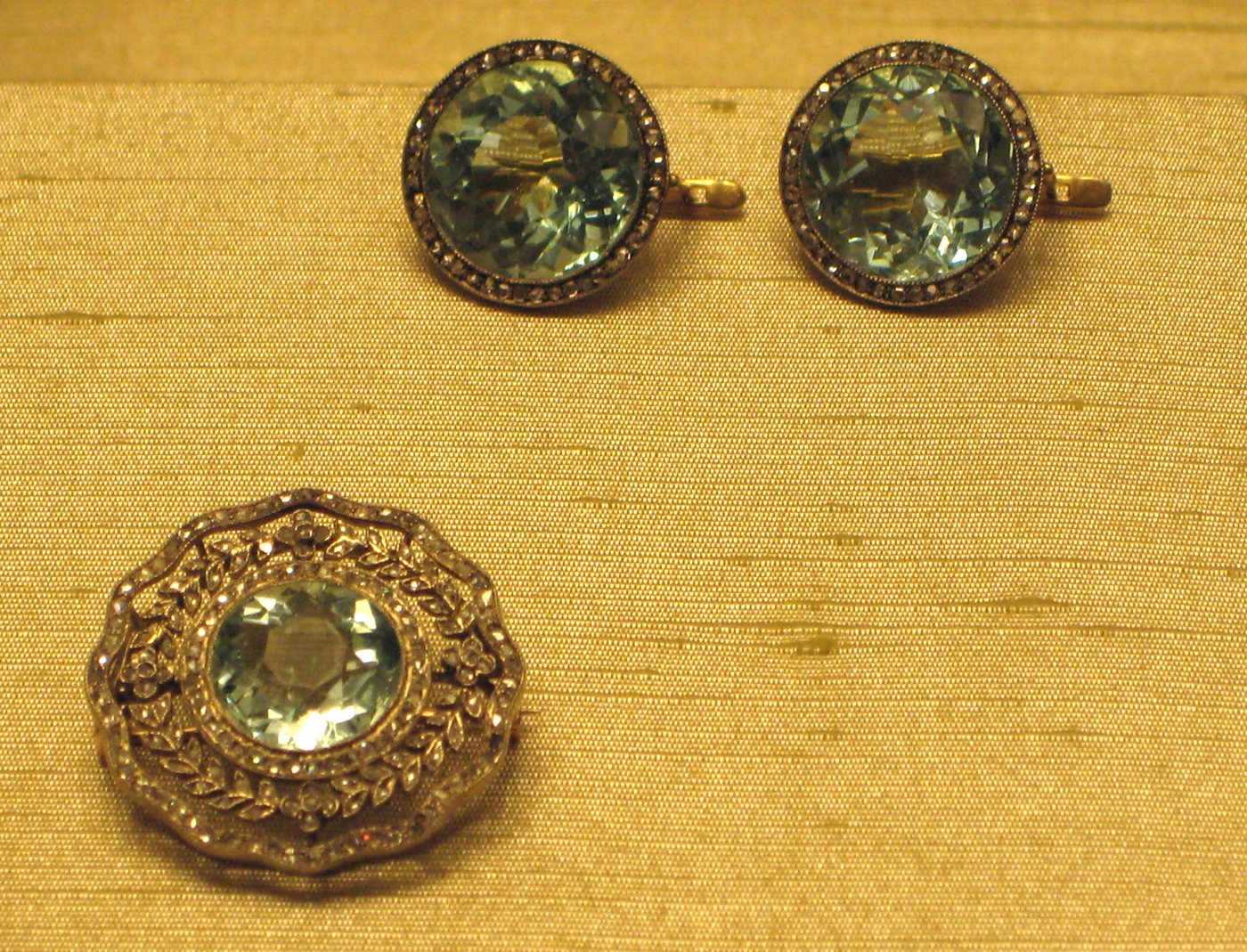
In the 18th and 19th centuries the main sources were Brazil, chiefly the pegmatite districts of Minas Gerais, and Russia. Ural and Siberian deposits - around Mursinka in the Urals and in the Nerchinsk region east of Lake Baikal - supplied fine material to the St Petersburg jewellers, which is one reason aquamarine appears in Russian court jewellery and in the work of firms such as Fabergé, as in the Hermitage brooch and earrings above. Brazil became the dominant source in the 20th century and produced most of the very large stones cut for Art Deco and Retro jewellery. Madagascar, then a French colony, also became a source in the early 20th century.
Before Art Deco
Aquamarine was used in Georgian jewellery, especially in the gold parures of the 1820s and 1830s, where it appears alongside topaz, amethyst and chrysoberyl in cannetille wirework mounts. Pale stones like these were usually set in closed-back collets, often foiled to strengthen their colour, so a Georgian aquamarine can look deeper in its setting than it would loose. Through the Victorian period it was a less fashionable stone than the darker garnet, amethyst and topaz, and it is uncommon in mid-Victorian jewellery. It returned in Edwardian and Belle Époque jewellery, where its pale colour suited the white-on-white taste for platinum and diamonds.
Aquamarine and Art Deco
Aquamarine found particular favour in Art Deco jewellery, where its pale, cool colour and clarity suited the era’s taste for large-scale, geometric settings built around clean lines and bold contrast rather than the softer, more naturalistic gemstone arrangements of earlier periods. Because aquamarine occurs in comparatively large crystals with good clarity, it could be cut into substantial faceted stones - step-cuts and emerald-cuts in particular - well suited to being the dominant visual element of a large brooch, pendant or ring. Its cool blue tone also worked well set against platinum and white metal mounts, a defining combination of Art Deco design. The leading Paris houses of the 1920s and 1930s, Cartier among them, set large aquamarines with diamonds in platinum for clips, bracelets and rings.
Continued Popularity in the Retro Period
Aquamarine’s popularity continued strongly into the bold, large-scale jewellery of the 1930s and 1940s, where large aquamarines were set in substantial cocktail rings and brooches, often in the warmer gold mounts and sculptural designs characteristic of that period. The same qualities that suited Art Deco - a large, clean, cool-coloured stone able to anchor a substantial setting - carried through into these later, bolder designs. With platinum restricted for war use, these big Brazilian stones were usually set in yellow or rose gold rather than white metal.
Aquamarine has remained a royal stone since. In 1953 the President and people of Brazil gave Queen Elizabeth II a necklace and earrings of large Brazilian aquamarines as a coronation present; Garrard made a matching tiara in 1957, and the set is still worn by the British royal family.
Typical Jewellery Applications
Aquamarine appears most often as a large single principal stone in rings, brooches and pendants, cut in step-cut and emerald-cut styles that suit its clarity and pale colour, though it was also faceted in cushion, oval and round forms. It was less commonly used in small accent quantities compared with gemstones like sapphire or ruby, since much of its appeal lay in the visual impact of a large, clear stone.
How to Recognise It
Aquamarine’s pale blue to blue-green colour, combined with generally good clarity and a tendency to be cut as a large single stone, is broadly consistent with the appearance described here, though other pale blue materials can resemble it at a glance. Blue topaz, glass and synthetic spinel - made by flame fusion in aquamarine-like colours from the 1920s onward and used widely in costume and lower-priced jewellery - are the commonest lookalikes. Visual appearance is a starting point rather than a means of confirming a specific stone’s identity, which requires assessment by a qualified gemmologist.
Frequently Asked Questions
Is aquamarine the same mineral as emerald? They are closely related - both are varieties of the mineral beryl - but they differ in colour, in the trace elements responsible for that colour (iron in aquamarine, chromium or vanadium in emerald), and typically in clarity, with aquamarine generally occurring cleaner than emerald.
Was aquamarine popular before the Art Deco period? Aquamarine was used in Georgian gold jewellery and in Russian court jewellery of the 19th century, but it became especially prominent in the 20th century, when Art Deco and, later, Retro jewellery design particularly favoured its pale colour and availability in large, clean stones.
Read next
Eras
Jewellery in the 1930s
A guide to 1930s jewellery: all-white diamond and platinum, dress clips and double clips, Van Cleef & Arpels' Mystery Set, Belperron and Boivin, Chanel and Schiaparelli, Hollywood, Bakelite and marcasite, and the move towards Retro.

Eras
Jewellery in the 1940s
A guide to 1940s jewellery: wartime platinum bans and the rose-gold Retro style, Cartier's caged bird, Van Cleef & Arpels and Verdura in New York, American costume jewellery in sterling and Lucite, British Utility rings, sweetheart badges and the New Look.

Eras
Art Deco Jewellery
A guide to Art Deco jewellery (c.1915-1935): geometric symmetry, the 1925 Paris Exposition, Cartier's Tutti Frutti and Van Cleef & Arpels' Mystery Set, the modernist jewellers, new stone cuts, Egyptian and Indian influences, and costume jewellery.
Gemstones
Emeralds in Historical Jewellery
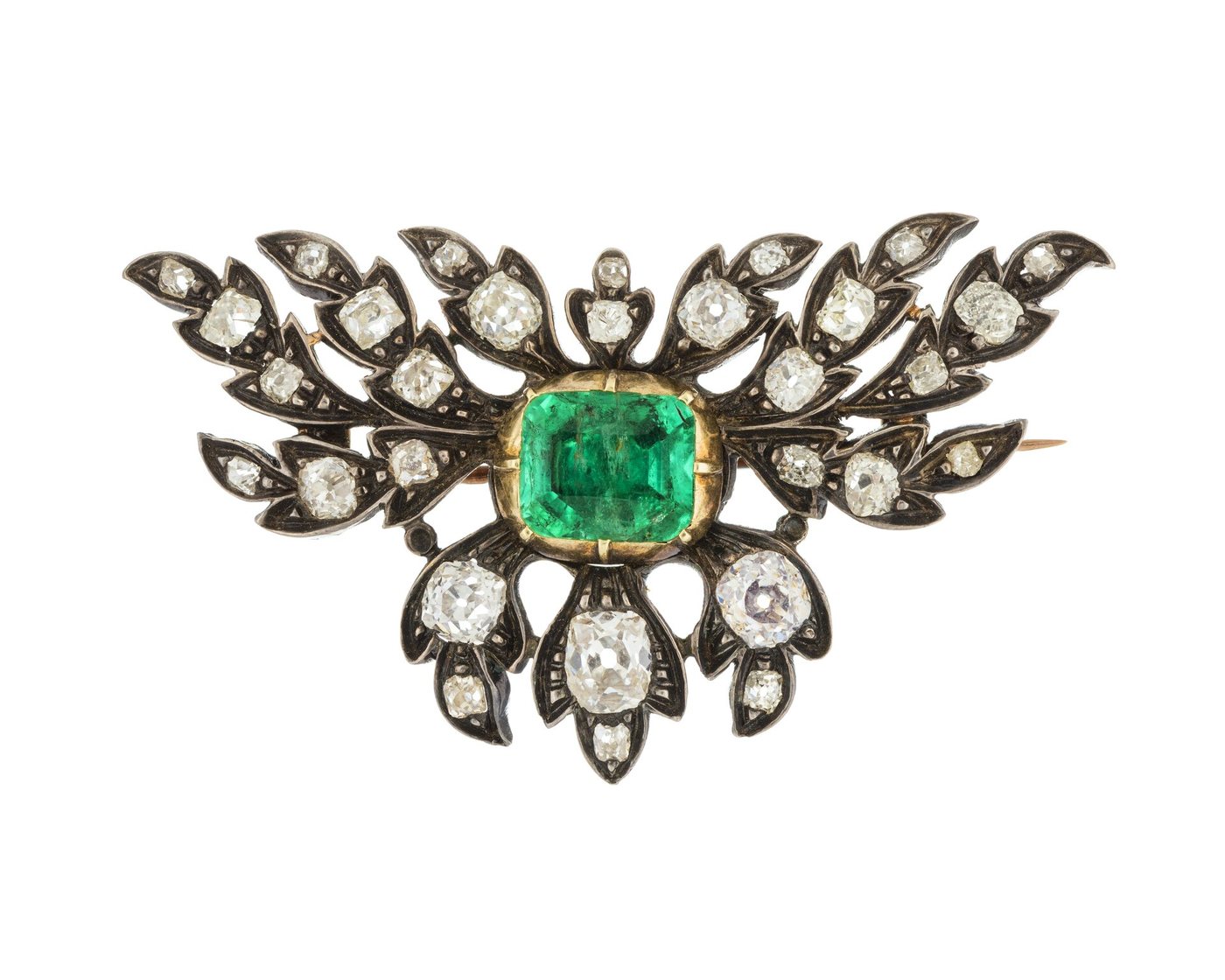
Emerald's status among the precious gemstones, Colombian and Ural sources, Mughal carved emeralds in Art Deco jewels, named royal pieces, oiling, the step cut and the first synthetic emeralds.
Gemstones
Topaz in Historical Jewellery
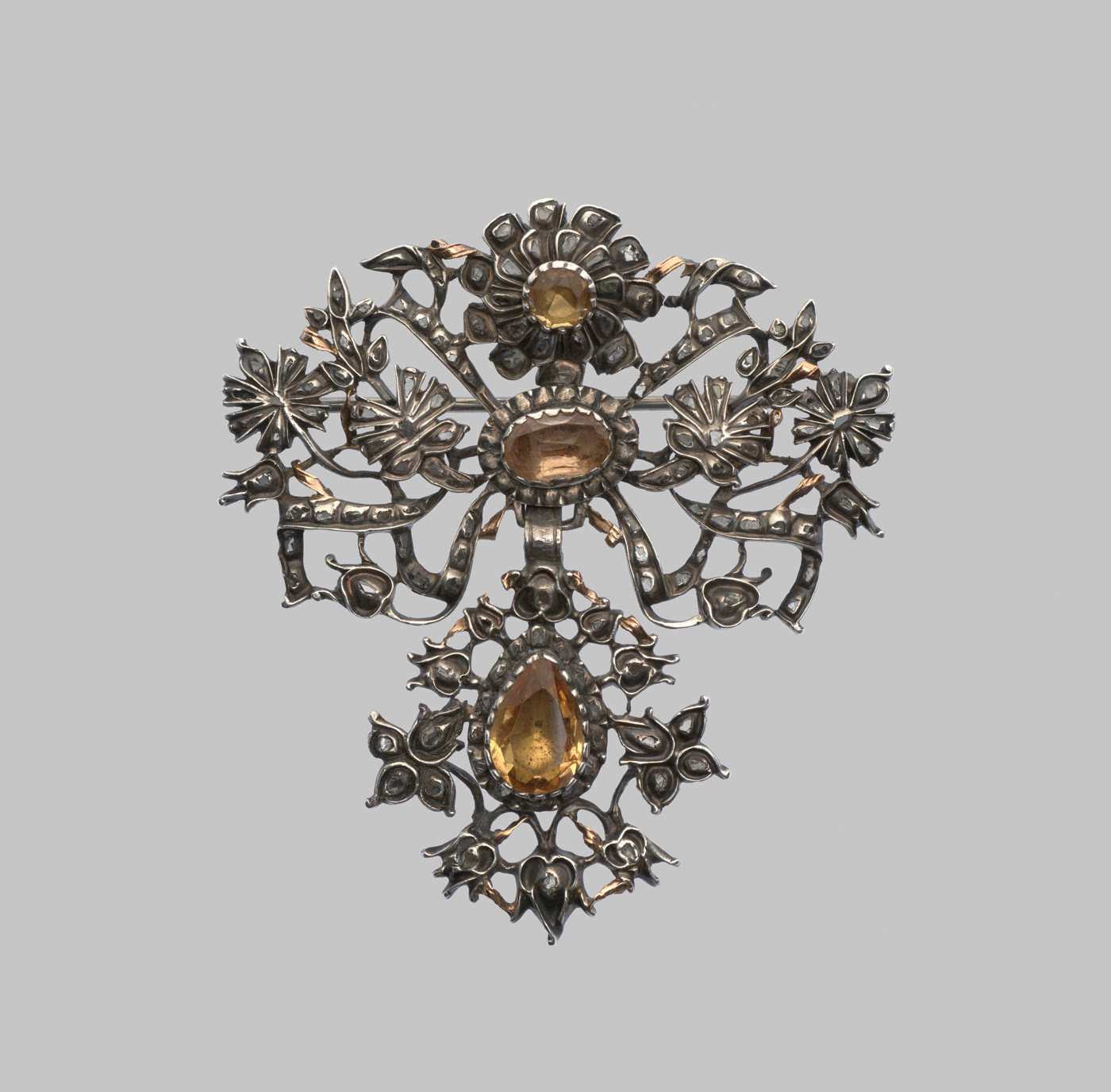
Golden 'precious' topaz from Ouro Preto in Brazil, Saxon and Russian topaz, pink 'pinked' and colourless stones, Georgian topaz parures, the loose old use of the name, and modern treated blue topaz.
Materials
Platinum in Jewellery History
Why platinum only became practical for jewellery around 1900, Cartier and the Edwardian garland style, Art Deco settings, Russian and South African supply, wartime restrictions and platinum marks.