Peridot in Edwardian Jewellery
Peridot from the Red Sea island of Zabargad and Burma, its older name 'chrysolite', and why its yellow-green colour was fashionable in Edwardian gold and platinum jewellery and Arts and Crafts work.
Peridot is a distinctive yellow-green gemstone that enjoyed a period of particular fashionability spanning the late Victorian years and, especially, the Edwardian period, when its bright, clear colour suited a lighter and more colourful jewellery taste.
Colour and Character
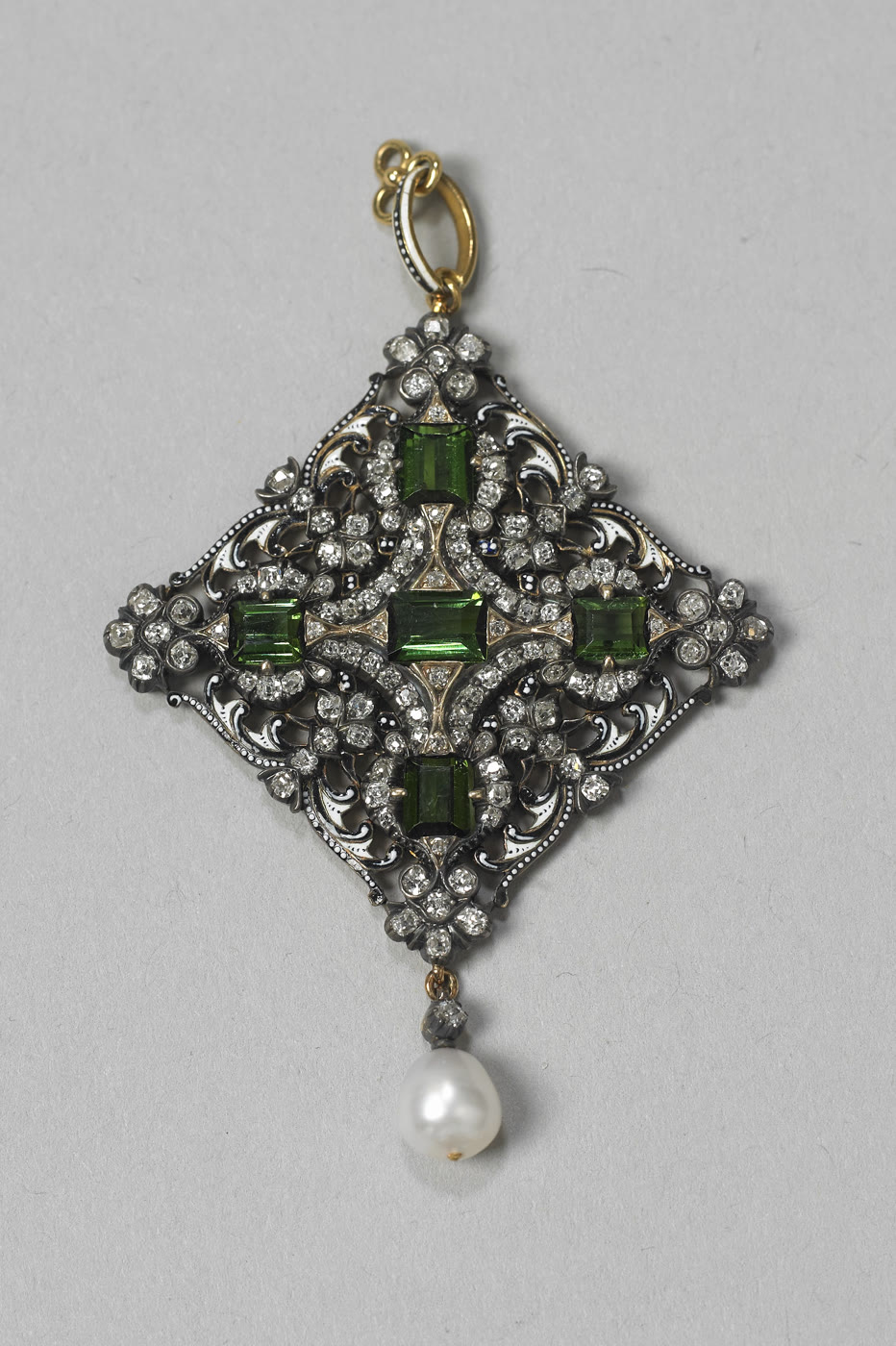
Peridot’s colour sets it apart from most other gemstones used in historical jewellery: a bright, often quite vivid yellow-green that reads as neither purely yellow nor purely green, with a warmth that distinguishes it from cooler green stones such as emerald. Peridot is the gem variety of olivine, a common mineral in volcanic rocks, and its colour comes from iron - so unlike many stones it occurs only in shades of green, from yellowish to olive. This distinctive colouring meant peridot did not simply substitute for other green gemstones in period jewellery but was valued and worn for its own particular shade. It keeps its colour well under artificial light, and is often said to have been called the “evening emerald” for that reason.
Names: Peridot, Chrysolite and “Topaz”
The names attached to the stone have shifted over time, which complicates period descriptions. In the 18th and early 19th centuries it was often called chrysolite, a name also applied to yellow-green chrysoberyl and other stones, so a “chrysolite” in a Georgian or Regency inventory may not be peridot. “Peridot”, from the French, came into general jewellery use in the 19th century. Further back, the ancient island source in the Red Sea was known to Roman writers as Topazios, and the stone Pliny the Elder called topazos is generally thought to have been peridot - not the mineral now called topaz.
Where It Came From
For most of history the main source of fine peridot was Zabargad, also known as St John’s Island, a small island in the Red Sea off the Egyptian coast. Its deposits had been worked in antiquity and in the medieval period, and were worked again commercially in the early 20th century, supplying much of the large, clean, vivid peridot found in Edwardian jewellery. Burma, where peridot was found near Mogok, became a second important source in the early 20th century. Smaller, often more olive material came from deposits in Arizona and elsewhere, which grew in importance later in the 20th century.
An Edwardian Favourite
Peridot’s period of strongest fashionability runs from the later Victorian years into the Edwardian period, roughly 1890 to 1915, when it appears with real frequency in fine jewellery. As taste moved away from the heavier, darker-toned stones and dense symbolic jewellery of the mid-Victorian period toward the lighter, more overtly decorative Edwardian aesthetic, a bright, clear-coloured stone like peridot suited the new mood. It offered a note of colour within a period whose fine jewellery, described on the Edwardian page, is otherwise dominated by platinum settings and diamonds.
Peridot was also part of a fashion for combining colours. After the Women’s Social and Political Union adopted purple, white and green as its colours in 1908, some jewellers advertised pieces combining peridot or other green stones with amethyst and pearls in those colours. Such pieces are often sold today as “suffragette jewellery”, but the same combination was also simply fashionable, and most have no documented link to the movement.
Peridot in Arts and Crafts Jewellery
Peridot was a favourite of Arts and Crafts jewellers in Britain between about 1890 and 1920. Its fresh colour suited their naturalistic leaf and vine designs, it was affordable, and it combined well with the other stones they favoured, such as amethyst, moonstone, opal and pink tourmaline. In this work peridot is usually set in silver or gold in simple collets, often as a small cabochon or a lightly faceted stone among leaves and berries, rather than surrounded by diamonds.
Typical Settings
In mainstream Edwardian jewellery peridot is most often found in delicate gold or platinum mounts, frequently combined with diamonds or seed pearls in the fine, lace-like settings of the period. A coloured centre stone framed by small diamonds or pearls in airy openwork metalwork reflects the general preference for delicate, pattern-based settings over the heavier, solid-gold work of earlier in the 19th century, and peridot’s bright colour worked well as a focal point within that lighter framework. Pendants on fine chains, including the lavalier and negligee forms, often used a peridot drop.
Typical Cutting Styles
Edwardian peridot is generally faceted in step-cut, cushion, oval and pear shapes, the cuts applied across many transparent coloured stones of the late 19th and early 20th centuries. Peridot is strongly doubly refractive: looking through a large stone, the edges of the back facets can appear doubled - one of the features a gemmologist examines. It is also fairly soft for a faceted gem, so old stones often show worn facet edges. Peridot was worn both as a principal stone in rings and pendants and as a secondary or accent stone within larger multi-stone pieces.
Typical Jewellery Types
Peridot appears in the period principally in rings, pendants, brooches and drop earrings, often as the coloured centrepiece of a small cluster or surround setting rather than as part of a large parure. Its scale in period jewellery tends toward the modest and delicate rather than the bold, single-stone treatment later given to stones like citrine and aquamarine in the very different jewellery fashions of the 1930s and 1940s.
How to Recognise It
A clear, bright yellow-green colour, generally set in delicate gold or platinum work alongside diamonds or seed pearls, is broadly consistent with peridot as described here, though other green and yellow-green gemstones - green tourmaline, chrysoberyl, demantoid garnet and green glass among them - can resemble it at a glance. Visual appearance is a starting point rather than a means of confirming a specific stone’s identity, which requires assessment by a qualified gemmologist.
Frequently Asked Questions
Was peridot popular before the Edwardian period? Peridot has a long history of use, often under the name chrysolite, but its period of particular fashionability between 1700 and 1950 centres on the late Victorian years and especially the Edwardian period.
Is peridot the same as emerald or another green gemstone? No - peridot is a distinct mineral (a variety of olivine) with its own characteristic yellow-green colour, different in both composition and appearance from emerald and other green gemstones used in historical jewellery.
Read next

Eras
Edwardian Jewellery
A guide to Edwardian jewellery (1901-1915): platinum and the garland style, Queen Alexandra's dog collars, Cartier, Boucheron and Fabergé in London, the Cullinan diamond, lavaliers, milgrain settings and day jewellery.

Eras
Victorian Jewellery
A guide to Victorian jewellery (1837-1901): the Romantic, Grand and Aesthetic periods, the Great Exhibition, gold rushes and 9ct gold, mourning and Whitby jet, archaeological revival, Scottish jewellery, and how to recognise each phase.

Gemstones
Diamonds in Jewellery History
From Indian and Brazilian diamonds to the 1867 South African discoveries and Kimberley, famous stones such as the Regent, Hope and Cullinan, and how diamond cutting and setting changed 1700-1950.
Gemstones
Garnets in Victorian Jewellery
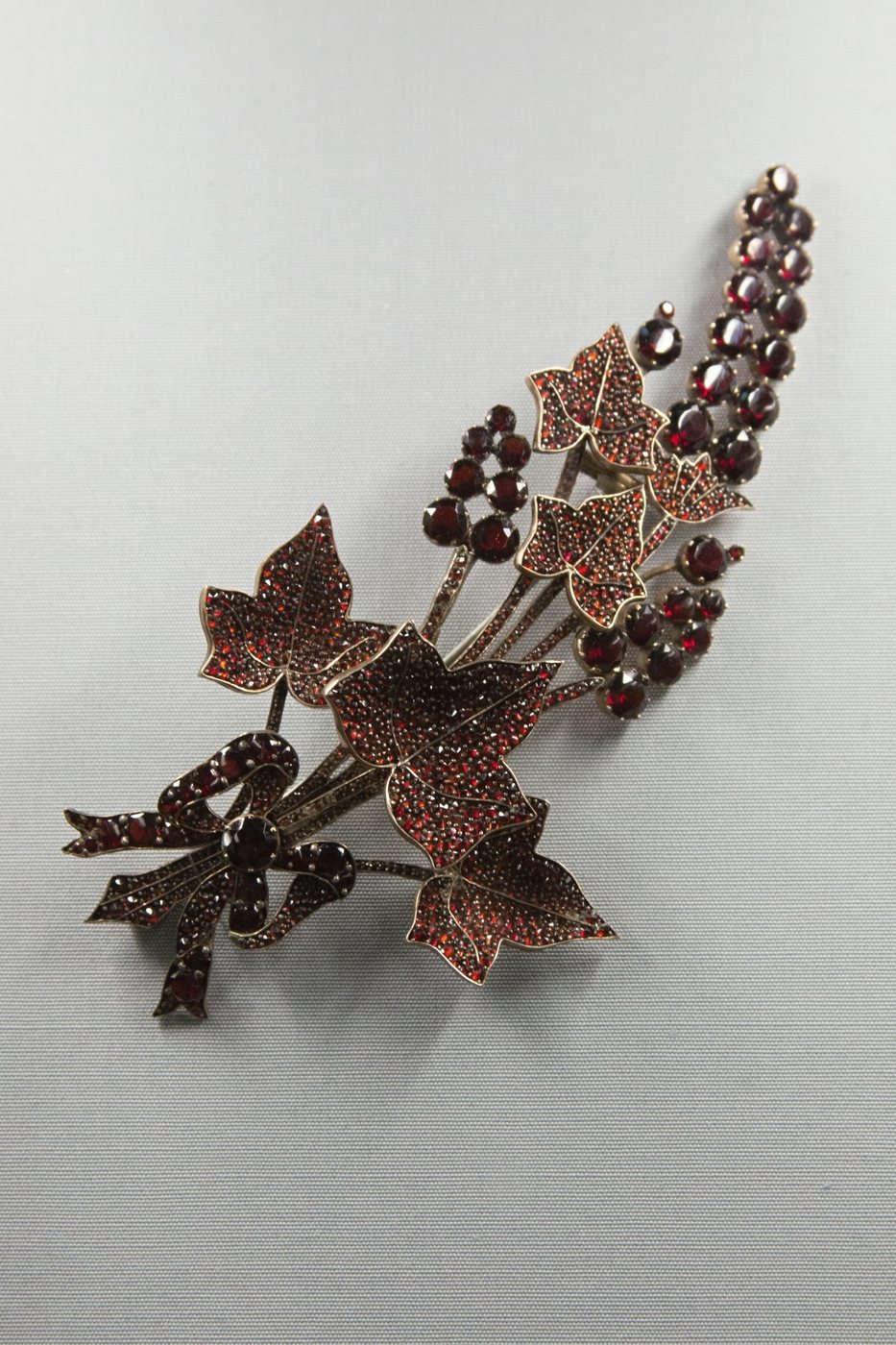
Why Bohemian pyrope garnets from Třebenice, cut and set in Turnov and Prague, became a hallmark of Victorian jewellery, with carbuncles, demantoids, cluster settings and their meanings.
Gemstones
Pearls in Jewellery History
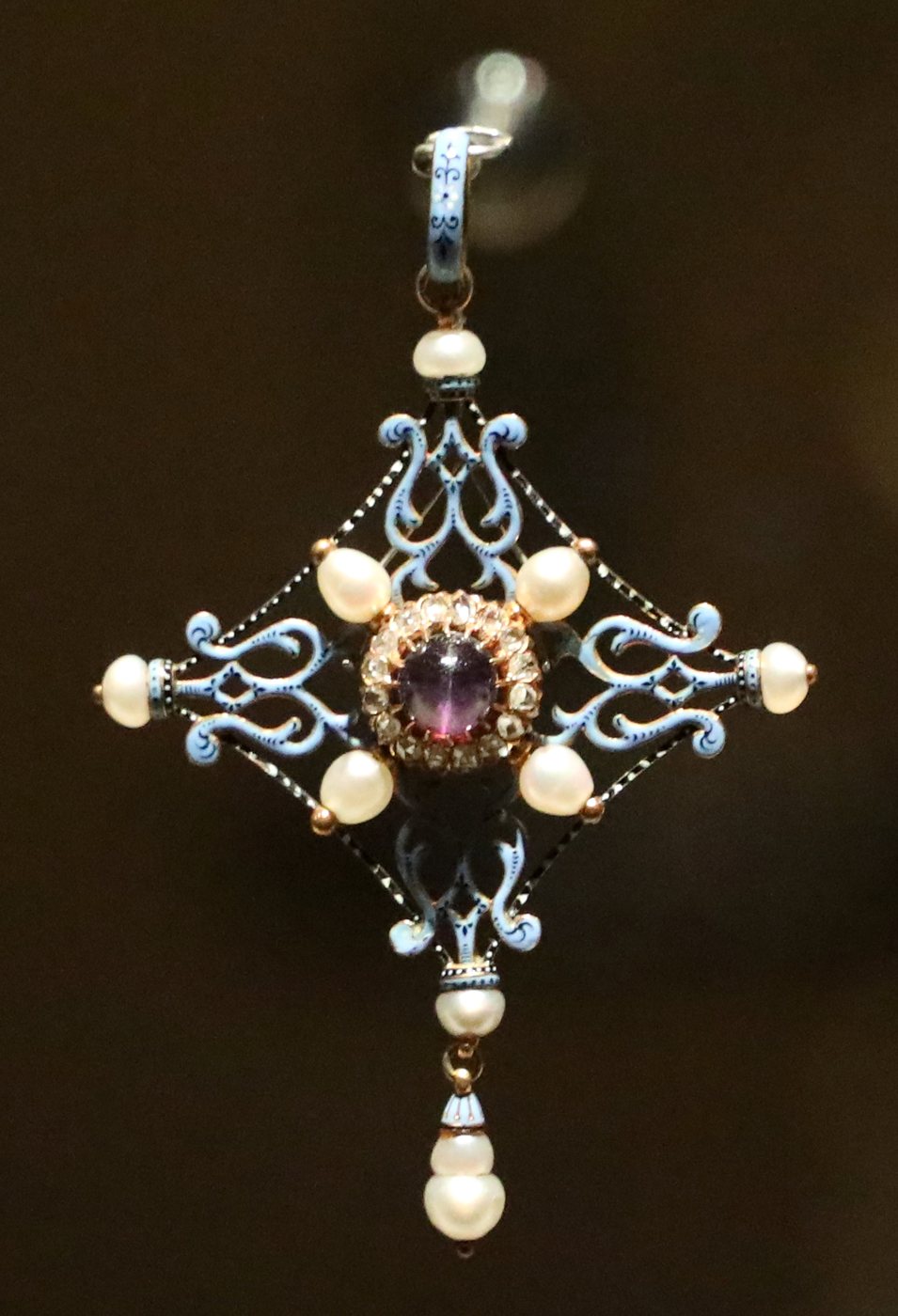
Natural pearls from the Gulf and Ceylon, seed-pearl work, Edwardian chokers and ropes, Mikimoto's cultured pearls of the 1910s-20s, imitation pearls, and pearls' bridal and mourning meanings.
Materials
Platinum in Jewellery History
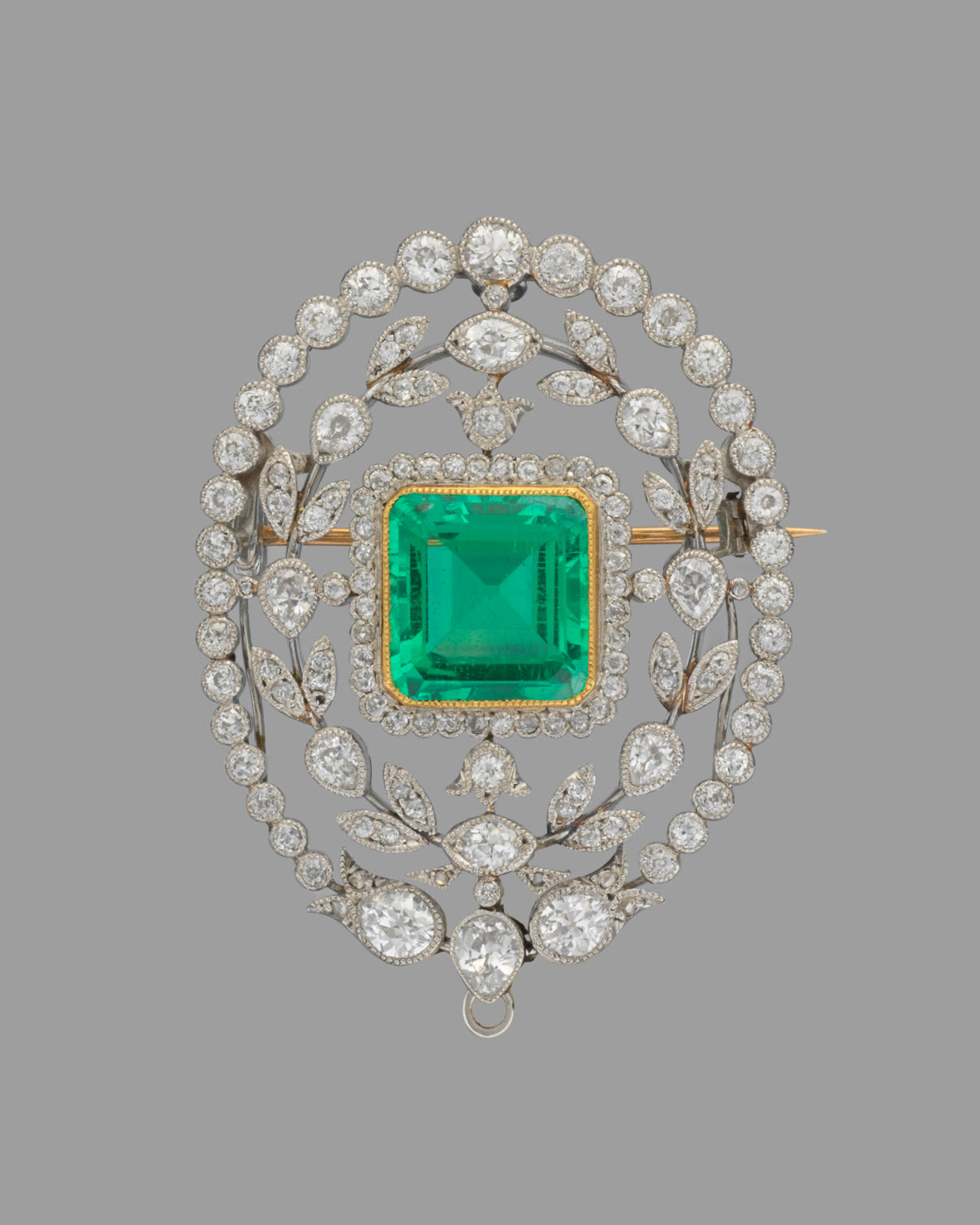
Why platinum only became practical for jewellery around 1900, Cartier and the Edwardian garland style, Art Deco settings, Russian and South African supply, wartime restrictions and platinum marks.